

It has been three years since we have collectively been trying to figure out “AI visibility” strategies.
So far, we haven’t even agreed on a name for it (although, it looks like we are going to stick with AEO and/or GEO).
But first a couple of cool announcements:
JOIN us to discuss this topic LIVE on Linkedin or Youtube (and bring your questions!)
Ask your questions in this week’s AMA (and join our sub!). This week the host is Pedro Dias, former part of Google’s Search Quality team (!), SEO advisor for eBay, and now Head of SEO at geoSurge. What a host! Ask him ANYTHING!
We have seen multiple “new” and “newish” AEO/GEO tactics floating around, from article to article, from “playbook” to “playbook”, from study to study, and if you haven’t been too deep into the topic, you are likely to be losing your mind.

There’s very little effort in putting all of that together, giving brands some way to understand what it is they should be doing to be visible in AI answers. The closest to a solid AEO/GEO guide is Man of Many’s guide to GEO which includes well-researched, clutter-free highlights of the most trustworthy advice and research on the topic of building AI visibility.
I have shared my highlights from the study here, but I highly recommend reading it in its entirety.
And yet, I’d like to expand on one of the most useful chapters of the guide: The five layers of search:
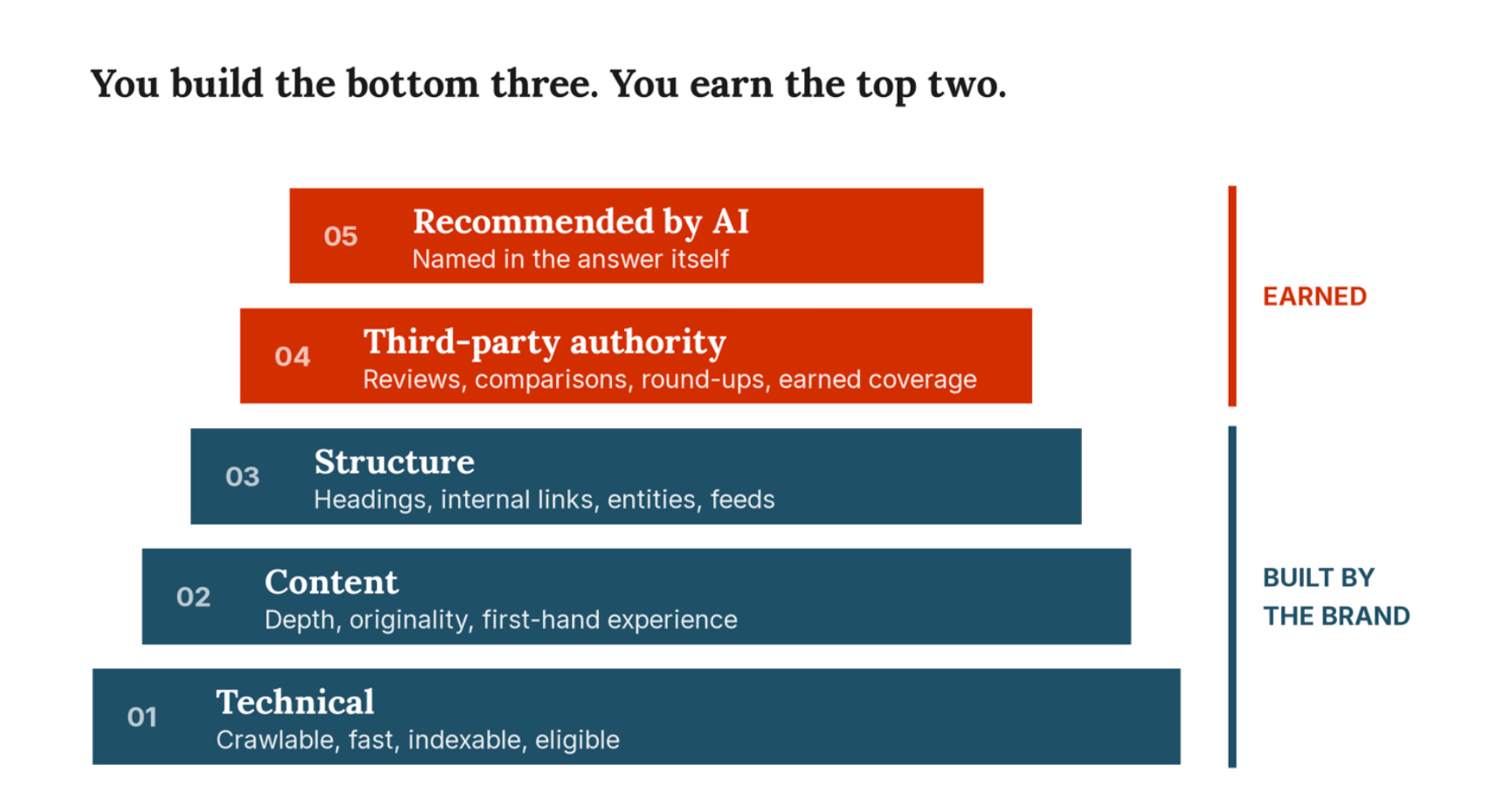
While I fully agree with the concept here, the guide isn’t answering the most important question for the most important layers here:
How do you EARN the third-party authority and, consequently, AI recommendations?
Leaving us there with the “earning” part is not fair. This reminds me of Google telling us for years, “Oh, just create useful content and you will rank”. (We all know it has always been much more than “Build it and they will come” concept behind organic search visibility).
So how do you earn your way to the top two tiers?
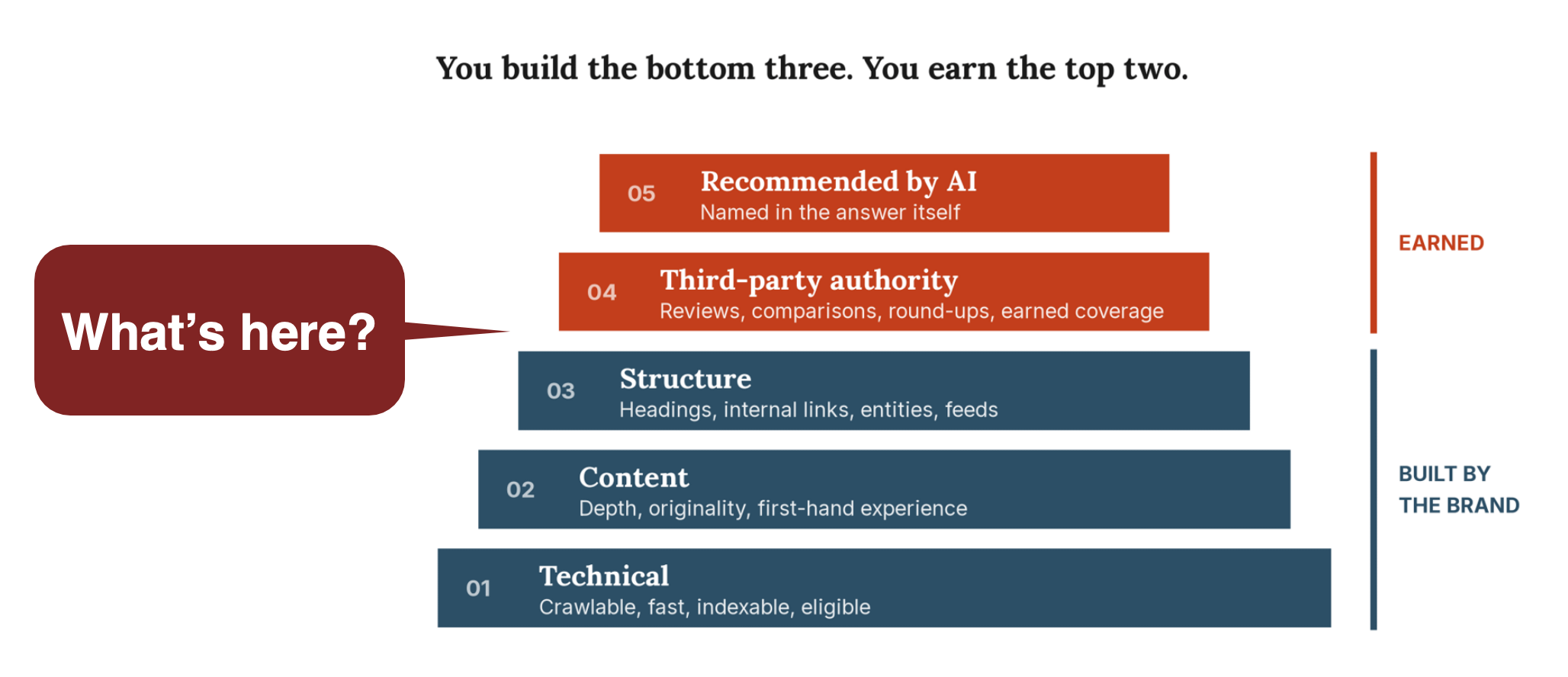
Luckily, there are proactive steps you can take here. Let me give you just a few ideas…
Note (and I will repeat myself a few more times below because you cannot just say this enough): NONE of the steps below should be done for “GEO”/”AEO” only, otherwise they all fail miserably.
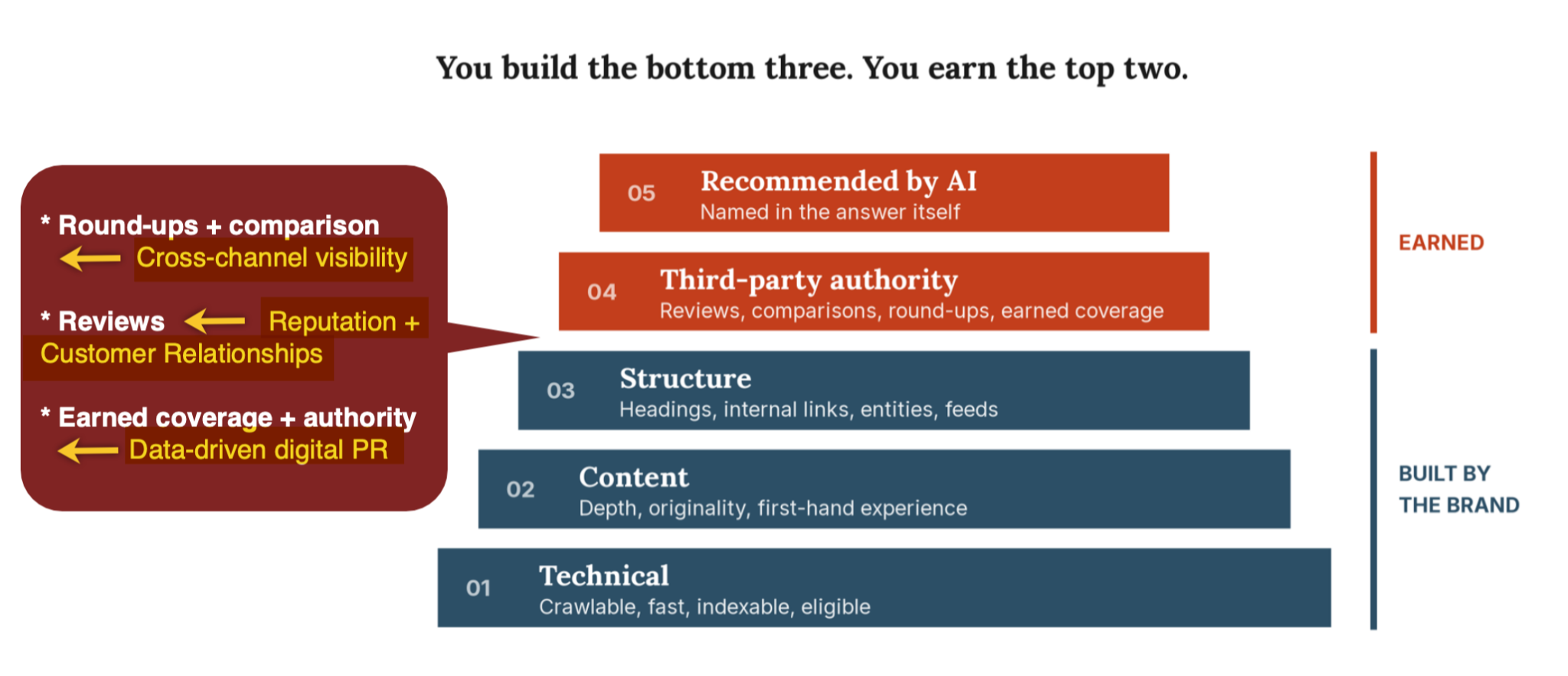
Cross-channel visibility: Be visible where your customers make those buying decisions
This is by far the most effective, most overlooked strategy to “earn” online visibility everywhere, be it traditional search or AI answers.
What you need to know is where your audience is, and be there. Tools like Sparktoro can be used to figure your specific influential platforms. Brand monitoring, competitor research and tracking will give lots of insights into where you are already being discussed… Just knowing your niche and audience usually helps.
It could be Reddit, Youtube, niche or local groups, or Pinterest (this one is going extremely strong in some niches!), Instagram, etc. etc. Pick the channels where your current and future customers go every day for shopping decisions and recommendations.
Repeat after me: Visibility drives visibility.
Once you are visible on those channels, your customers will bring that visibility elsewhere, and LLMs will quickly pick it up.
And that is how you build that “earned coverage footprint”, as editors and authors start seeing you mentioned everywhere and have no choice but include you in roundups, comparisons and lists.
And it is not just “set up your accounts and broadcast” kind of visibility. That’s growing a channel for it to have a dedicated community around it of real people willing to read your updates and engage.
Just don’t choose channels because of AI. Choose channels because of your customers (AI is following them, not vice versa).
Stop listening to AI studies on “most cited domains” to identify channels where you need to be. Today they cite Reddit, tomorrow they cite Wikipedia. A cross-channel strategy isn’t supposed to align with those whims. Plus, those citation rates are different from niche to niche.
I’ve had Reddit marketing leads knocking my door asking for Reddit services, and when asked “Why did you decide to invest in Reddit”, the confident answer was, “Because it is cited by LLMs”.
Listen, AI visibility is a highly ephemeral concept
We don’t know how to reliably measure it and attribute it to KPIs. For the most AI-visible brands, AI contributes to measurable 0.1-0.2% of revenue at this point (the rest is theory).
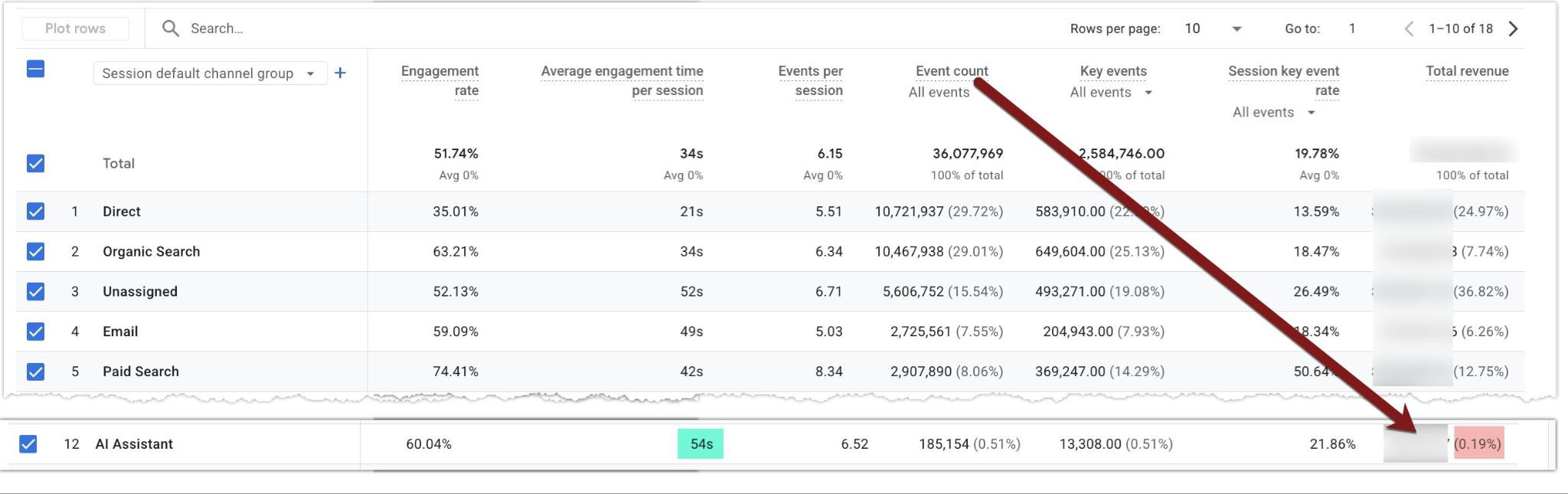
To quote Rand on my Linkedin post sharing this stats:
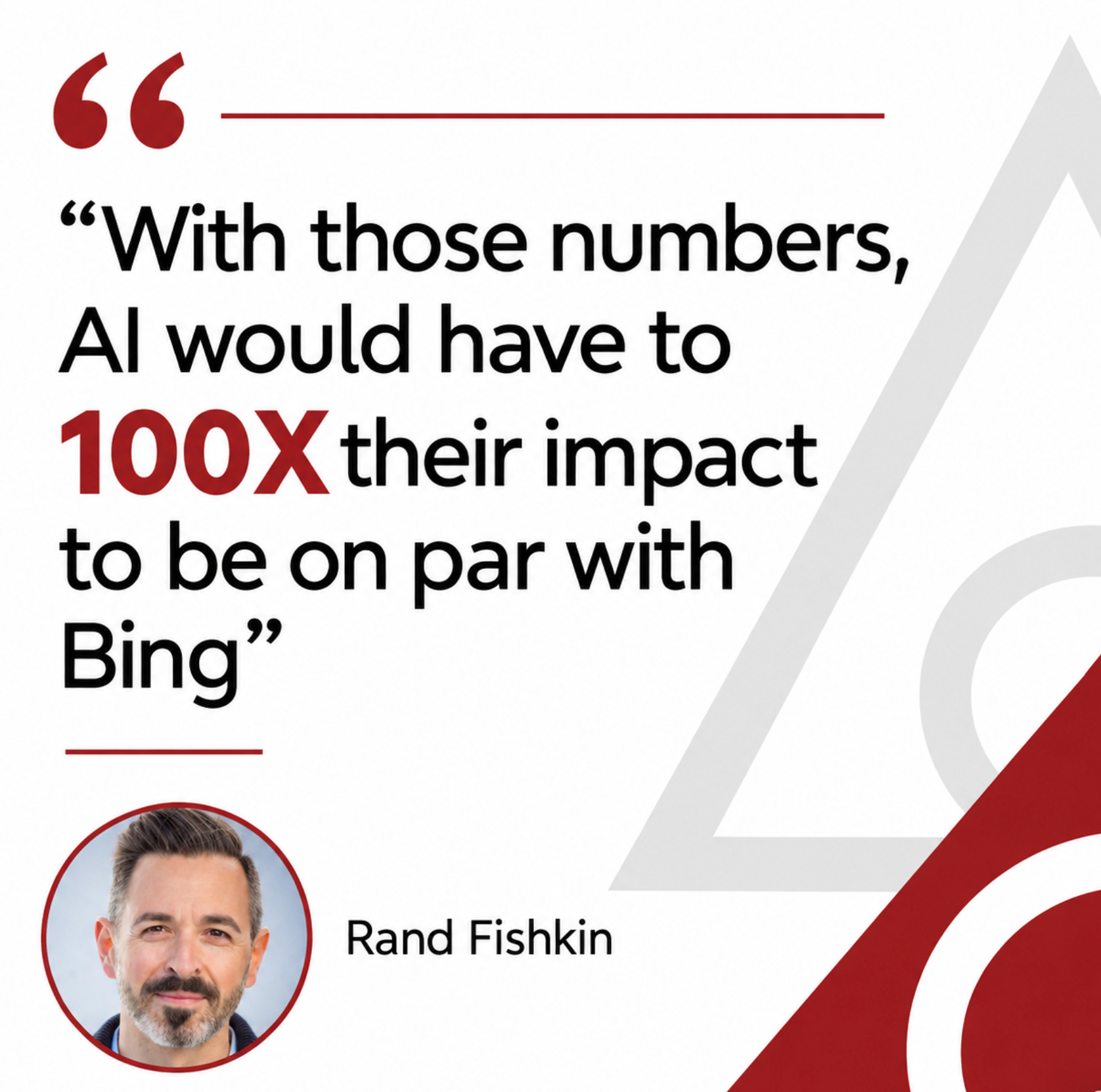
Invest in visibility for your customers, and all other bots will follow them. It is never the other way around.
Reputation and customer relationship building strategy
With building brand visibility, there’s always an inevitable problem most businesses don’t expect, for some reason. Online reputation gets out of control, as more and more people start discussing your name online.
Having an active community (see above) is extremely helpful because your happy customers will also be heard and seen.
But it also takes a careful reputation and relationship building strategy to take your own brand’s digital footprint under control. Essential things your business should be doing:
Listen to your customers and adjust your on-site and social media content to address their pain points (this means including your customer support and sales teams into the process, brand monitoring, etc.).
Fix as many of those issues you identify (no-brainer, right? Well most brands are trying to find other ways to fix their reputation)
Establish strong presence where your brand is being discussed (again, see above) to have enough authority to confidently and publicly reply to negative reviews and comments
The goal is that most of the brand-driven user generated content flows into your own channels and all the customers’ concerns are addressed on your site.
This is the kind of a reputation strategy that will help your AI visibility because that is how you build a well-balanced, trustworthy and convincing customer review footprint.
Creative / data-driven digital PR (original research, guides, reports)
Data-driven digital PR has been brought up in the guide a few times as the most effective content strategy:
Specific evidence wins. Original data, citable facts and first-party information beat generic content, nearly unanimously.
What makes you worth citing? Original data nobody else has
What correlates with results is depth, editing and original research
Original data earns roughly 3.3 times more AI citations and improves the odds of a strong business result by 50%, and fewer people are doing it every year.
What the guide fails to emphasize is that original data or original reporting is exactly what earns you layer #4: Third-party authority.
Unless you create (and market!) something truly great on a regular basis, no one will know about you, including LLMs.
I do like the concept of *earning*, to be fair
…because it discourages businesses from taking useless shortcuts when they are “building” visibility. And none of the steps above is easy or quick.
And again, none of them should be done for “GEO” sake because they all bring about more, quicker, and more measurable benefits than AI visibility (additional revenue channels, happier (and hence more returning) customers, even higher organic rankings and more brand visibility.
And they will, by all means, earn your brand to layer 5, i.e. AI recommendations.
If you need help building your AEO/GEO strategy, reach out!