

Last week, OpenAI launched Atlas, its own AI-first browser that is supposed to answer users’ questions even when they don’t have any.
Many “experts” started talking about the death of SEO, out of pure habit, I suppose.
But others noticed another cool phenomenon: Atlas’s searching capabilities are powered by Google.
But it doesn’t stop there.
>>>> JOIN US to discuss this topic LIVE on Linkedin
Let’s look at the very first example:
Prompt: “best apps for managing your finances”
Fanned out to: “best personal finance apps 2025”
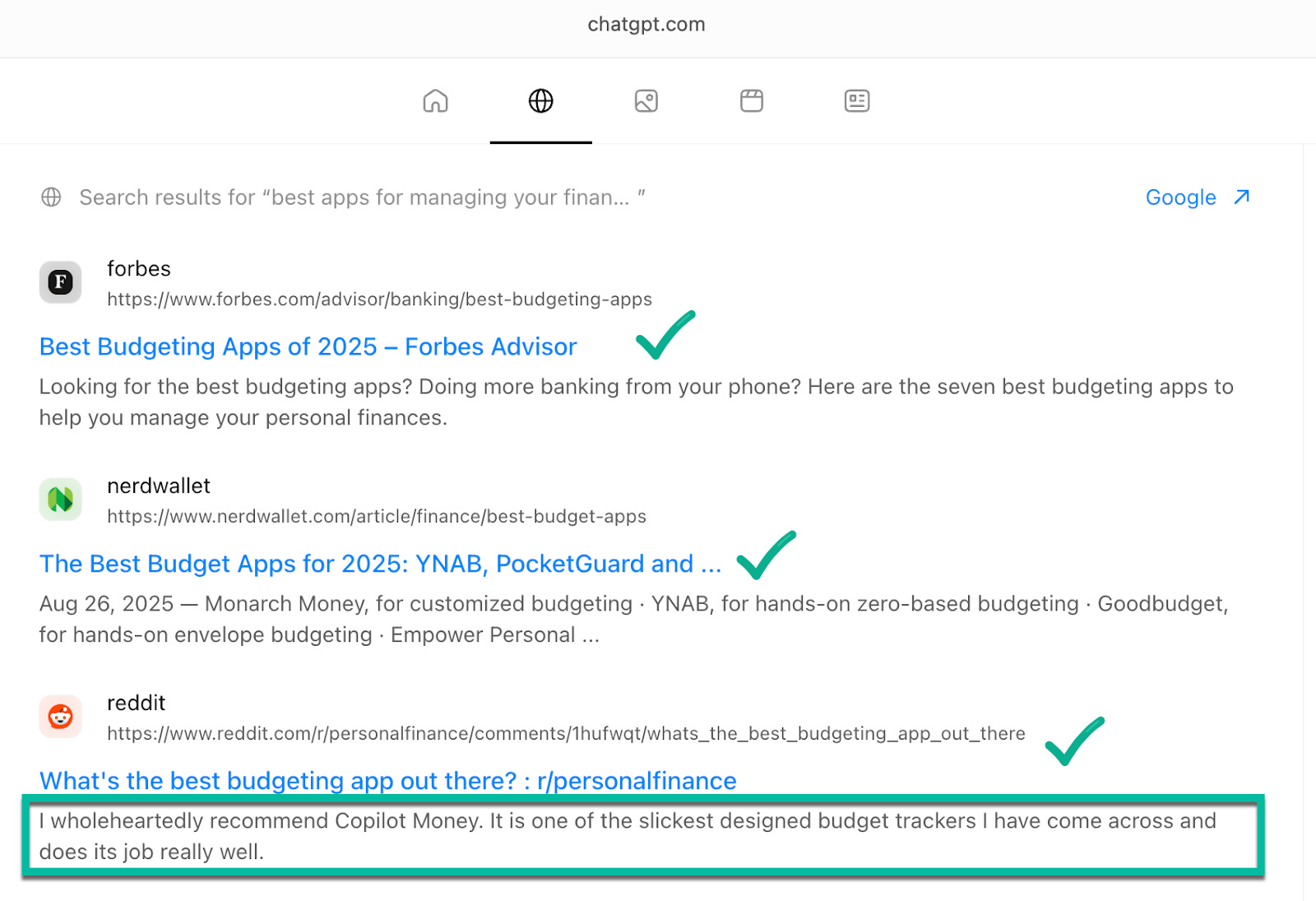
Correlation between Google top-ranking URLs and ChatGPT citations: 100%
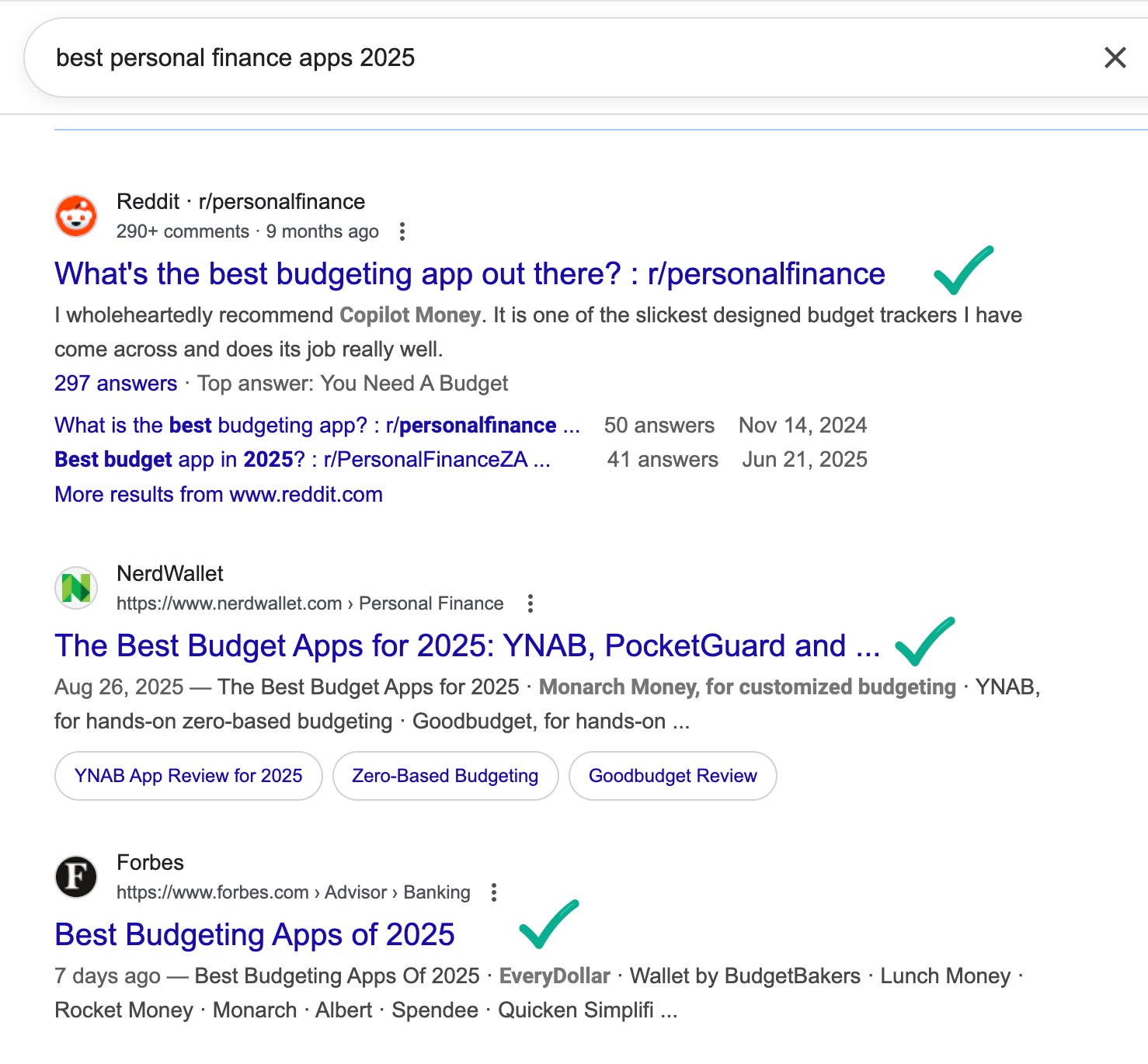
Correlation between Google top-ranking URLs and Atlas citations: 100%
Notice Reddit thread preview is exactly the same! Other snippets look different, so it is not exactly scraping results.
Correlation between Bing top-ranking URLs and ChatGPT citations: 0%
So what does this mean for SEO?
The surprising reliance of ChatGPT and Atlas on Google means only one obvious thing: SEO is not going anywhere.
If you rank in Google, you will have visibility in both.
Apart from this good news, there are a few more alarming things to keep in mind (none of them is quite new, though):
Less traffic
I don’t expect Atlas to send a lot of clicks to publishers because the default tab takes you to actual answers. And while the same URLs (from Google search) are cited here, I don’t expect a huge click-through as the complete answer is given:
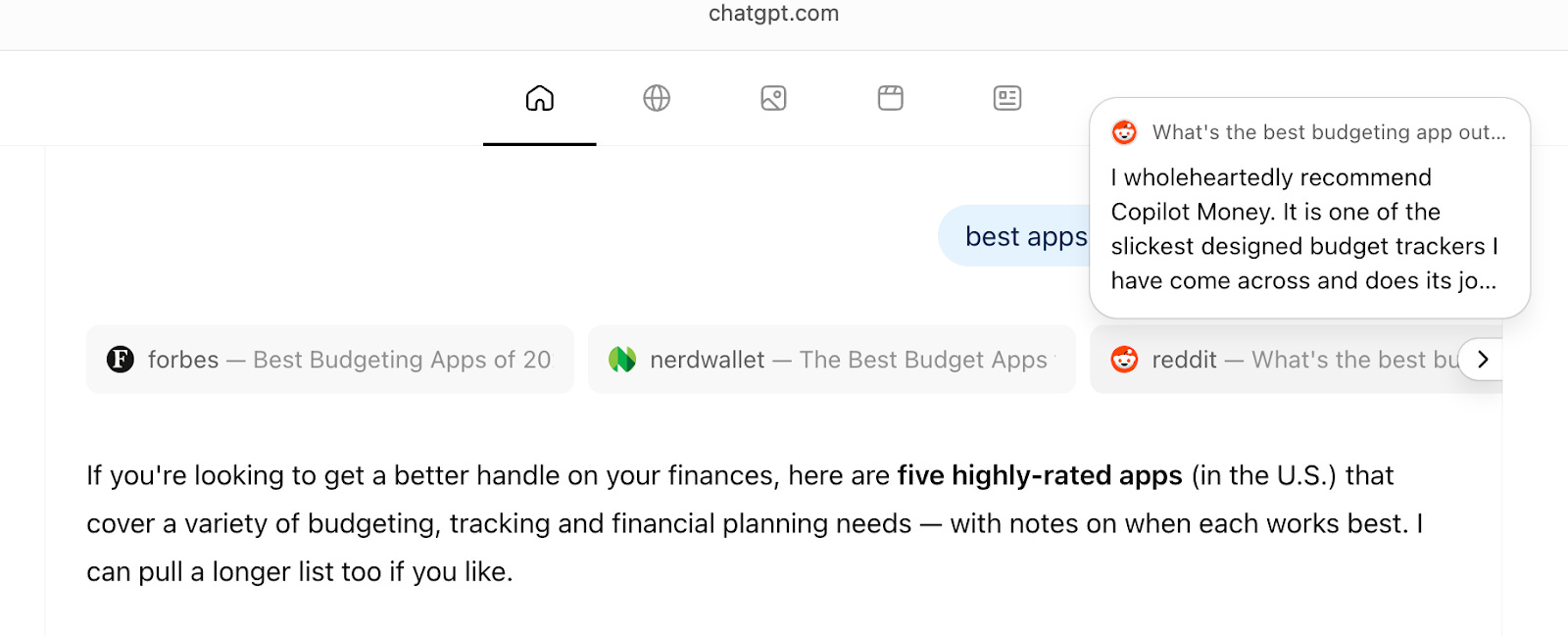
Until Atlas is well-adopted, we don’t have to worry about this, though.
0-link answers
Just like ChatGPT, Atlas doesn’t always sync answers from live searches. Sometimes it gives answers from the training data, giving 0 citations to answers. 0-link answers are less common than a few months before, but these provide 0 visibility to publishers who provided content for the training data. This will change.
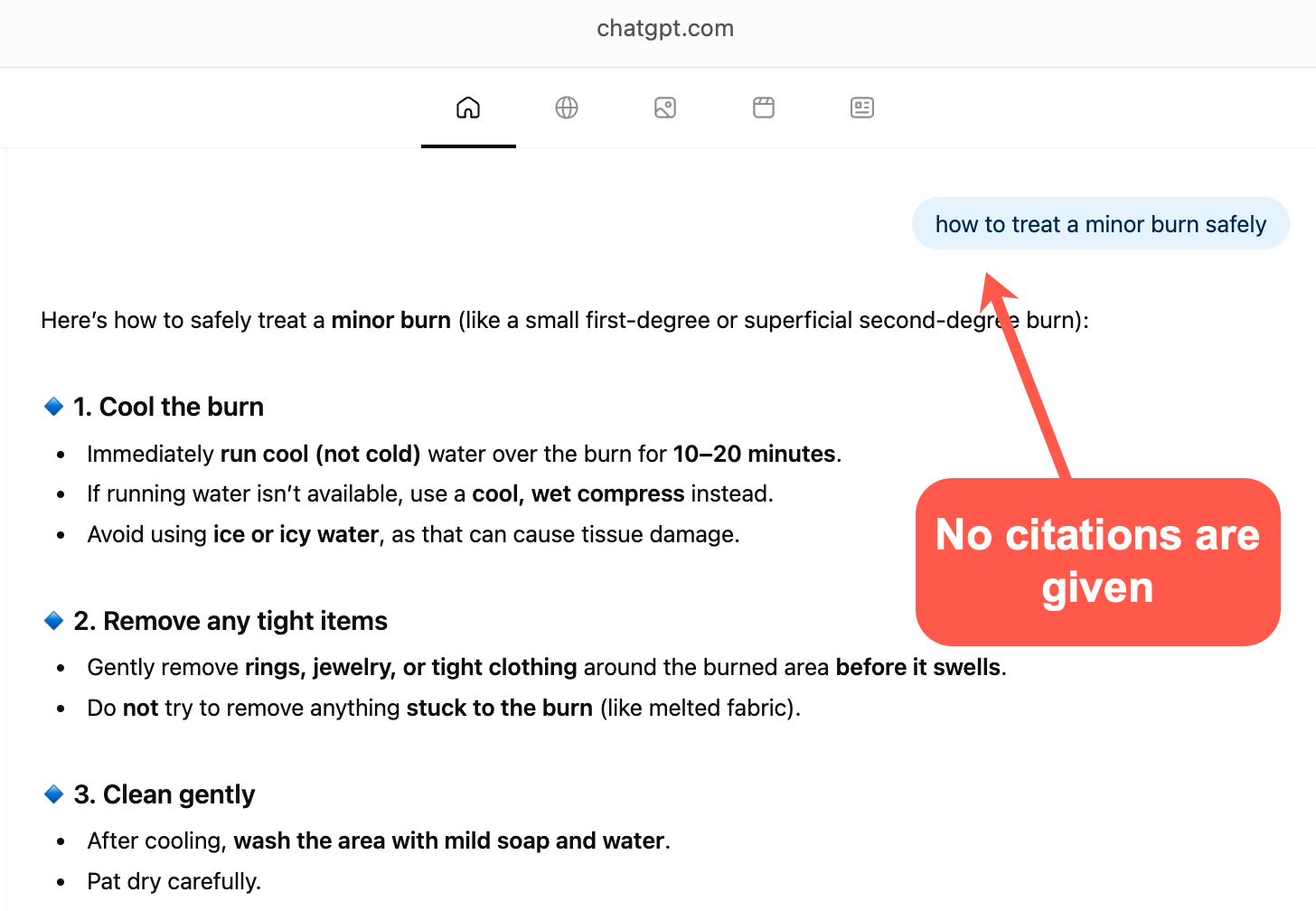
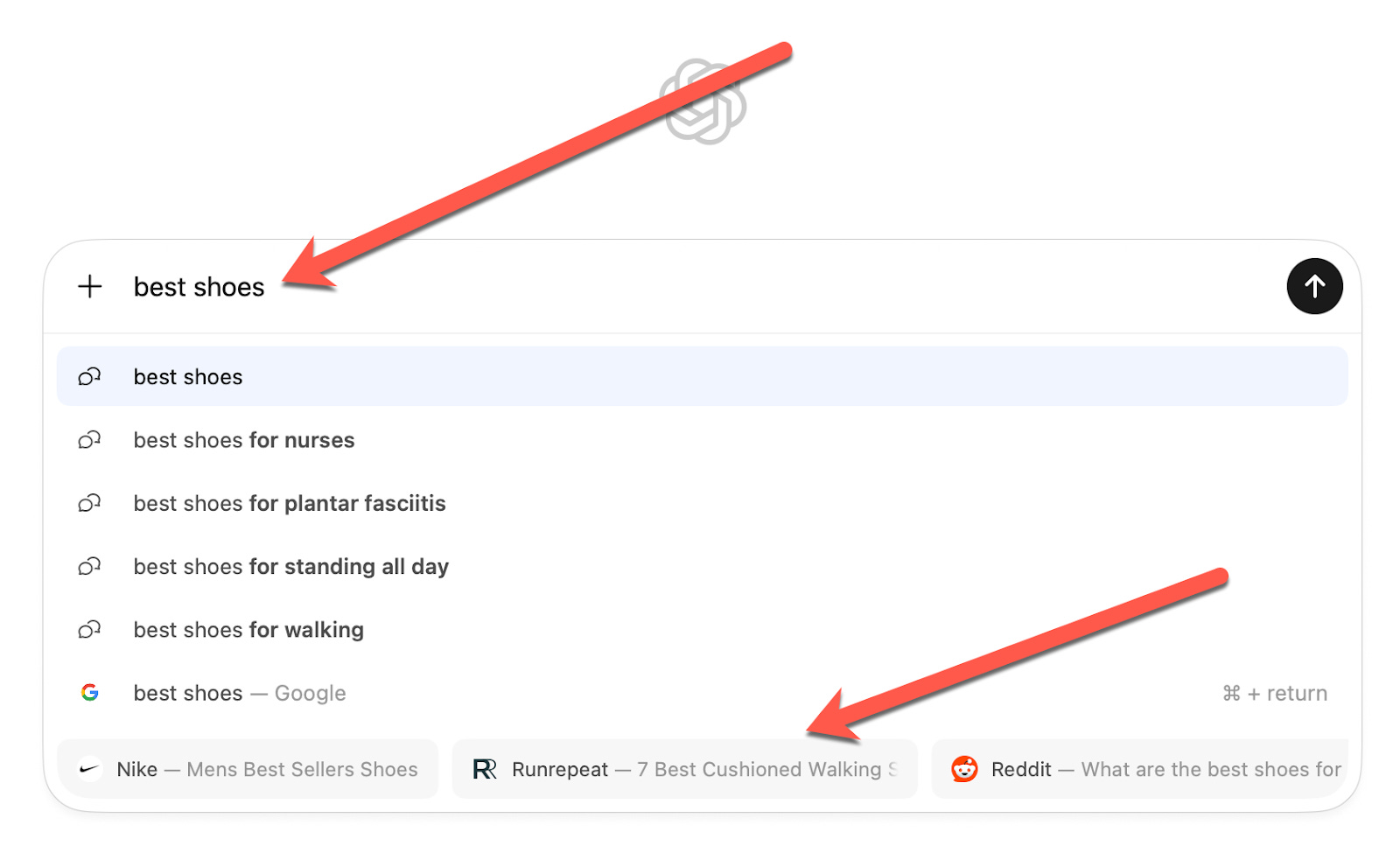
Atlas’s “Auto Suggest”: Prompts will be more predictable
Atlas auto-suggests prompts and even answers while you are typing. This will result in the following:
More prompt predictability (Good news)
More direct visits (which will be hard to attribute)
Other features (like the ability to prompt about a highlighted term, launch an agentic mode, etc.) I was less excited about, because they are not quite (yet) relevant to what I do. I am sure there are already lots of articles on how all of those are revolutionary :)
Atlas is not the first AI-driven browser. Perplexity has had that for a while. Chrome is actively integrating AI Mode too. We will see which one wins, and direct our attention to that one.