

In SEO, co-citation is a very old concept. Ever since Google started using backlinks as signals of authority (just like research papers are ranked based on citations in other pieces of academic work), SEO experts have believed that Google may have adopted another academic metric, co-citation.
>>> JOIN US to discuss this topic LIVE on LinkedIn
In the academic world, co-citation is the frequency with which two documents are cited together by other documents.
In SEO, co-citation is the frequency with which two URLs are linked in the same web document.
There’s no official confirmation that Google’s algorithm actually uses co-citation as any type of signal (whether it is relevance, authority, or similarity).
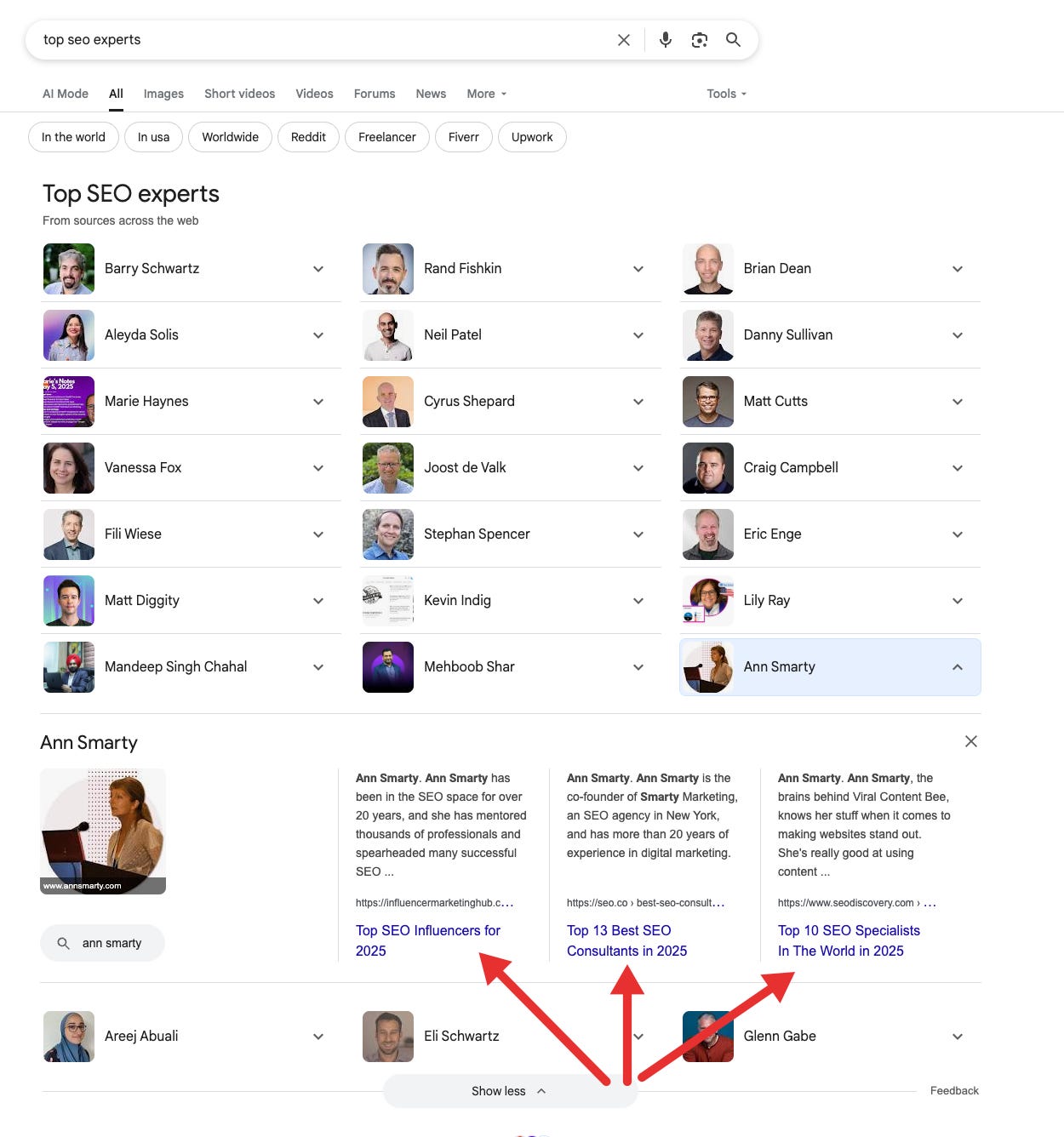
But we definitely see some evidence that Google is looking at co-citation when generating entity-based results, i.e., a list of brands Google has found in similar lists:
Co-citations and AI visibility
With the launch of AI answers, co-citation has become even more important because all LLM platforms (including AI Mode, Gemini, and ChatGPT) heavily rely on lists to provide product recommendations:
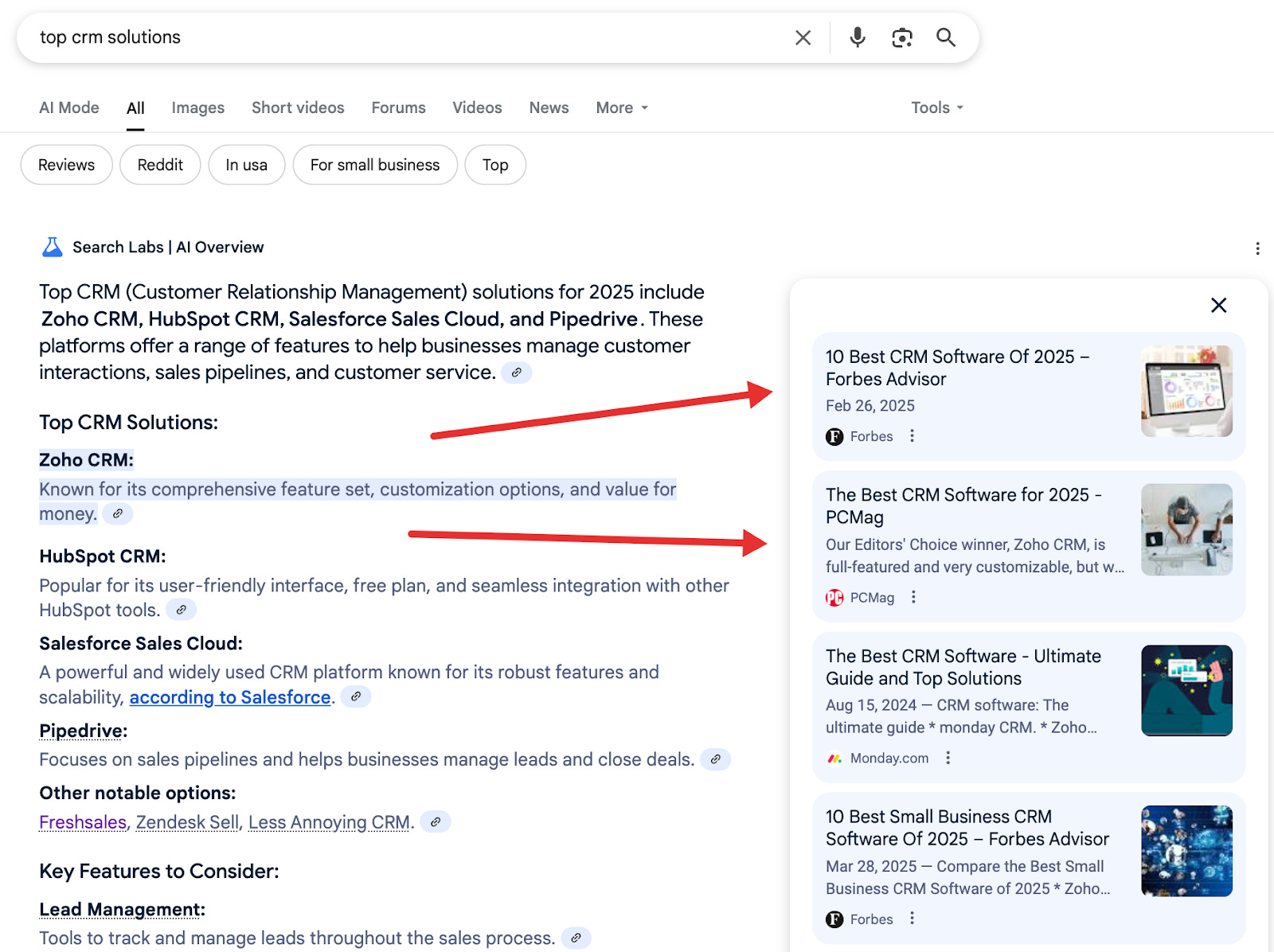
Unlike traditional search, LLMs do not rely on links so much, so these brand mentions do not have to be linked to be effective. That is why, for AI visibility optimization, co-occurrence (unlinked mentions) is as important as co-citation (link neighborhood).
It is important to know which brands your business is often listed with because that defines your brand’s relevance and visibility.
It is not just about backlinks anymore. Co-citations can also refer to unlinked brand mentions, which are also used by Google and AI algorithms.
Lack of co-citation always results in lower brand visibility (both in Google search and AI answers).
Search engines and AI platforms may all use different sources, so make sure to check multiple platforms and create a list of at least 20 articles listing your competitors:
Higher ranking URLs in organic search
Cited sources in AI Overviews and AI Mode
References from ChatGPT
Many of these may overlap. But even looking at 20 lists, you will get a good idea of how often your business is listed as compared to your competitors.
There are a few tools that will help you find co-citation opportunities you are not utilizing.
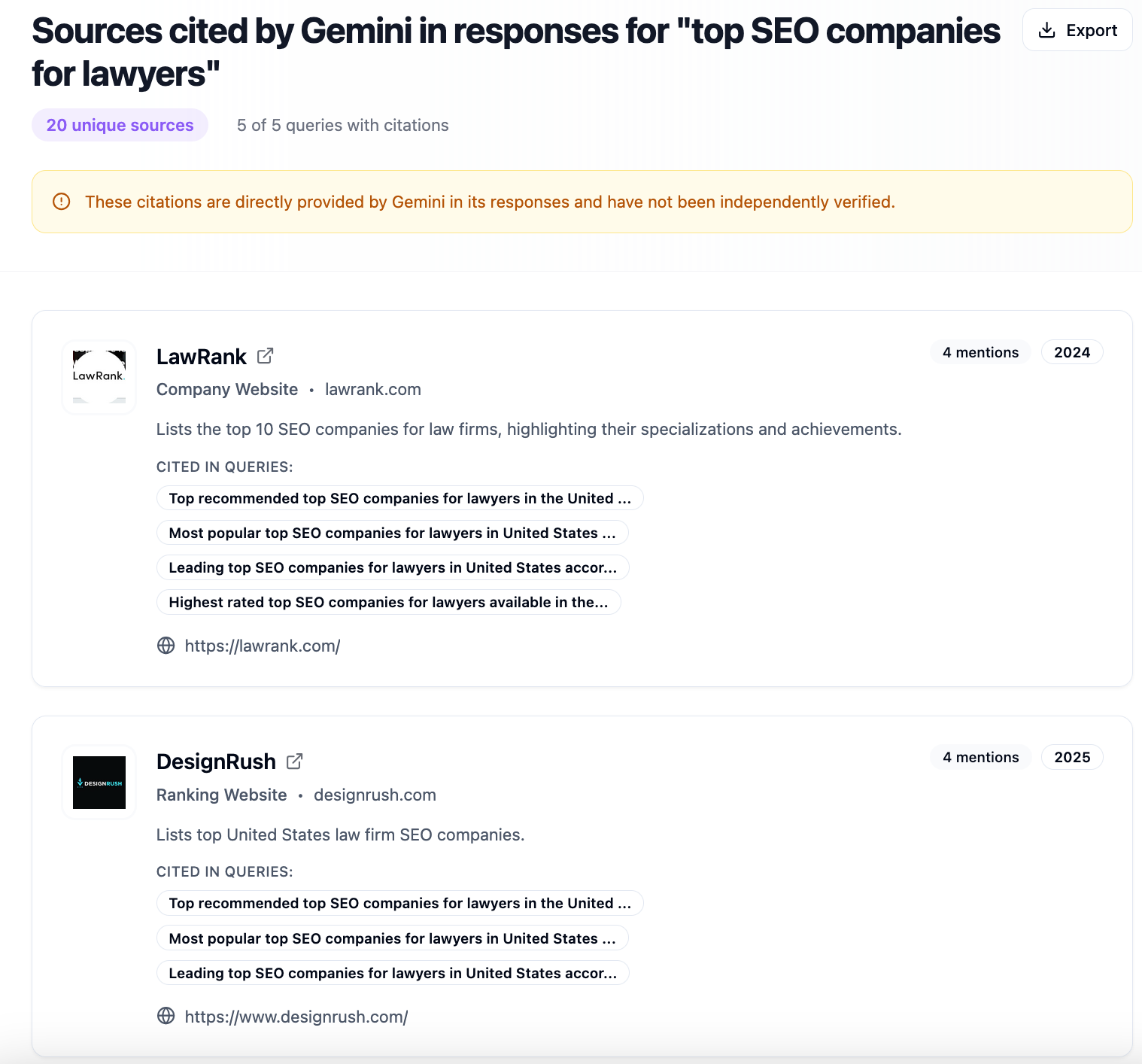
InTheMix.ai runs several related prompts based on your initial query in Gemini, analyzes its answers, and creates a list of unique sources that came up in them. It will also note how many answers include each URL, so you can find the most popular ones. It is currently a free tool that you can use common references included in Gemini’s AI answers:
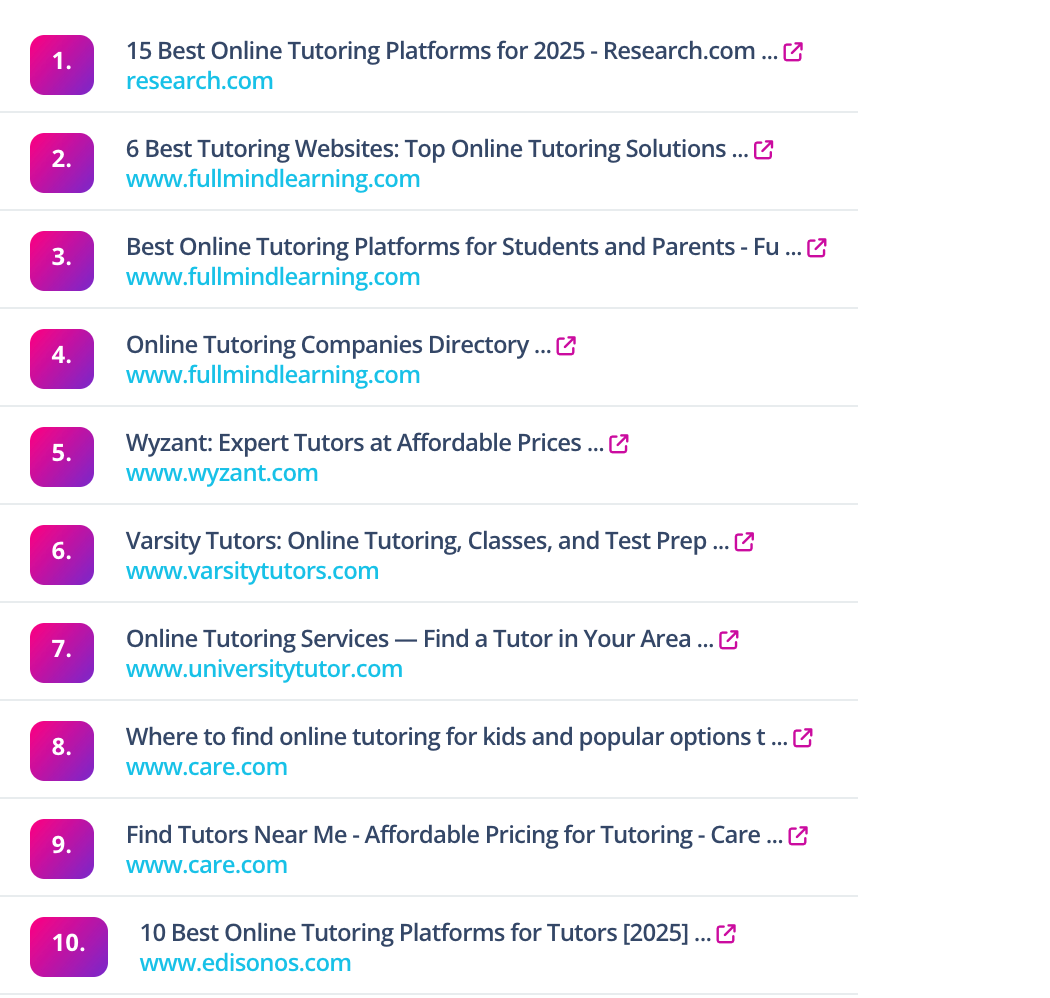
Otterly.AI is another great tool that pulls citations from ChatGPT, Google’s AI Overviews, and Perplexity for any prompt you enter. It also provides weekly monitoring of those citations, so you can discover more or newer opportunities:
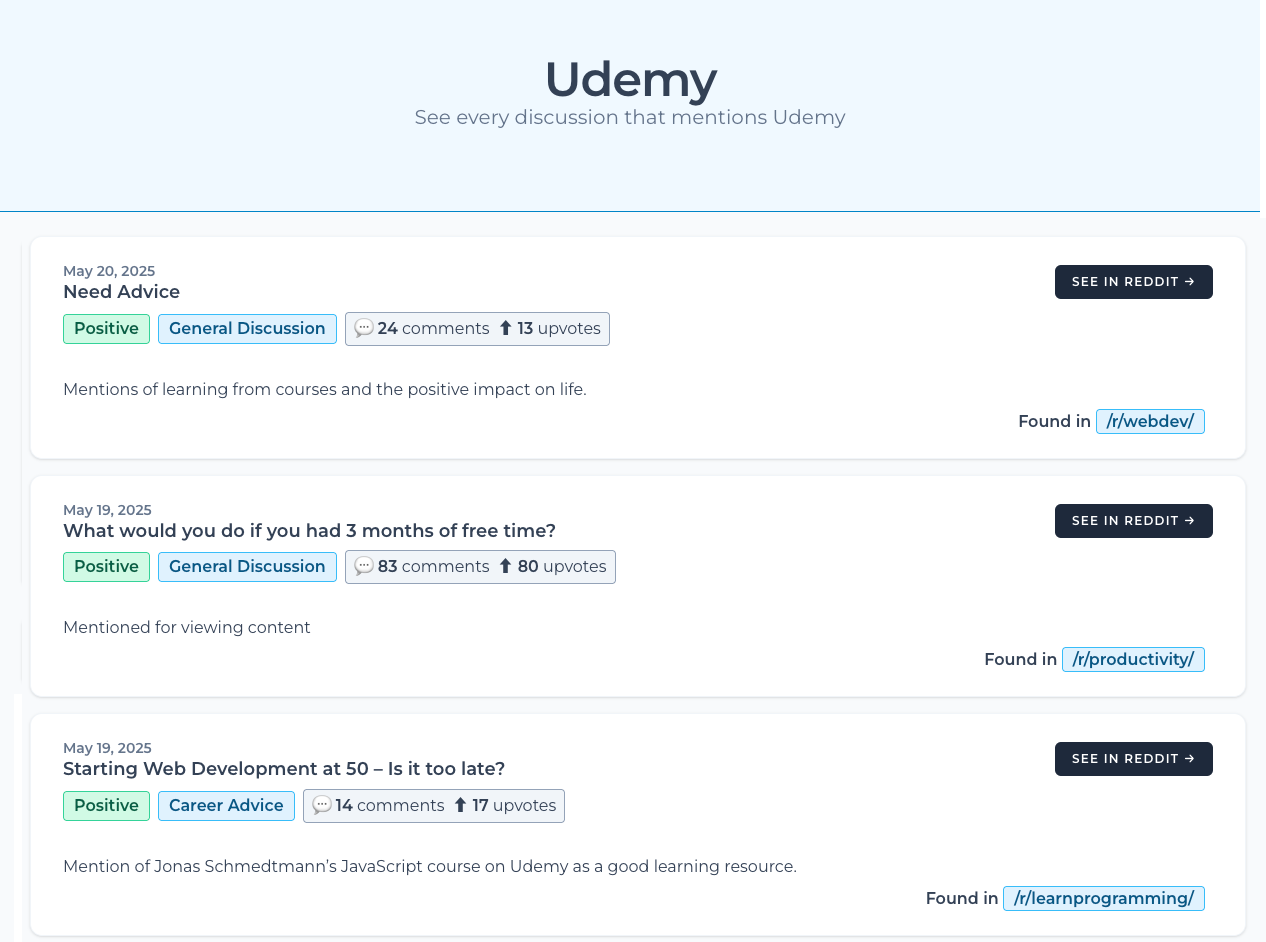
Reddit is another good place to research when understanding your business’s (or your competitor’s) co-citation, i.e., other brands it is associated with. Reddit is one of the top-cited sources in Google and ChatGPT, so make sure you know which subreddits your brand is mentioned in and which of your competitors tend to be discussed in the same threads.
If you have a well-established competitor, use AI Brand Rank’s Reddit analytics section to find Reddit threads that include their name. This is a good way to analyze your competitors’ Reddit citations:
Understand how your business is compared with your competitors
Use various AI platforms to compare your business or product to your competitors. This will give you a good understanding of how your brand is positioned in AI training data.
If you'd like me to help with your AI visibility strategy,let me know!