

As the most tracked search platform out there, Google has been struggling with handling search sessions initiated by bots for many years.
With AI platforms, the problem has become worse because AI agents will often search Google to find answers for their users.
The first step in solving this issue was Google canceling support for the num=100 parameter, which caused some analytics and reporting problems in the SEO industry.
Now, Google has introduced a new update trying to combat bot traffic: It hid the destination URLs from search results.
Google has been testing replacing direct URLs in search results with google.com/goto? redirects for a few weeks.
It is now officially confirmed that Google has rolled this update out within a month for most users.
You can only see the redirects when logged out of Google:
>>> JOIN US to discuss this topic LIVE and bring your questions!
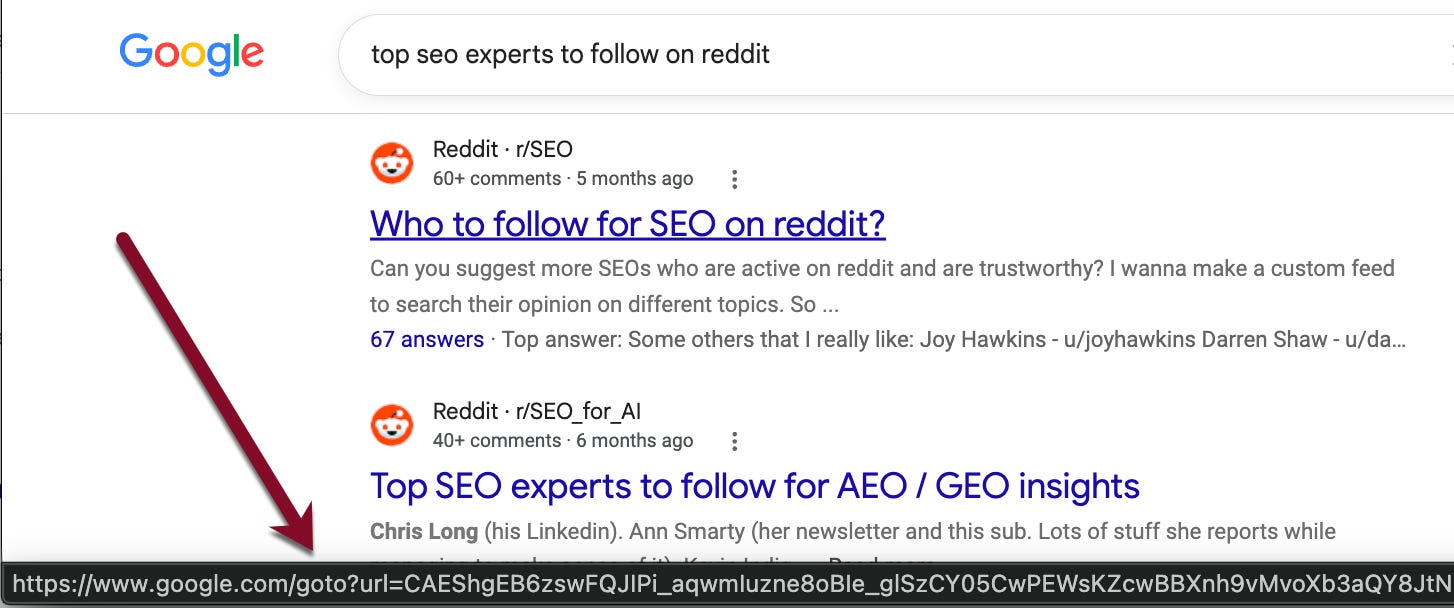
As this change is gradually going live for everyone, here’s what you will likely be seeing:
Your daily rank tracker may be showing weird results
It is a hard switch for rank-tracking platforms because the ranking URLs cannot be retrieved without clicking the links.
It may take some time for your ranking reports to start reflecting your actual rankings. Both Moz and Ahrefs are claiming to have solved the problem because they saw it coming (from earlier tests Google was noticed to do) and were able to adjust.
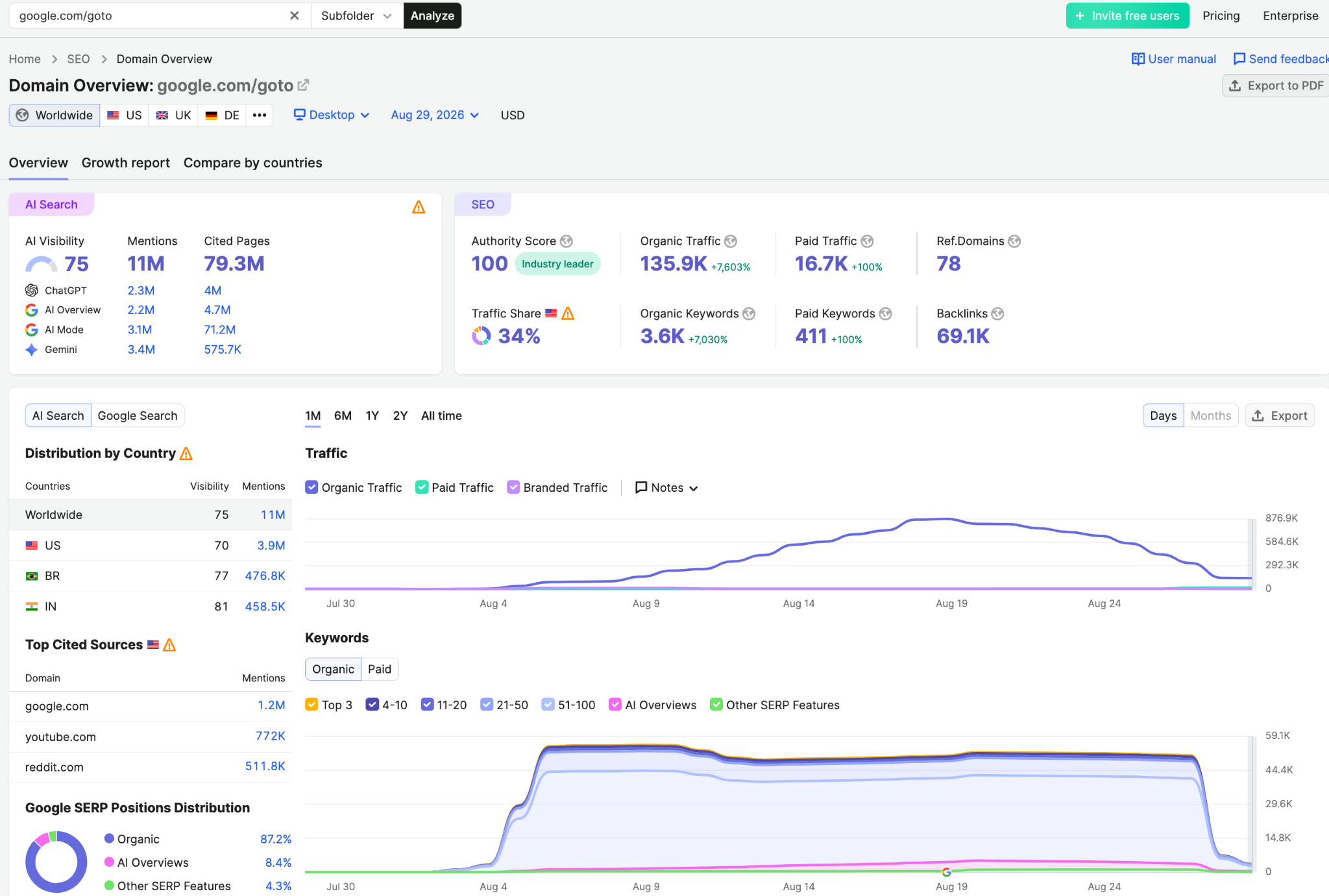
Semrush seems to be adjusting pretty well too. At the beginning of August, Semrush started reporting /goto links as ranking URLs but the numbers have declined recently. Presumably, this is a sign that Semrush has found a way to retrieve the actual URLs:
There are also free browser-based solutions already that fix redirects to point to direct URLs, so it is definitely doable at this point (but Google will persist, for sure).
If your rank tracker fails to adjust, you may notice your rankings disappear which may not actually be the case.
Your Search Console “Performance” section will likely be impacted
It is unclear how Search Console data may be affected yet. Even if all major rank trackers promptly figure out reporting, the data may still be skewed if AI agents change their searching behavior. Here are two possible trends we may start seeing:
Fewer impressions without clicks being impacted (from AI agents giving up on using Google because the URLs are harder to retrieve)
More clicks (Instead of giving up on searching Google - which is not easy to do because Google does provide the highest-quality results and is used by most people - AI agents may be compelled to click more URLs instead of just citing them without reading).
In either case, if you notice your numbers start changing, don’t panic just yet.
So far it looks like many AI platforms are still searching Google and just citing the /goto URL (which I expect to change soon). So you may also start noticing your citation numbers going down as well.
What’s the future of SEO data?
This is one question that bothers everyone now. After Google lost the DMCA case to a well-known search scraper, SerpAPI (which is also used by ChatGPT to access Google’s search results), Google seems to be even more serious about blocking its results to bots. This will likely cause ongoing issues for SEO analysis and reporting.