

I spent a considerable amount of time reaching out to business owners and (mostly) in-house marketing teams to find out what they think about the future of SEO, now that AI/LLMs are impacting organic discovery in many ways.
👉🏻 Find the results of the effort here: SEO for AI (GEO) Statistics: 90% of Businesses Are Worried About the Future of Organic Findability
I admit that I am connected to most of the survey participants through Linkedin or Twitter, so the results are skewed to an audience that is more or less aware of what’s going on.
However, all the takeaways are very well-expected:
Most businesses are worried about the future of organic findability because of LLMs
The total loss of organic search and the loss of traffic (and click attribution) are the two biggest concerns
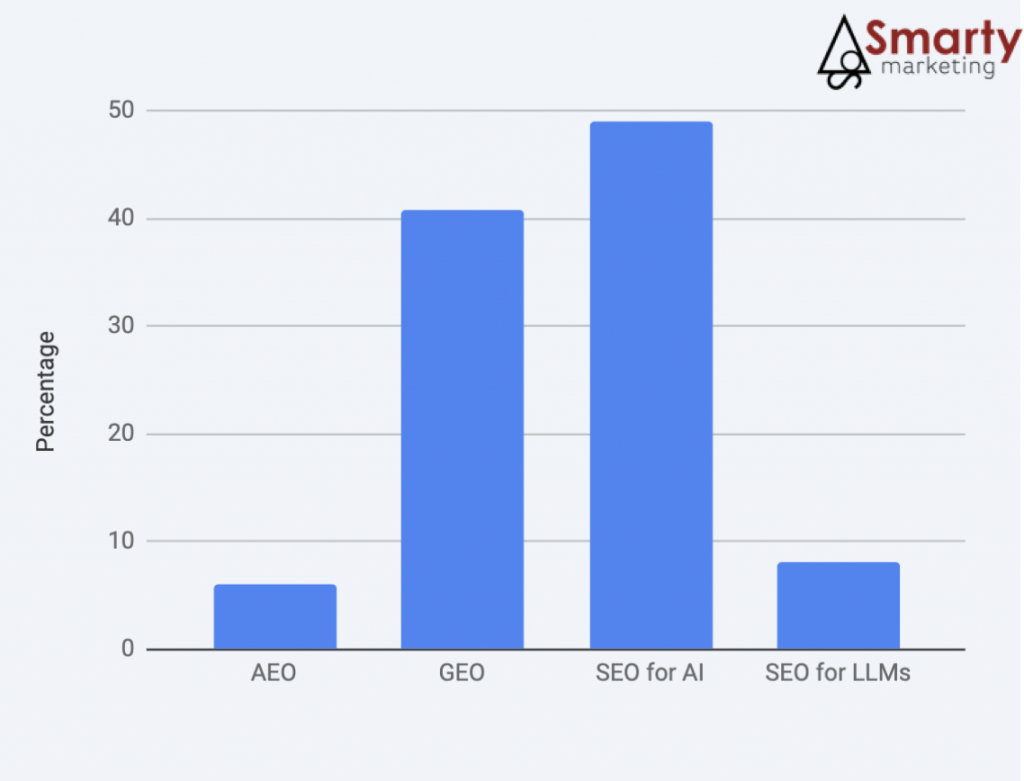
None of the surveyed businesses thinks SEO will die because of LLMs, and most of them prefer to call AI visibility optimization “SEO for AI” (the second most popular choice was GEO!)
If you are worried about LLMs and the future of SEO, join my subreddit curating all the industry news, tools, and studies: https://www.reddit.com/r/SEO_for_AI/
Here are some predictions some of the participants chose to share:
The future of Google is questionable…
It’s evolving - Google could be the biggest company ever to fail - and lose money (Allen Kopelman)
Digital PR is back!
The future of SEO will be driven by trust and authority, making Digital PR essential for building brand credibility and visibility in an AI-powered search landscape, both on Google and LLMs (Maria Kennedy).
Check out what Ann Smarty’s digital PR agency do to build links.
Prioritize SEO best practices
So far, we have seen that OSO tends to still prioritize Google’s SEO best practices - i.e,. providing high-quality question-answer and stats-based content, specifically formatted in AI-friendly ways, and a much heavier emphasis on proper website coding and architecture. (Kirill Kniazev)
AI is pushing SEO in the right direction
I think the industry is already (thankfully) moving away from some of the SEO practices that I’ve always found dissatisfying as a marketer and writer (creating tons of 101-level or glossary-style content, trying to outrank competitors with skyscraper content, etc.).
With brand mentions (from authoritative sources) becoming increasingly important for AI visibility, I think marketers are going to start investing more in PR, content partnerships, and original research. (Madeline Jacobson, Head of Content, Creovai)
Google is driving the change
I think SEO will remain effective for a long time because people are resistant to change, and 50% will continue to stick with traditional search. If Google completely shifts its search results towards something like Web Guide or something similar, well, we won’t have a choice.
However, in my opinion, the classic strategy of creating content for people, supporting it with backlinks, and updating it regularly will always work, because AI needs something to learn from, and it simply has no other factors to assess quality content. (Nadezhda Mosyagina)
The key tactics remain relevant
Distribution equals discoverability. Put the best content you can on every platform where your target audience is searching. (Brian Piper)
Start experimenting
We (collectively) need to move past the self-branding skirmishes and acknowledge that we’re not likely to go back from AI. Yes, there are a lot of core fundamentals that will remain salient, and information discovery won’t be going anywhere.
However, there are new ways of looking at strategies and tactics for digital visibility. More importantly, do your own research. Know the trajectory of AI traffic growth for your category and digital properties. Start experimenting now. (Zach Doty)
We need standards
Need to first decide on the AI bot white listing policy. Governance is important to proactively establishing new standards. (Renee Girard)
What are your thoughts?