

YouTube is one of the top-cited sources for LLM models. YouTube videos rank incredibly well in Google search, so they are highly findable URLs that are retrieved and cited by AI Mode and ChatGPT.
For most of my clients, YouTube is one of the top cited sources, along with Reddit, so it is a great channel to impact AI Answers with additional channels:
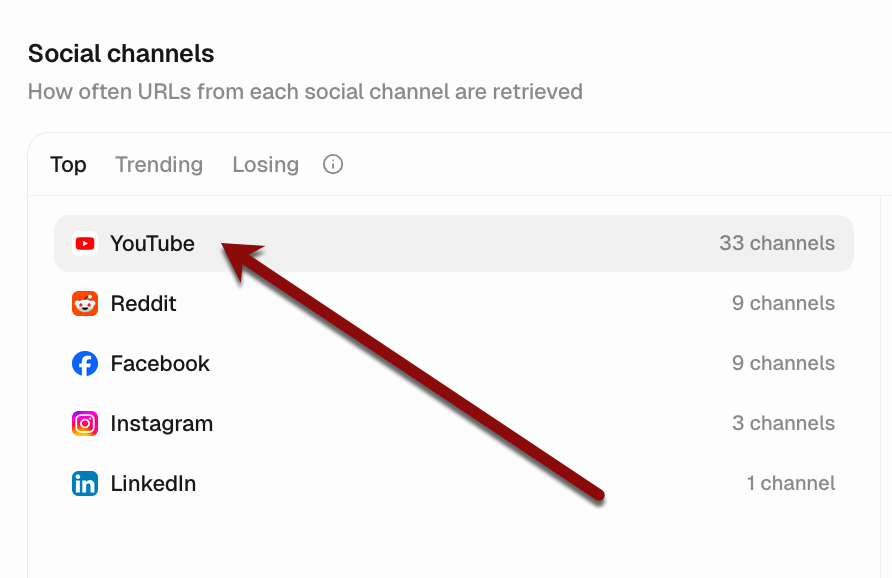
As always, I don’t recommend building YouTube presence just for GEO because if you do anything for GEO/SEO, your strategy is doomed. In itself, YouTube is a great conversion and lead generation channel for most businesses.
So your first task is to create a long-term strategy addressing the target audience’s pain points, building community, and engaging the influencers. All of these, when done consistently, will result in higher brand awareness, more organic search opportunities, and better AI visibility.
But while we prioritize native YouTube visibility, it doesn’t hurt to keep SEO and GEO practices in mind. Let’s discuss this latter part.
But before we do, here’s what else you can do to build a better YouTube marketing strategy:
JOIN us to discuss YouTube SEO/GEO tactics on Linkedin and YouTube
Ask your questions in this week’s Reddit AMA, hosted by David Konitzny, GEO researcher whom I cite a few times in this article. He is by far the BEST source to answer your questions about YouTube GEO.
1. SEO for YouTube
Traditional organic search visibility is the most predictable way to win a citation. I’ve seen many videos that are cited but not ranking well, but I’ve never seen a high-ranking video that is not cited at all. So SEO tactics should be prioritized.
YouTube SEO is no different from any SEO:
Each YouTube video should have a detailed title (which includes a target keyword)
The video description should be detailed, highlighting takeaways, questions discussed in the video, speakers, etc. Including timestamps can also help organic visibility of videos.
Backlinks pointing to the YouTube video page will help it rank in Google. You can link to your videos from your own site (as a text link, not just the video embedded code). Highlighting more videos from your YouTube channel home page will also help its visibility.
Verify your YouTube channel through Search Console to track your channel’s organic search performance and queries.
2. ChatGPT-Specific YouTube “Ranking Factors”
ChatGPT has been found to have a specific “YouTube scoring algorithm” that helps a video get cited.
The algorithm prioritizes videos with more views, but it also takes the host channel’s subscriber count and the verification status. So getting your YouTube channel verified will help more of its videos get cited.
If your channel has 1,000+ followers and 10 million+ views, your videos will have the highest chances of being picked to be cited.
3. Optimize Video Descriptions for AI (not Just SEO)
ChatGPT has been found to prioritize YouTube titles and descriptions, instead of the full transcript.
Another study has found a correlation between updating YouTube video descriptions and AI Mode citability rates of the updated videos.
YouTube videos with updated descriptions saw a 359% increase in daily AI retrievals, according to an experiment by AI search analytics platform Peec AI.
This confirms the importance of video descriptions for AI optimization, even though LLMs have access to the full transcripts. Well-structured, detailed video descriptions are easier to retrieve, so it makes total sense.
YouTube allows descriptions of up to 5,000 characters, but very few videos include detailed descriptions.
In your video descriptions:
Include question-and-answer content from the video
List the featured experts’ names and professional titles
Highlight personal experience with the subject of the video (if any). Personal experience and subjective judgment have been found to generate higher AI visibility.
Include important statistics or any other numbers (like pricing information) mentioned in the video.
Reach out if you have specific questions. It is free!