

As AI conversations are more and more integrated into traditional search + more and more people may turn to LLMs for product recommendations, one of the most important and challenging questions to answer is, “How do we measure visibility in those conversations?”
Many SEO experts are still trying to apply old, convenient metrics to AI visibility by measuring:
Traffic from LLM platforms
While it is still a useful metric to monitor, focusing on it is highly limiting because AI answers are not designed to send clicks. They give conclusive and satisfying answers that often remove the need to click anything.
>>> JOIN us to discuss AI visibility LIVE on LinkedIn
In many cases, the solutions or best options listed in AI answers are not even linked (so there’s no referral traffic possible). Or sometimes they are linked to Google search results for further research:
Traffic is no longer representative of the level of visibility. Your product can be listed as a top option (and trigger a lot of conversions) without ever generating any direct clicks from AI answers.
Rankings in AI answers
AI answers tend to list the best options as lists. Logically, the higher your product comes up in a list, the higher the probability that a consumer will choose it. So many business owners want to know and track these rankings, aiming to be listed more and higher.
While some AI visibility tools promise to track your AI rankings, it is, unfortunately, not possible. LMM answers are highly inconsistent. A study by Sparktoro (shared by Rand Fishkin) shows that LLMs are very likely to list various brands when using the same prompt again and again.
What should be tracked instead?
Here are other metrics we need to start focusing on more when tracking and measuring AI visibility:
1. “What LLMs know about me vs my competitors.”
When answering prompts, LLMs refer to what they already know about the world. Even if they search, they will likely turn to their pre-training data to decide what to search for.
The important question should be, “How much LLMs know about your business vs how much they know about your competitors”. An even more important question is, “Where LLMs get it wrong.” This is about identifying outdated, false, or missing information that needs to be addressed (on- and off-site)
You can prompt various platforms to find these gaps of knowledge in LLM training data.
AI visibility analytics platforms (like Profound or Peec AI) can help you run and monitor these prompts on a regular basis.
2. Most impactful citations
Gen AI platforms perform live searches more often these days. They may search Google, Bing, or Brave Search (so organic search visibility is still very important for AI visibility), or they may refer to sources they know (like Reddit, their current partners, etc.).
Citations that influence AI answers are likely to be very inconsistent (just like product rankings inside answers) because AI platforms fan-out to always different search queries. So, chasing every citation you come across is not doable.
However, there are “most influential” URLs you tend to come across from prompt to prompt. This is what you need to focus on to:
Try and get included
Fix any misinformation there (if you are already included). In most cases, incorrect training data positioning comes from misconceptions in cited URLs.
AI visibility platforms can collect these most cited sources for you and even report if your brand is included:
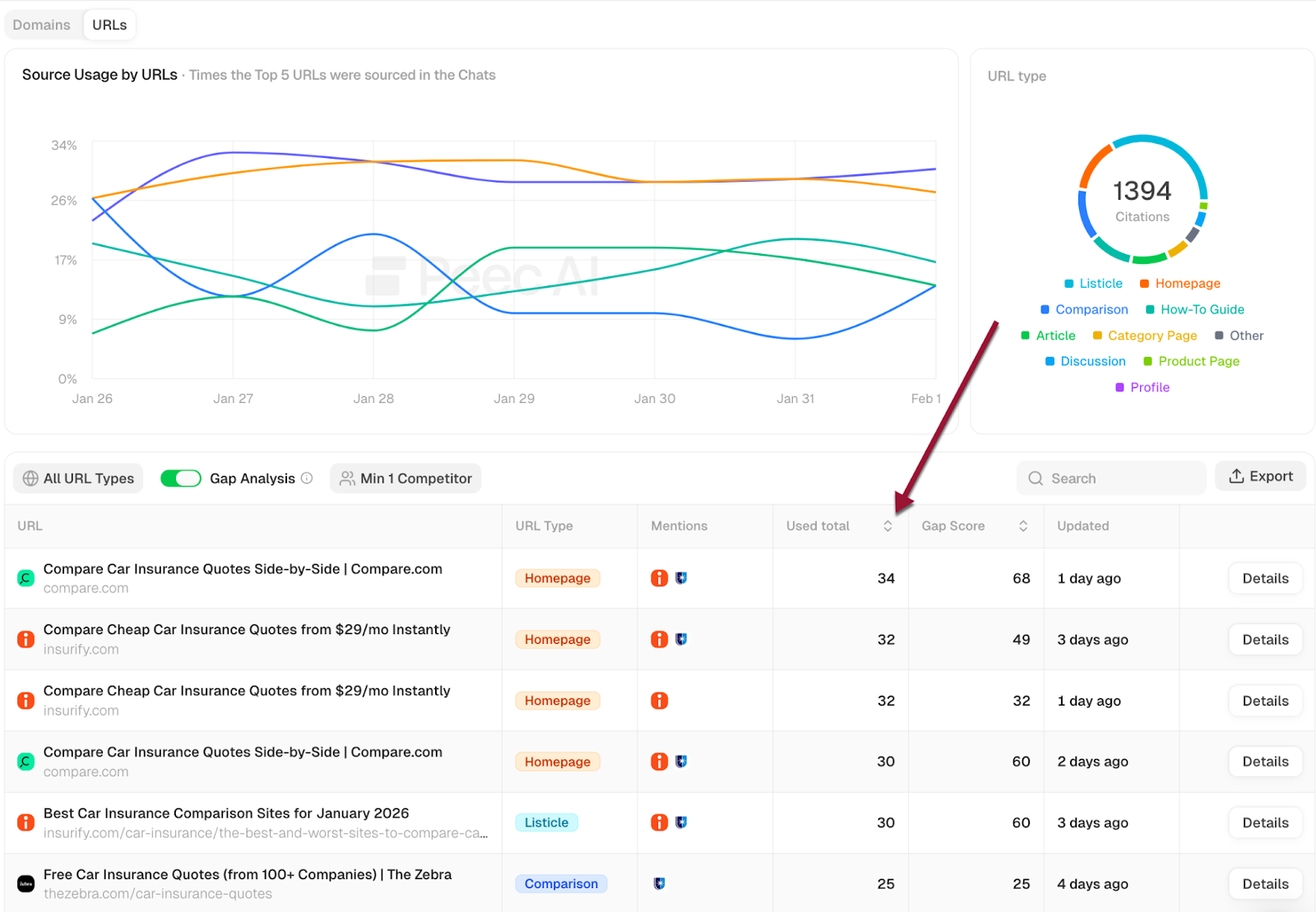
[Peec AI reports how many times each URL was cited across all your tracked prompts]
3. Branded search variety, volume, and clicks
There’s an interesting cycle at play here:
Frequent brand mentions get you included in more gen AI answers. We see it all the time by running digital PR campaigns for our clients. Here’s what we do. Fresh brand mentions “remind” LLMs of your businesses and build trust. So you want to see your brand mentions consistently increase.
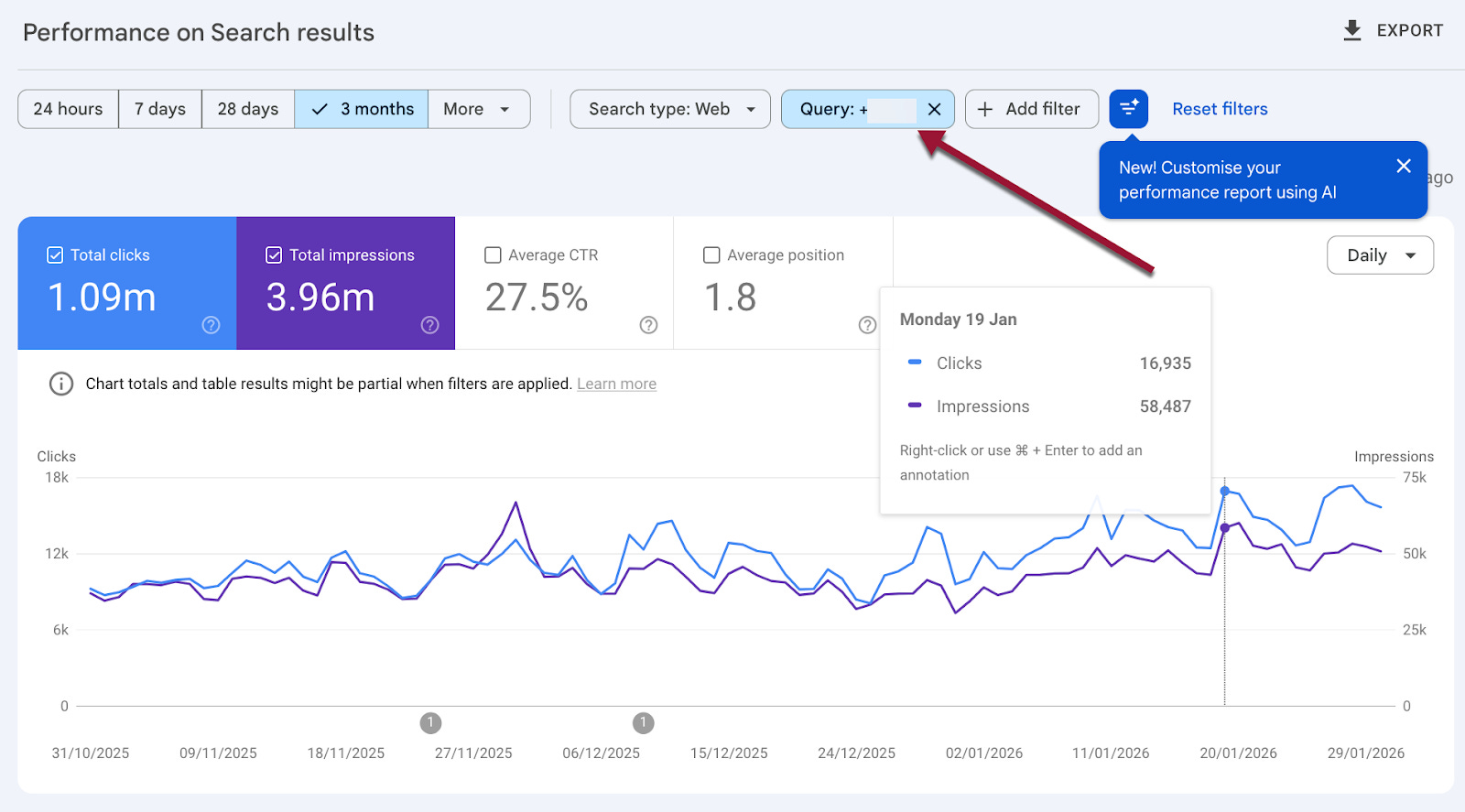
If your brand is included in more LLM answers, more people will search for it (because it is often unlinked). So if you are doing something right, you will see more impressions for your branded searches. So your branded search is a success metric to track.
You can use Search Analytics to do that. Just create a new filter in the “Performance” report to see data for your branded queries.
[Clicks and impressions for branded search, reported by Search Console. The growth of both likely signals of higher AI visibility]
If you need help auditing your business AI visibility, let me know!
The branded search cycle is the piece most small operators miss entirely. I work with independent hotels and destination marketers who are still measuring success by direct traffic from AI platforms. Meanwhile their property name is showing up unlinked in ChatGPT answers and they have no idea it's happening. The real signal is whether more people Google you after the AI conversation, not whether the AI sent a click. That reframe alone would change how most of my audience thinks about visibility.
The branded search cycle point is spot on. We ran audits across 150 B2B SaaS brands recently and found that 67% are completely invisible to at least one major LLM. The scary part: most of them had no idea because they were still measuring success with traditional SEO metrics.
The metrics gap is real. You can't just transplant keyword rankings and organic traffic into the AI visibility world. Citation rate, share of voice across models, sentiment accuracy -- these are fundamentally different signals that require different tooling.
Curious what you think about model-specific strategies. We're seeing brands that rank well in ChatGPT but get completely ignored by Claude or Gemini. Each model has different training data and retrieval preferences.