

Building organic visibility has become more challenging over the past few years for a small or medium-sized website.
There have been a few different trends that have made it worse and worse:
SEO budgets have grown to a level (especially link-building budgets) that only larger businesses could afford
Smaller websites lost those few clicks they had to AI Overviews
Consumers are expected to move to ChatGPT or other AI-driven platforms to make final buying decisions, and LLMs are reported to favor big, well-known brands.
As small business organic visibility is getting more and more challenging, many ecommerce owners may doubt the feasibility of starting or maintaining a separate website. Maintaining consistent marketplace visibility may seem the only effective tactic.
Those concerns are valid, but here’s why I believe having a website is still very important (and will remain important in the future), from the SEO perspective.
Cross-channel visibility is definitely more important now than 2-3 years ago, but can or should businesses survive and thrive without an official website?
No!
>>> JOIN US to discuss this topic LIVE on Linkedin or Youtube (free) and bring your questions!
1. Control your branded search better
Lots of customers will search for a business name before buying from it, especially if they saw a product ad on social media or found its products on Amazon or elsewhere.
In most cases, Google will favor an official site for branded search, allowing the business to better control brand-driven SERPs.
Look at the branded AI Overview example here, which prioritizes giving answers from the official website:
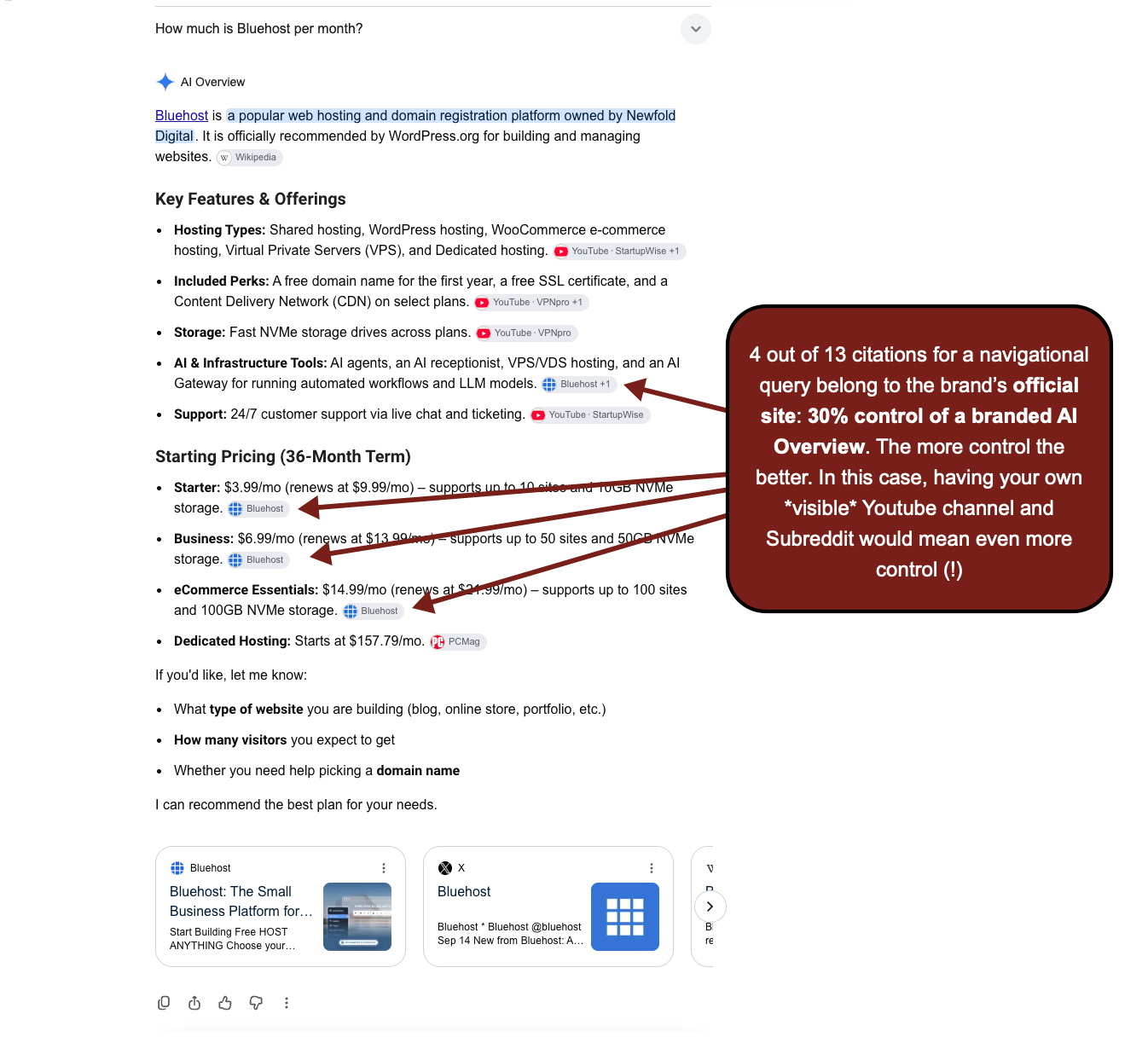
[4 out of 13 citations for a navigational query belong to the brand’s official site: 30% control of a branded AI Overview. The more control, the better. In this case, having your own *visible* Youtube channel and subreddit would mean even more control (!)]
Side note: % of the brand sentiment ownership should be one of your business KPIs, going forward.
Customer reviews may be lower on third-party marketplaces or third-party review platforms, like Trustpilot, because the business cannot control customer relationship management there. On their website, businesses can nurture their relationships with customers more effectively, so the top results for the branded search will likely be more favorable.
Branded queries are the highest-intent, bottom-of-the-funnel queries out there. Customers tend to search for brand and product names when they are already ready to buy. Branded search is the most important asset to monitor and manage in any marketing strategy.
Your website allows you to:
Curate more positive reviews
Showcase other trust signals and build a positive first impression (family-owned, years in business, hand-picked, etc.)
2. Control the narrative better
When asked about a business, or when considering if a product is worth including in an AI answer, LLMs often consult the official website first.
That’s why having a clear, detailed About page is so important these days: You can become THE source of information about your own business to LLMs.
3. Build long-tail organic visibility
There’s still a huge opportunity for small businesses to build long-tail search visibility, i.e., when searchers are looking for something very specific and/or local. These are low-competition, high-intent queries: Very detailed search queries often mean that searchers know exactly what they need, so they will likely buy if your product matches this intent.
Long-tail queries are not easy to plan for (because third-party tools like Semrush and Ahrefs may not know about them, but you can increase this traffic naturally by:
Providing more details about each product, especially in the title
Creating an effective cross-site interlinking strategy
You can also find longer queries your site is currently appearing for in Search Console using its AI assistant.
4. Own your data
Finally, both Search Console and Google Analytics (or any other on-site analytics solution) provide lots of insights into popular products with higher conversions, future low-hanging-fruit opportunities, and seasonal buying trends. You can also attract returning customers through retargeting ads.
There are many other reasons that go beyond purely SEO objectives. Having your own home base for your business, which you actually own, means that you can build other owned assets around it. For example, you can build a newsletter list to build customer loyalty. Or you can invite your customers to your site to create a community and help one another.
If you need an effective SEO and GEO/AEO strategy for your official website, reach out!
Exactly this. Your spot on that you need a website.
1. If you're building your business on rented land expect to be treated like a renter.
2. Entity SEO 101. You have to have an anchor for your personal and brand entity so that it's clearly defined for Google and AI search.
Platforms and tools change. But in 30 years of doing digital marketing I can tell you that the job really hasn't changed that much.
We have one job. To make your brand visible to your ideal customers regardless of what platform, tool, or device they use.
I can't understand why so many SEO agencies are dependent on so few tactics that every time there's a new update or a new tool or a new platform, or one goes away, they have to reinvent the strategy.