

I recently noticed that ChatGPT started fanning out to ridiculously long search queries. This was later confirmed by others.
Whether this behaviour continues or not, it is definitely a trend: LLMs search for very specific queries, which tend to be very long.
But there’s more to that: Long-tail keywords still present organic search opportunities. They are not as likely to trigger AI Overviews, and they are more likely to result in a click because the intent is higher (people searching for something specific tend to know *what exactly they need*, so they are more likely to click and convert if they find what they need).
>>> Join us to learn more and ask questions LIVE on LinkedIn
Having a diverse long-tail ranking portfolio is also more sustainable. You can lose a few clicks (to ranking decline or a new AI Overview showing), but it will not result in a huge traffic drop.
How to find your long-tail opportunities?
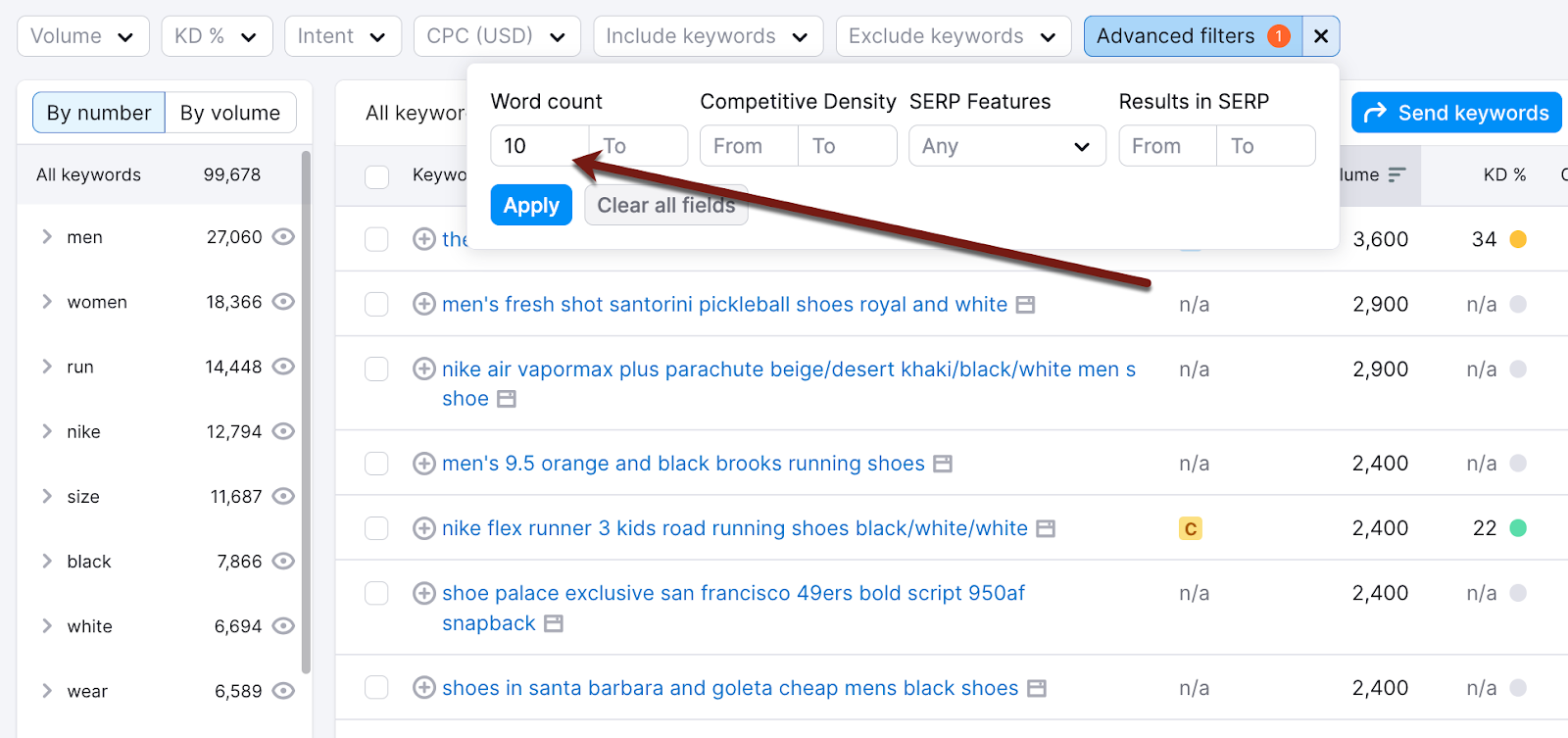
Keyword research tools can give you a solid insight into longer queries people tend to use. For example, Semrus allows you to filter keyword lists by the minimum number of words in queries.
[In the screenshot, the minimum number of words in a query is set to 10]
Question research tools are also helpful.
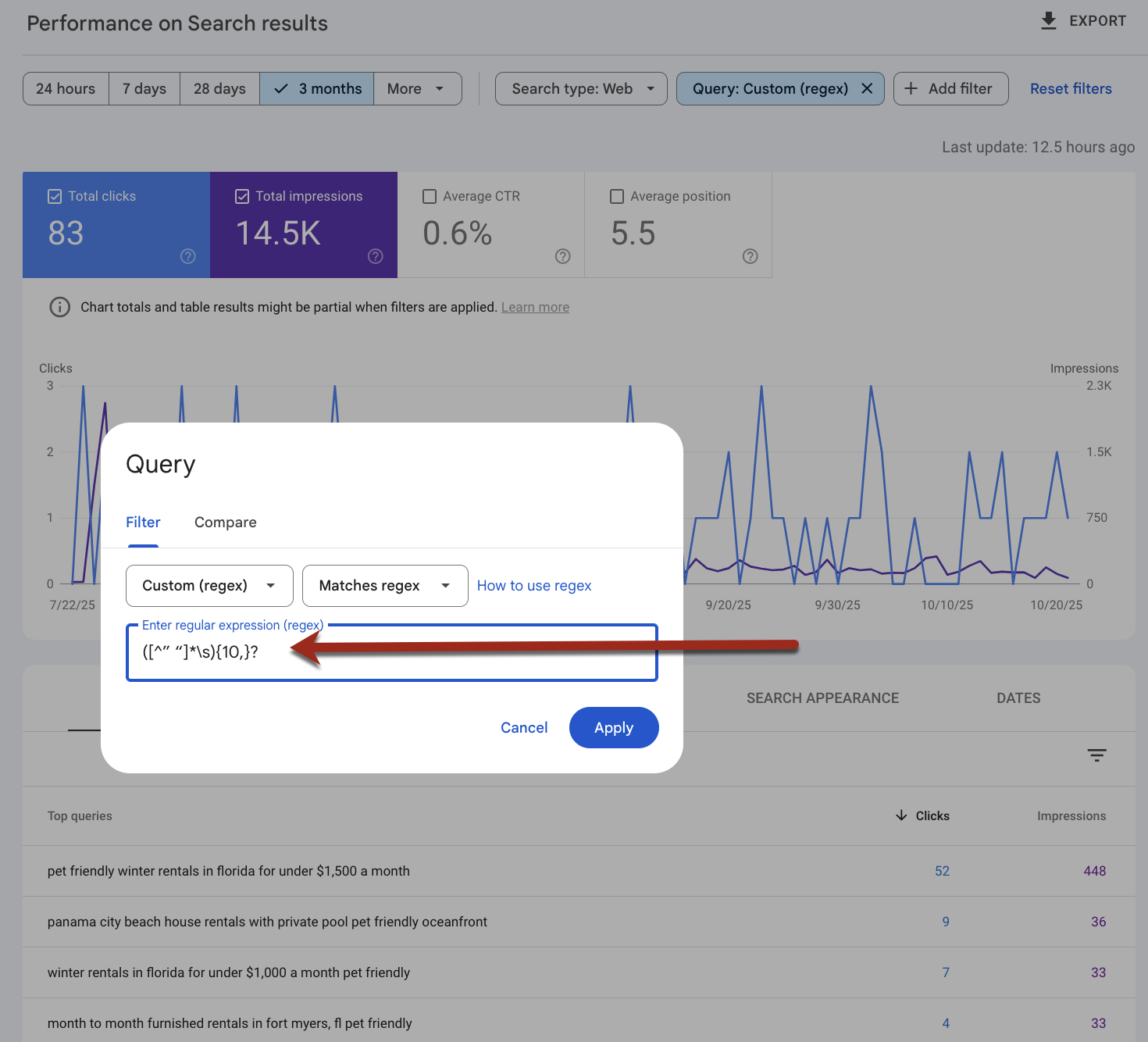
Search Console can list your current long-tail opportunities. Just use regex in Search Console to find longer queries that drive search visibility for your site. Go to the “Performance” section, click “Add filter”, choose “Query” and choose the “Custom (regex)” option
There, type:
([^” “]*\s){10,}?
This regex filters queries to those containing more than 10 words. You can change “10” to “5” or “25” to find queries longer than 5 or 25 words in them, respectively.
How to optimize for long-tail keywords?
The first step is to think on a higher level. Instead of trying to add more pages, think about how you can elevate your existing deep pages in search.
Make product page titles more descriptive (add color, target audience (“for”), use cases (e.g. “Gift idea”), etc. We discussed some ideas when talking about Instant Checkout in ChatGPT)
Add subcategories of products or articles to elevate more products in the site architecture.
Consider adding UGC (product Q&As, reviews, public customer support forums, etc.). Make sure these are indexable, crawlable, and well-moderated.
Interlink deeper pages better (“People Also Buy”, “Related articles”, “Related guides” on product pages, “Related products” on article pages, etc.
Remove everything that’s not essential (outdated content, private pages, etc.). Most websites I am seeing have a ton of content they allow crawled and indexed that’s private, dev-only, outdated, etc.
When that’s done:
Include your customer and sales teams in content planning: You need to address real people’s questions and problems on your site.
Create tools and PR assets that will attract links and fresh signals on a continuous basis: You need more visibility for it to flow throughout the whole site.
Overall, “doing more” is one of the best ways to generate more (long-tail) traffic. For example:
Participating in Reddit discussions = more ideas for specific niche problem-solving content
Being on social = better understanding of social media trends (and elevating matching products)
Talking to your existing customers or engaging them with your site = more UGC content (great way to boost long-tail traffic).
Trained by typing (or saying) prompts, people will soon search more conversationally too. Long-tail is the future for both organic search and AI visibility!