

Are you seeing your SEO rankings off?
Does Search Console performance data look weird this week?
You are not alone. There’s nothing wrong with your site.
Here’s what happened!
>>>> Join us to discuss this topic LIVE on LinkedIn
Google has dropped support for the &num=100 URL parameter, which allowed searchers to load 100 results per page.
The overall assumption is that Google had to do that in response to increased search usage from AI Agents that perform multiple searches (including fan-out queries) to create AI Answers in response to prompts.
This change has resulted in most SEO rank tracking tools being broken because those tools used the search URL parameter for scraping Google’s results for query positions.
Unexpectedly, this has also resulted in changes in the Performance data inside Search Console: The average position is going up, and impressions is going down:
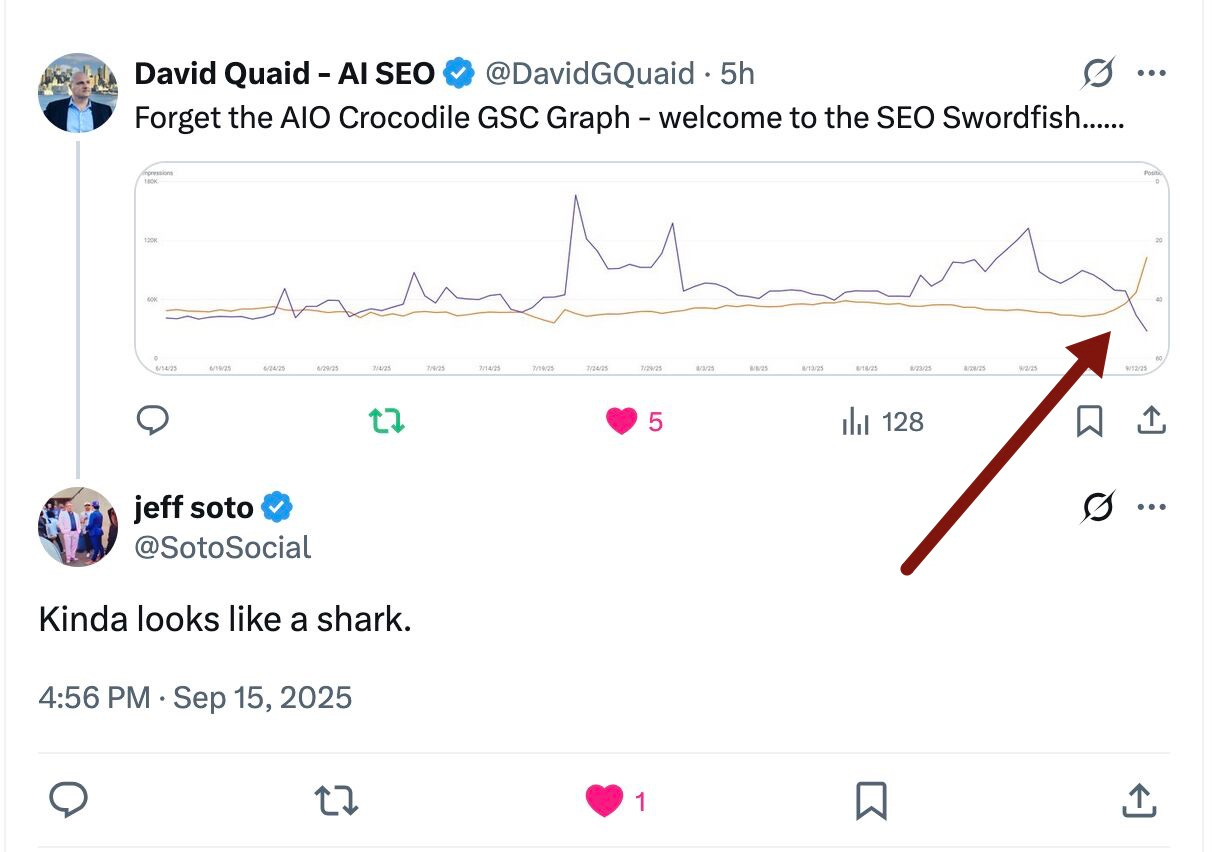
What happened to Google’s Search Console Performance section?
There is no official explanation provided by Google yet, but most SEO professionals assume that the changes to the Performance data were caused by the rank tracking tools not being able to access those positions.
The lost “impressions” were “bot impressions”, i.e., URLs showing to SEO scrapers.
The “Average Position” is tightly connected to “Impressions”, because Search Console records the top-most position at which a URL was shown to a searcher. Because the SEO scrapers can no longer “see” those URLs beyond page 1 of search results, these impressions are no longer recorded.
So what you see in your organic search performance data now is impressions from humans and fewer bot impressions. So the current data reflects your actual customers viewing your results.
The data is still skewed for higher ranking URLs because top 10 search results are accessible to scrapers.
It is also unclear which of those impressions are humans searching and which of are AI agents searching.
One huge takeaway here (and something we never paid much attention to previously) is that the Search Console data is very much impacted by the bots searching (and it doesn’t always represent the actual human search journeys).
What is the future of organic search rank tracking?
That is still unclear.
Search scrapers take lots of resources running searches, so they will likely have to up their prices for rankings beyond page one (because from now on, they will need to “click” to the next page 9 times to get to page 10).
Tim Soulo from Ahrefs already hinted that the tool would probably be limited to the first 2 page rankings to remain sustainable.
So it looks like the future of SEO position monitoring is:
It will get much more expensive to track rankings (or access competitors’ ranking data)
It will get much more limited (we will be tracking top 20 positions).
What to do?
Start tracking your search performance in Google Search Console more (if you are not already)
Consider using platforms that provide convenient Search Console integrations.
Other than that, we will have to wait and see for rank tracking providers to come up with solutions to these changes.
Rank monitoring may be an outdated SEO metric for sure. But this change goes beyond just monitoring your organic search positions. For example, crucial SEO tasks like content planning and keyword gap analysis will likely be impacted as well.