

Is your brand’s online reputation killing its AI visibility? Or does it make your customers change their minds and never buy from you?
Both of these are very likely for many businesses out there.
AI visibility is defined by three layers:
Brand’s visibility and clarity: Do LLMs “know” about the brand?
SEO: Is it findable when LLMs are searching for answers?
Sentiment: Does your brand survive the “reputation” searches LLMs run before creating the shortlist?
Today we are talking about layer #3.
>>>> JOIN US to discuss this topic LIVE on Linkedin or Youtube (and bring your questions!).
Also, make sure to watch Edward Sturm and me discuss online reputation and AI Overviews.
Imagine investing in brand visibility and SEO for years and never making it into an AI answer because LLMs couldn’t define your digital footprint as trustworthy.
Online reputation is no longer about “making a good impression” when consumers are searching for your brand name. Online reputation defines your visibility.
ORM before AI vs. NOW
I’ve been presenting on branded searches and taking control of your branded SERPs for decades. One of my older slides illustrates the point quite well: More channels -> More control over the top ten results for your branded queries.
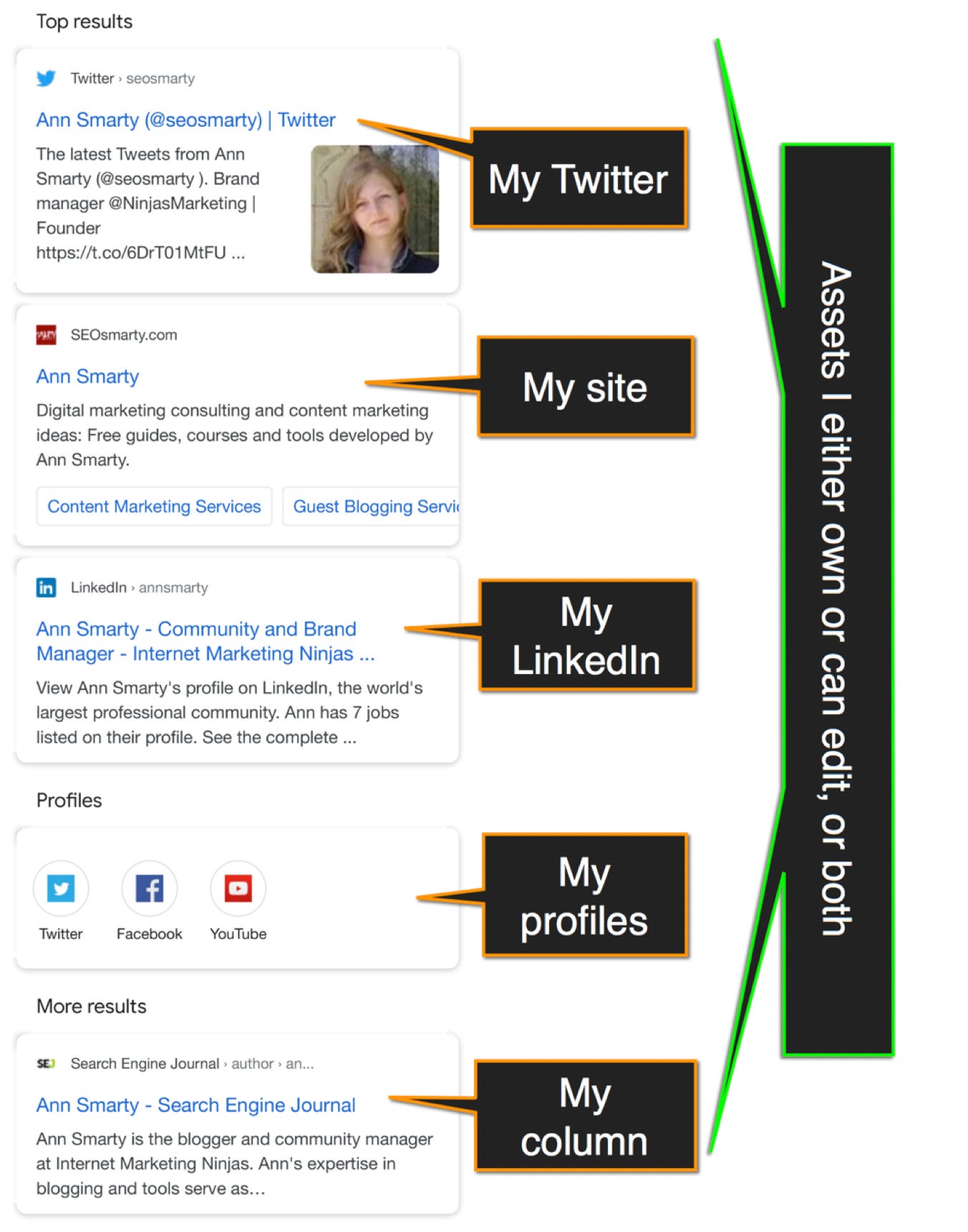
It is no longer THAT easy.
When AI “knows” all your brand’s digital footprint, hiding anything about your brand past page 1 for branded queries is not enough.
AI summarising your whole digital footprint in 5-6 paragraphs creates a new challenge for businesses: How do we make sure it’s up to date, accurate, and not all negative?
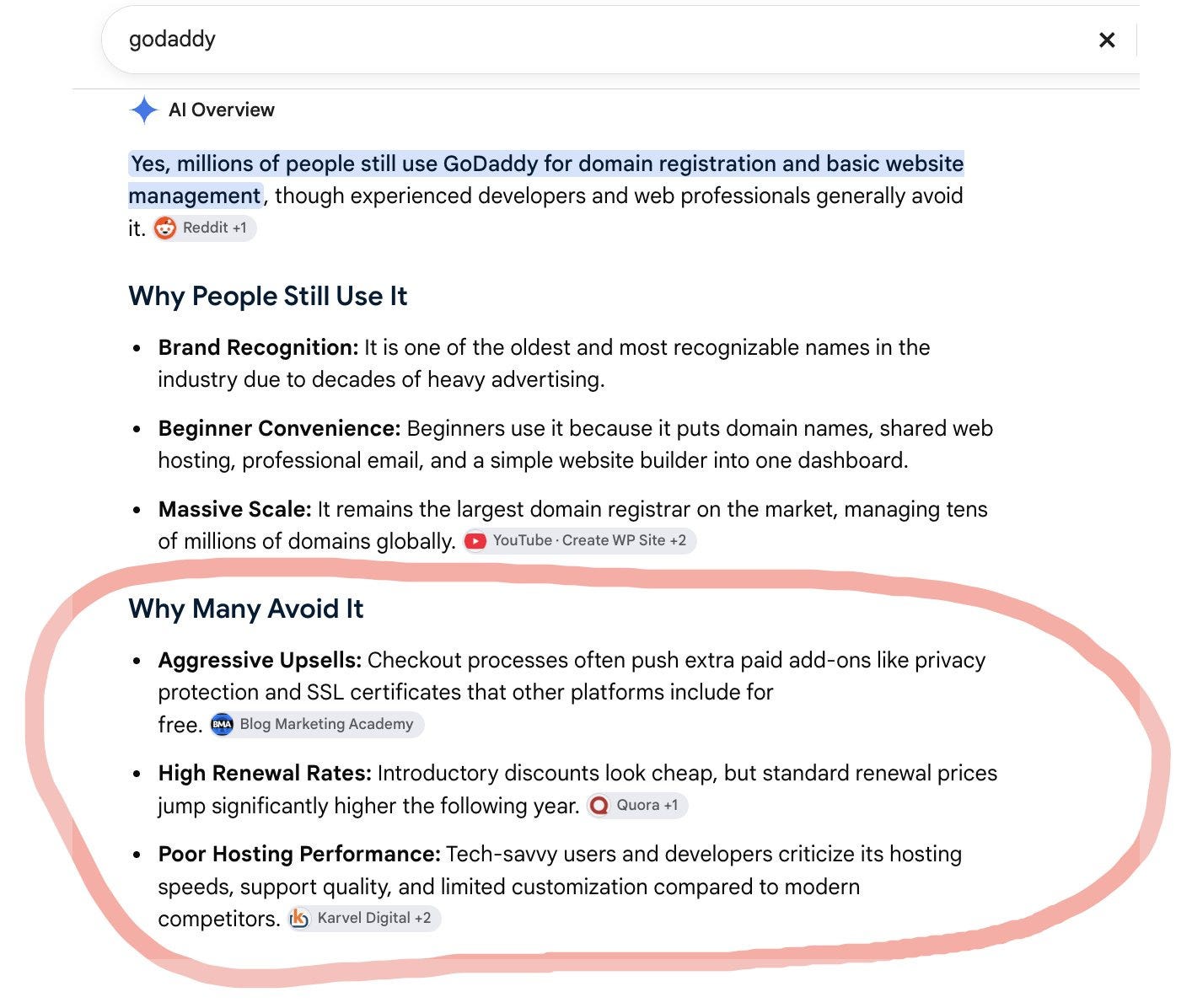
AI Overviews for Branded Searches: Your Wake-Up Call
Google started showing ~90% more AI Overviews for navigational queries in early October. This is not essentially new (ChatGPT has been doing this behind the scenes since day 1). But this is definitely any business’s final reminder: Your ORM strategy should be about making sure those AI summaries of your business’s digital footprint are not scaring your customers away:
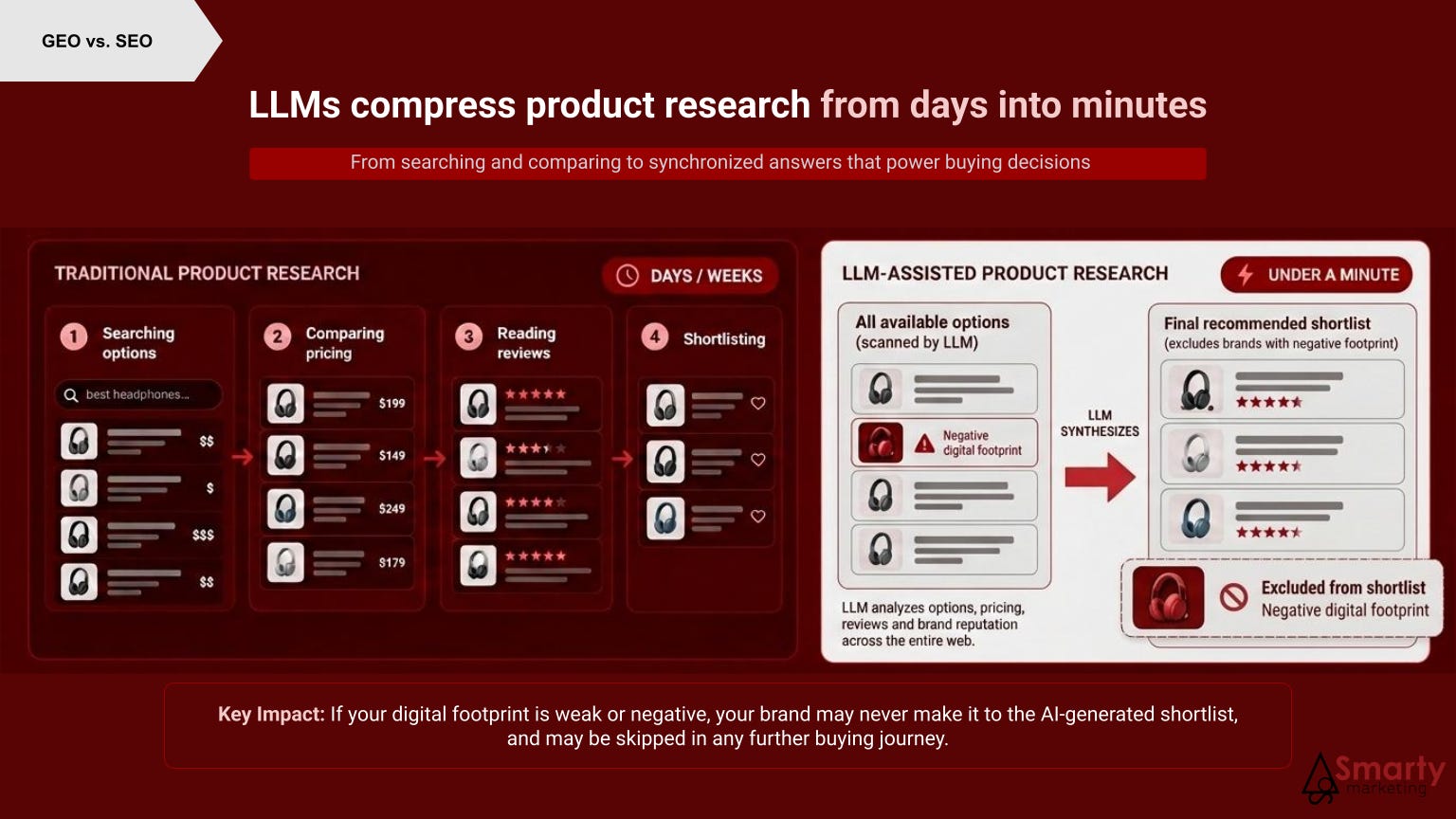
But the problem is bigger than that. AI answers are highly trusted (we saw a good example of that just last week). If product research used to take days and weeks of searching for all the options, comparing pricing, and finally narrowing your list down to a few most suitable options, LLMs do all of that within a minute, and if your digital footprint is negative, your brand won’t make it to the final list and won’t even be considered further down the buying journey.
That’s why we often see branded fan-outs anytime we ask ChatGPT for product recommendations: It checks reviews and reputation of each product or brand before including it in the answer. These are fan-outs for the “Best headphones for running” prompt. See how it researches each product to consider recommending it.
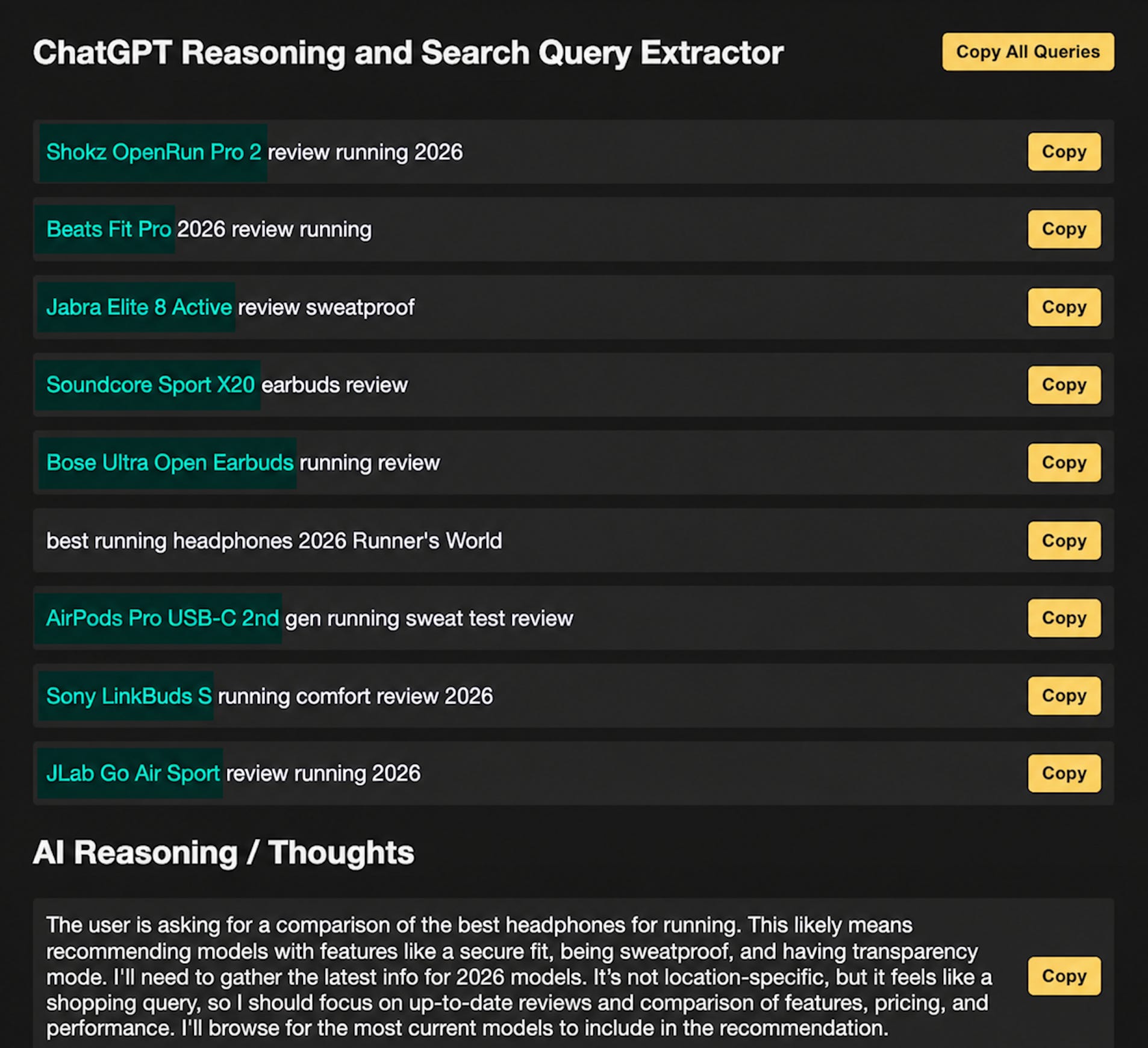
Would your brand or product searches convince ChatGPT to include you in the list of recommended options?
How do I fix my LLM reputation: Consistent, Long-Term Effort
I repeat: Consistent and long-term…

I know, executives don’t like to hear “consistent and long-term,” but that’s the only way to shift the semantic consensus.
It all starts with an LLM consensus audit:
What’s your current brand sentiment, and where is it coming from?
What outdated information comes up in search and AI answers?
Which brand attributes is your brand associated with (and which of those are wrong or outdated)
You can create the audit using tools like Peec AI (the screenshot is below) or by creating an autonomous workflow using Claude Code.
Here’s brand perception analysis done by Peec, for example. There’s a list of current “objections” (i.e., which attributes are associated with your brand that can prevent you from making the shortlist) and which citations are associated with each one.
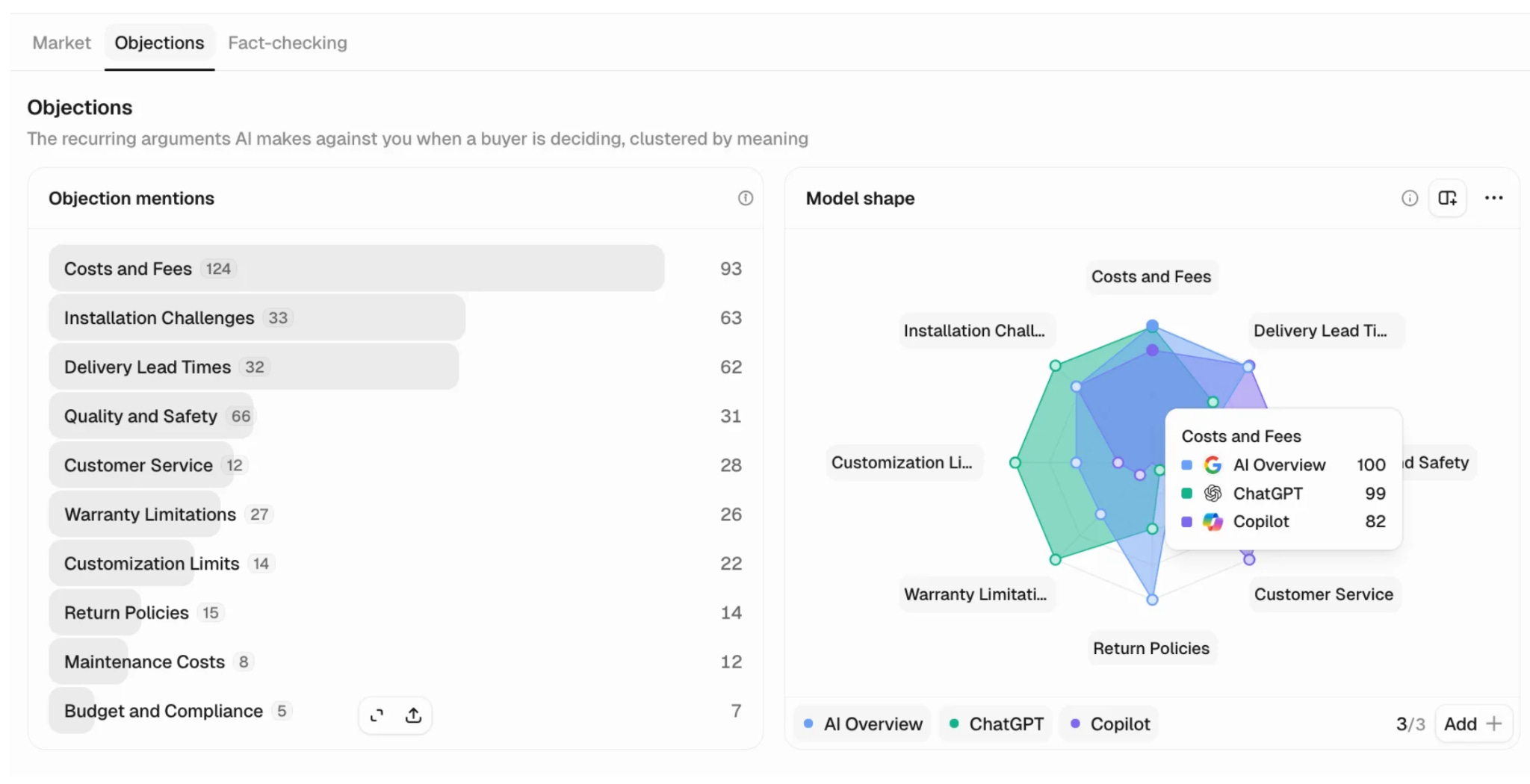
You can create something similar using Claude or other LLM tools.
Then, you focus on creating long-term presence where it matters:
Instead of trying to influence Reddit or Youtube sentiment by commenting on other threads/videos, create a strong branded subreddit or Youtube channel that helps you lead the conversation
Instead of trying to sponsor your way into one or two high-intent listicles, develop long-lasting relationships with the editorial teams of publications that make the most influence. This will help your brand to be mentioned there on a consistent basis (which creates an LLM consensus)
Instead of trying to hide negative reviews, create an effective workflow to curate positive reviews everywhere it matters.
In addition to building links, focus on building authority by regularly publishing high-quality and (more importantly) unique research studies, tests, etc.
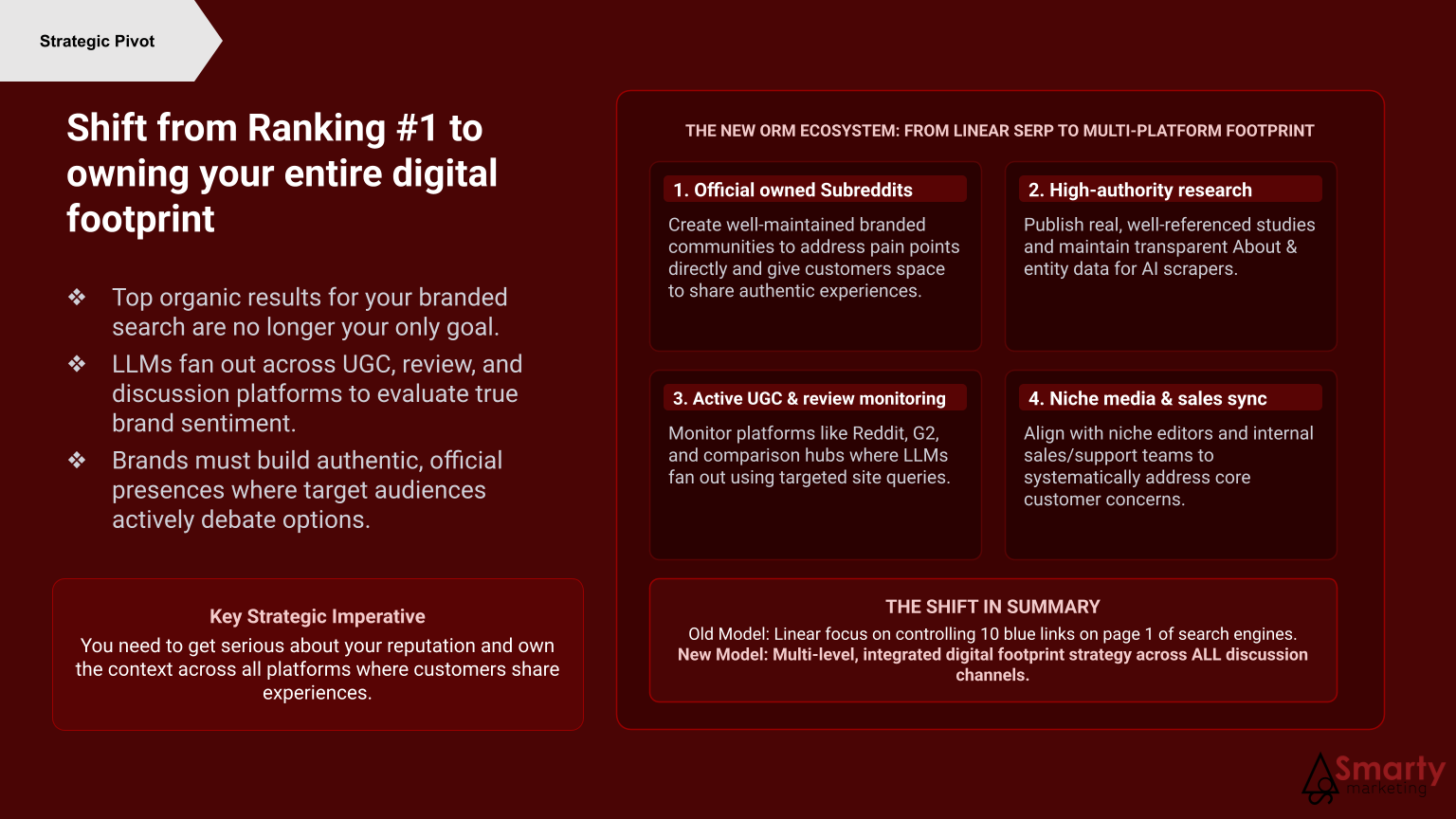
More importantly, make sure your whole company is involved. You need strong, clear, and consistent messaging on all channels (customer support, sales, paid media, on-site content, PR, etc.)
Shortcuts don’t build strong LLM consensus; smart strategic approaches do.
If you need help getting started, LLM reputation has been my specialty. Reach out!