

Both Bing and Google now officially provide AI visibility insights. Not many people realize how different those reports are:
Bing Webmaster Tools show what Bing’s LLMs (Copilot) are searching for and whether your URL was cited to be seen. It is not about search (for all we know, LLMs may not be even searching Bing). These are LLMs searching, not people.
Google’s Search Console reports whether your URL was ever cited inside search features (AI Mode and AI Overviews). In other words, it is a search visibility report (not Google’s LLM visibility report). We really don’t know who is searching here (for AI Overviews, it’s people. For AI Mode, it’s likely Google’s AI agents. Since there is no way to filter between the two, there’s no way to know.) But we know, it’s Google-only visibility.
It is a little funny how we are given so little insight into all the above, but it is important to know.
Now, let’s see if this data can be made useful:
>>>> JOIN us to discuss this topic LIVE and bring your questions!
Bing’s “AI Visibility” section
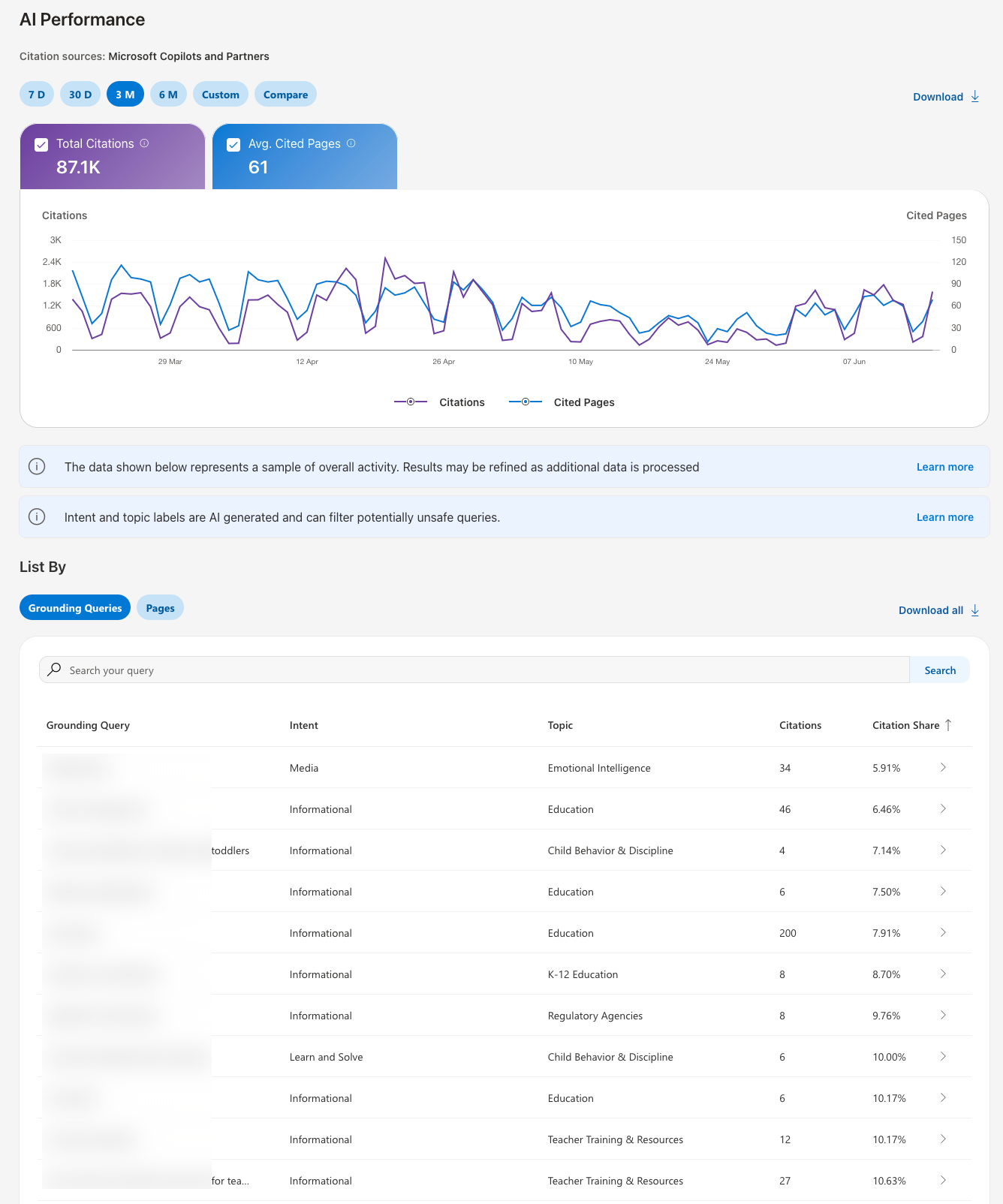
The report consists of two sections: “Grounding Queries” and “Pages:”
“Grounding Queries,” which are “the key phrases the AI used when retrieving content that was cited in its answer.” In other words, the queries are the “fan-out” terms that Bing’s AI agents use to search for and find answers, though we don’t know which search engines or platforms they access.
“Pages”, i.e., the URLs included in the AI answers.
For every Grounding Query, Webmaster Tools now reports on:
Query Intent (Navigational, Informational, “Learn and Solve”, Commercial, Conversational, Comparison). I found those latter two (Conversational and Comparison) quite useful.
Query Category (I wasn’t a fan here but no complaints). Both intent and topic labels are AI-generated, according to Bing.
The average number of unique pages cited per day in AI answers.
“Citation share,” which is “the percentage of citations attributed to your site out of all citations shown for a specific grounding query.” This is an interesting metric to look at.
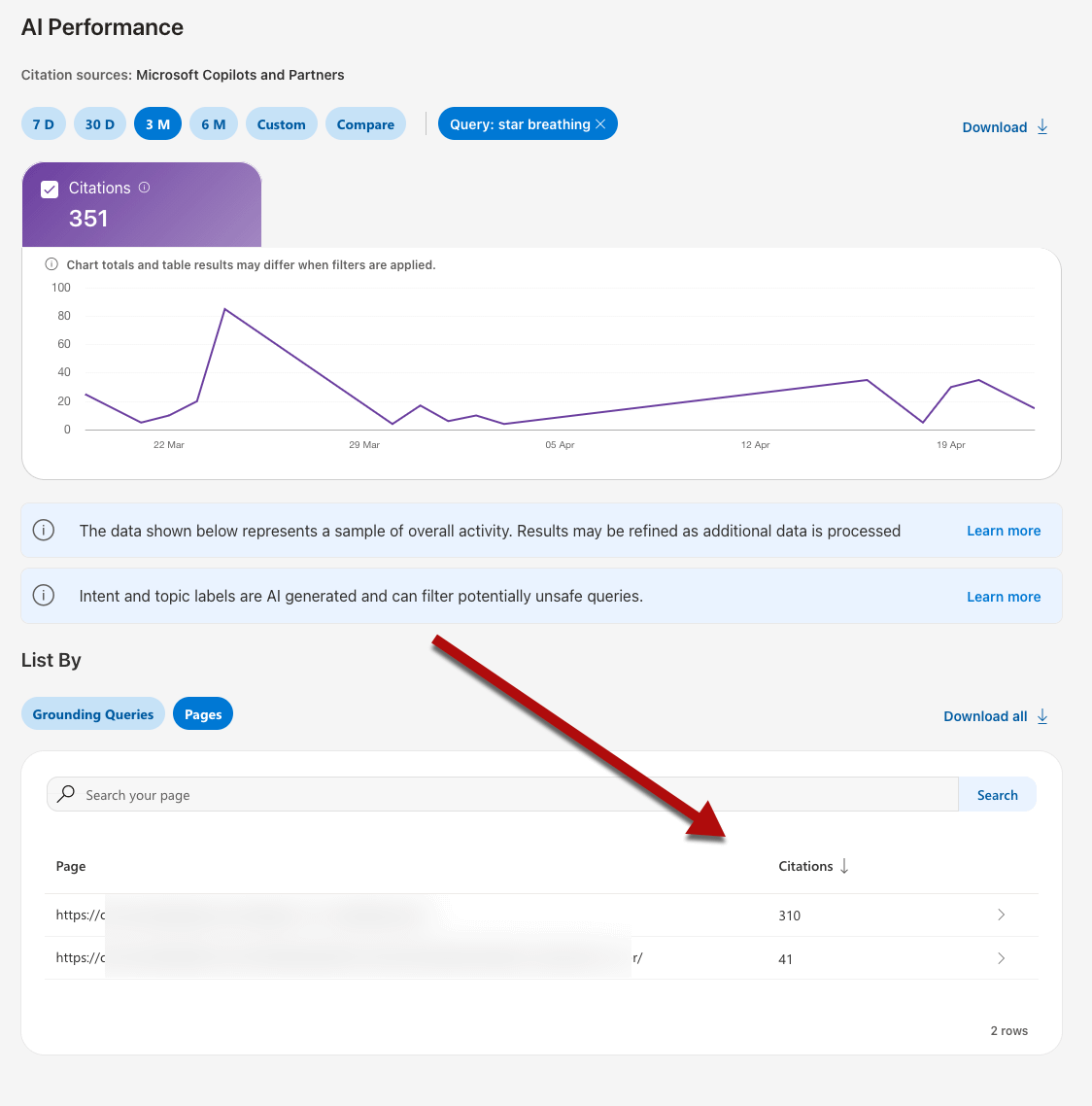
Clicking any grounded query in the report will take you to all your site’s pages that were found and cited for that query. This is pretty awesome.
What can you do with this data?
You can:
Identify all branded queries (those with “Navigational Intent”) and optimize the corresponding pages to better answer brand-driven questions
See all grounded queries any URL had any visibility for, identify queries with fewer citation frequency and update your page to better respond to a problem behind those queries
Identify pages with higher citation share and reverse-engineer why they might be performing so well for the corresponding grounded queries
Group grounded queries by topic to identify related URLs (for internal linking purposes)
Identify URLs that show up for the same queries and find if there’s a potential duplicate intent or a duplicate content issue to fix there
Optimize content for under-performing grounded queries, etc.
Track visibility trends after your optimization efforts to identify more effective tactics.
Google’s “Generative AI Features”
This report shows:
Which URLs get impressions in Google’s AI answers
How many impressions each URL got within a set period of time
Which countries and devices each URL was viewed from
So what is an impression?
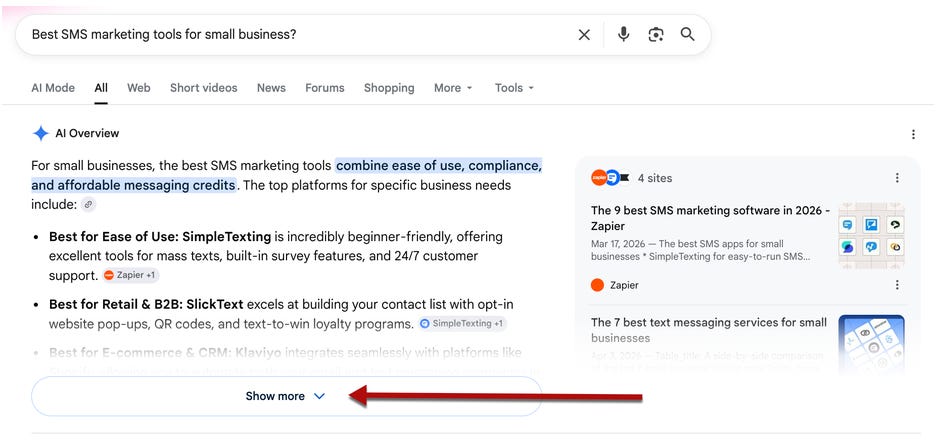
Most of the URLs are hidden behind the “Show more” button in AI answers, so we are not sure if the URLs were actually seen…
The “Show more” opens the full answer:
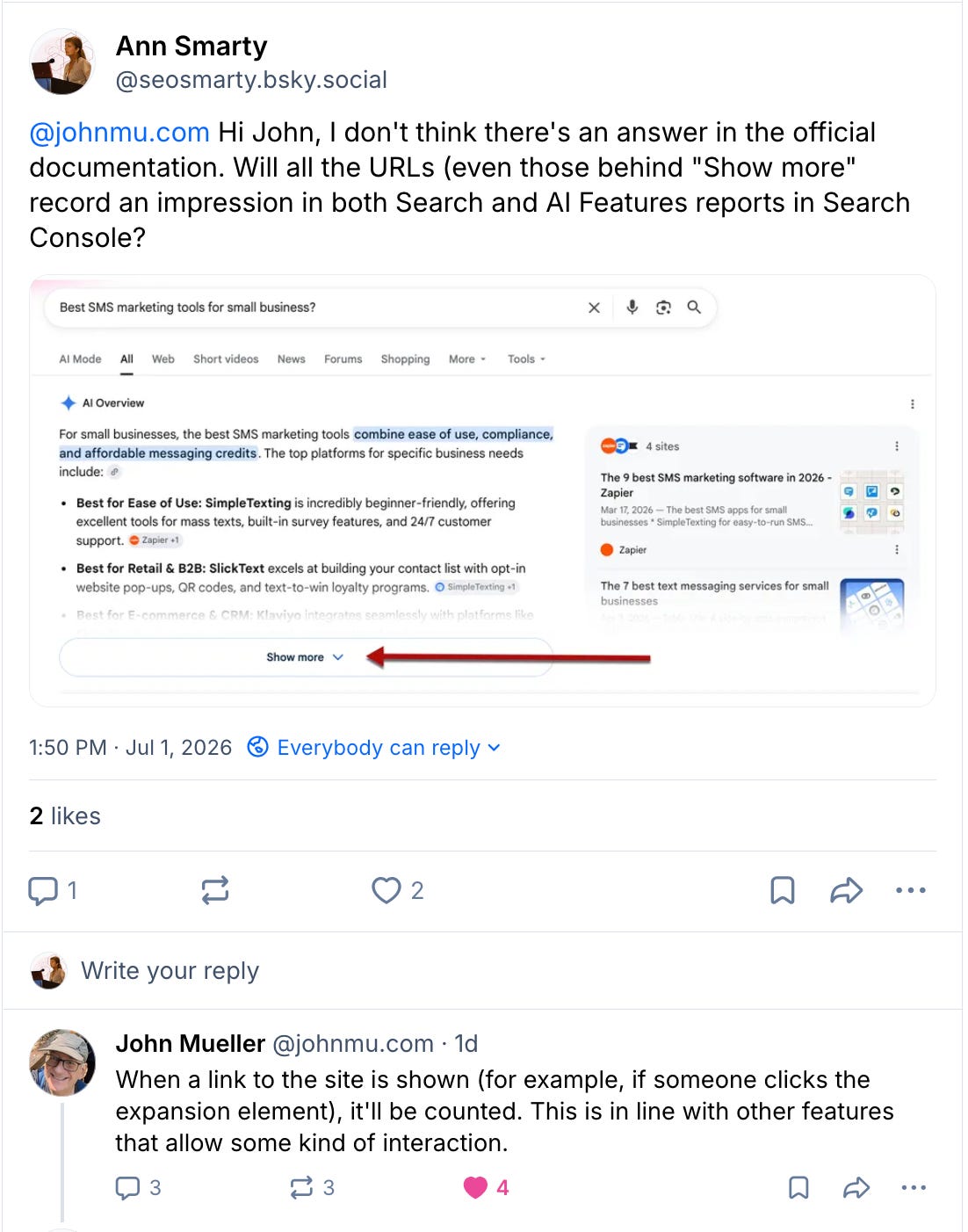
According to Google’s John Mueller, an impression will only be recorded if the URL is in the visible part of the screen. So URLs that are not immediately visible will not record an impression unless someone clicks “Show more”:
As of now, the report is not too actionable as there is no click-through data or feature-specific filters.
To make it more useful, you need to do some digging.
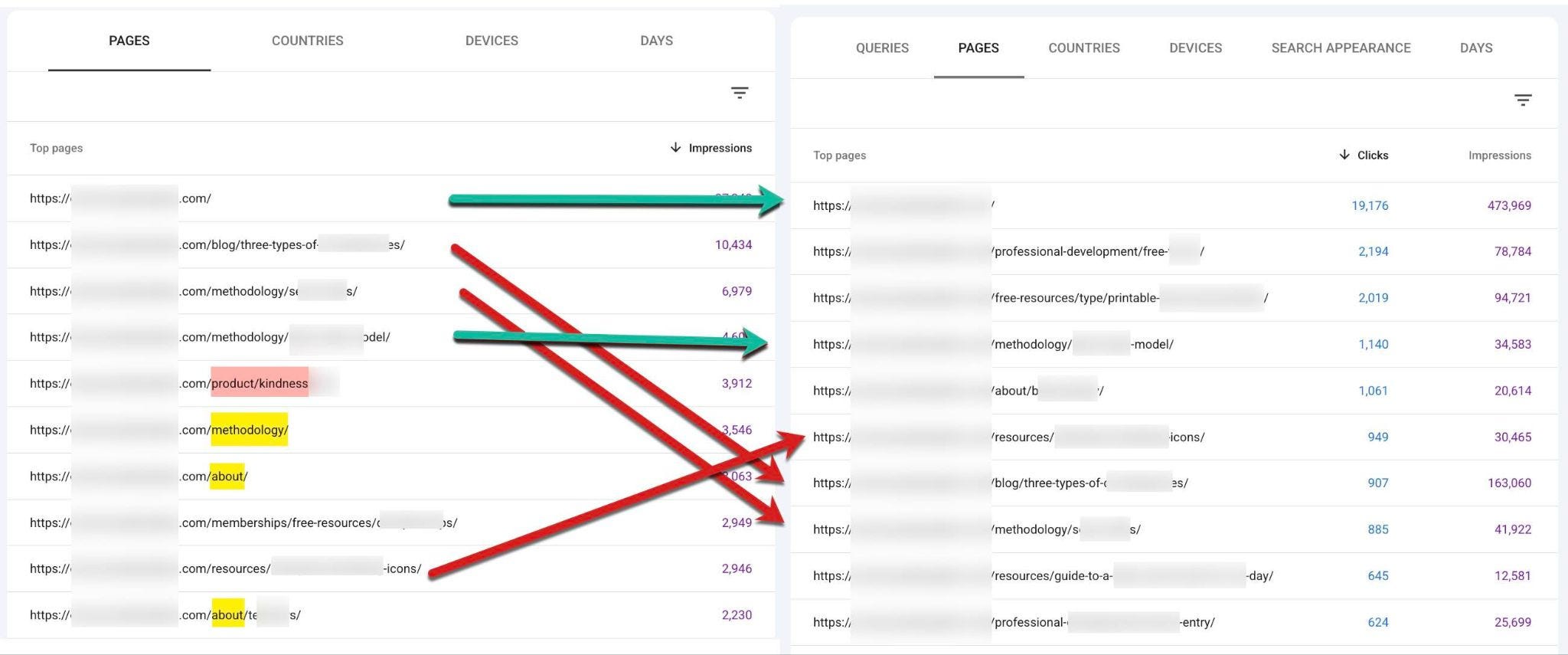
Download the top-traffic URLs from the “Search results” sections
Download the top viewed URLs from the “Generative AI Features” section
Use Excel to combine the two
Now you can see:
URLs that perform well in search but may not be included in AI features (so you can optimize them better for AI answers with a better structure, clearer answers, etc.)
URLs that are featured in gen AI answers but not as well-performing in organic search.
There can be different reasons why there’s some disconnect between the two, to be sure. For example, some queries just don’t trigger AI features (so they won’t be included in the AI feature report).
Also, LLMs seem to reference the branded sections more. For example, this AI report includes methodology, the about page, and specific About pages about employees, etc.:
It is still useful to know and research which queries/prompts these brand-driven pages are coming up.
If you need help using the AI visibility reports, you can schedule a quick free call!
When it comes to fanout queries there are 2 varieties one is the grounding queries the other is the fanout queries that have been all the rage in the SEO community. The difference is fanout queries are checking what's out there and the grounding queries are the queries actually used to synthesize the answer. I have been working with the Google AI Studio Gemini Grounding API for a few months. When you see the grounding queries it's easy to see that the "concepts" in the grounding queries are the same concepts you see in the answers and how sites are cited in the answer. It's also cool to see exactly how many bytes a site contributed to the answer providing a true share of voice and visibility.
The Bing grounding queries report is genuinely underused — what makes it particularly interesting for ecommerce is the 'Comparativa' and 'Conversacional' intent categories you mention, because those are precisely the query types where a missing product attribute in a feed (material, use case, compatibility) creates a hard floor on AI citation share. We've seen retailers rank consistently in traditional Search Console but have near-zero citation share in Bing's AI report for category-level queries — and in most cases the problem traces back to product descriptions written for conversion, not for answer synthesis. The gap between pages that perform in organic search and pages that get cited in AI responses is the most important diagnostic gap nobody's measuring yet.