

As SEO seems to be changing so fast that it is impossible to keep up these days, one of the most popular questions remains the same, “How do I keep my brand relevant and visible?”
The answer that usually comes up: Digital PR (if you do it right).
At Smarty.Marketing, we have been marketing our clients through digital PR for more than 14 years. And the strategy is as relevant as it was 14 years ago:
Create something linkworthy (trends, seasonality, audience research… Oftentimes all of that combined!)
Position it well on Reddit
Reach out to journalists who are likely to be interested
The solid combination of the three tactics above is what you need.
>>> JOIN us to discuss how to do it right on LinkedIn!
How most companies are doing digital PR wrong:
Publicising stories that are too brand-centric (it is not about you! It is about problems your audience is trying to solve!)
Using automated PR distribution
What this approach fails to achieve:
Organic reach to the people genuinely interested in a topic
Organic spread from journalists who also need a bigger reach (looking to reach more readers)
Relevant, problem-solution context for your brand, elevating your brand’s visibility in search and LLMs.
Organic product positioning your brand as a trusted, authoritative source (which is key to any other algorithm, be it organic search or generative AI).
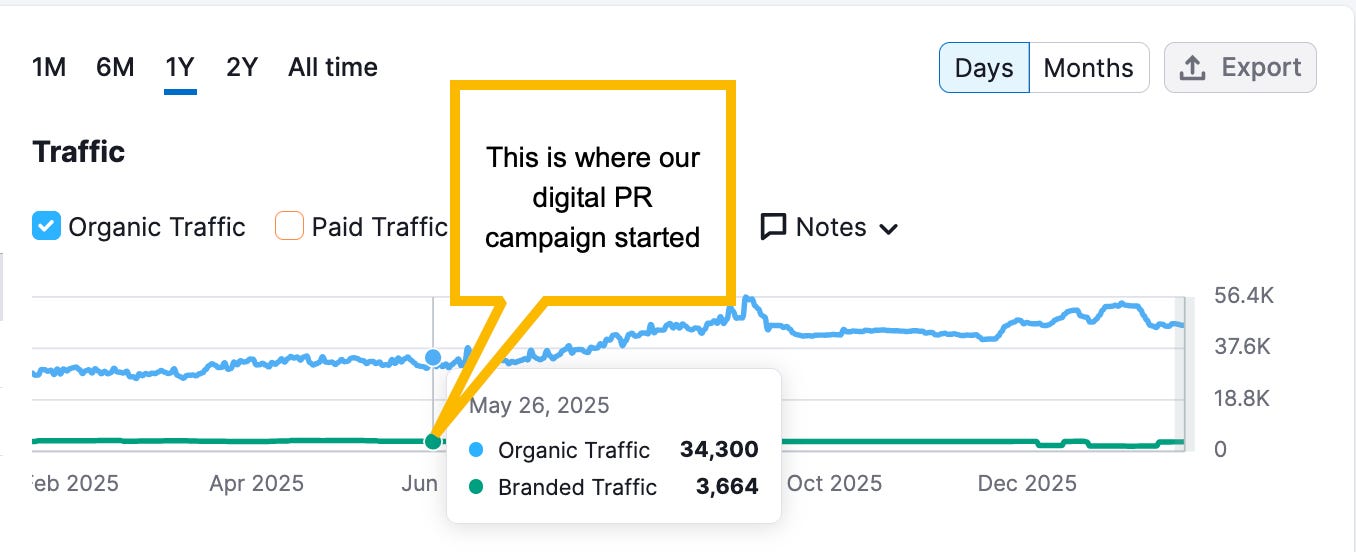
I have already shared a case study on how a solid digital PR strategy can elevate your brand long-term, without you chasing every outbound opportunity: You are in control. That case study achieved success over time, driving links through being discoverable through many organic sources (Google, Google Images, Reddit, etc.). And at the time when everyone was losing organic search traffic, our client was slowly but surely gaining visibility. Here’s its domain organic traffic report:
I was also interviewed on this case study here:
Today’s case study is different: It shows how you can achieve success due to seasonality. But it doesn’t mean it can double or triple its success next season (if updated and marketed again).
This is our test campaign we meant to turn into a case study, and it did so well that there are more lessons to learn than we expected.
Summary:
Since then, the backlinks have nearly DOUBLED to 240 with 113 TV/radio broadcasts (including CNN)!
The brand name (which had 0 mentioned before) started showing up in Google Trends
So what are the lessons to learn?
Seasonality can work wonders even for topics that were very well covered before
Timing doesn’t mean temporal success (this study kept attracting new coverage for two months after its initial success)
If a topic resonates (in this case, there’s a huge emotional aspect of people feeling nostalgic about their favorite movies), it doesn’t even take too much to promote it BUT….
“Build it, and they will come” won’t work even for the best ideas and big brands: You need to seed it well. Reddit is a great place to do it if you know how to do it right.
It is still early to talk about long-term organic visibility (this will be addressed later in 2026 when seasonality starts picking up again, so we will follow up!), but the overall power of the power of seasonality + strategic marketing is already obvious.
Plan your marketing around seasonality because it does work! Let me know if you need help brainstorming!
hat I appreciate most here is how grounded this is in behavior, not hacks.
“Create something link-worthy” sounds obvious until you actually do it. Most teams jump straight to distribution and skip the hard part: saying something people already care about, at the moment they care about it, in a place they already hang out.
Also yes to seasonality being misunderstood. It’s not a spike strategy, it’s a planning strategy. When you seed it well, the tail does a lot more work than people expect.
This is one of the clearest explanations I’ve seen lately of why visibility isn’t dead, it’s just more human than it used to be.