

One of the key changes SEOs will have to adapt to is that more and more people are using prompts instead of keywords:
Prompts are much longer than keywords because people tend to use voice and questions to interact with generative AI agents
Prompts are much harder to predict because they are more spontaneous, descriptive, and contextual.
Before we get into this deeper, please make sure to:
Subscribe to our brand new SEO for AI subreddit. I will be using it to curate all new hot tools, updates, studies, etc.
More importantly, searching used to be a journey where your target customers would start with generic queries and advance to professional jargon as they get a deeper understanding of the topic. Nowadays, this whole journey happens within minutes inside one conversation with AI.
For example, small local businesses wouldn’t start with “local SEO” keyword when researching how to get on Google Maps.
In most cases, they will be asking AI platforms for something like:
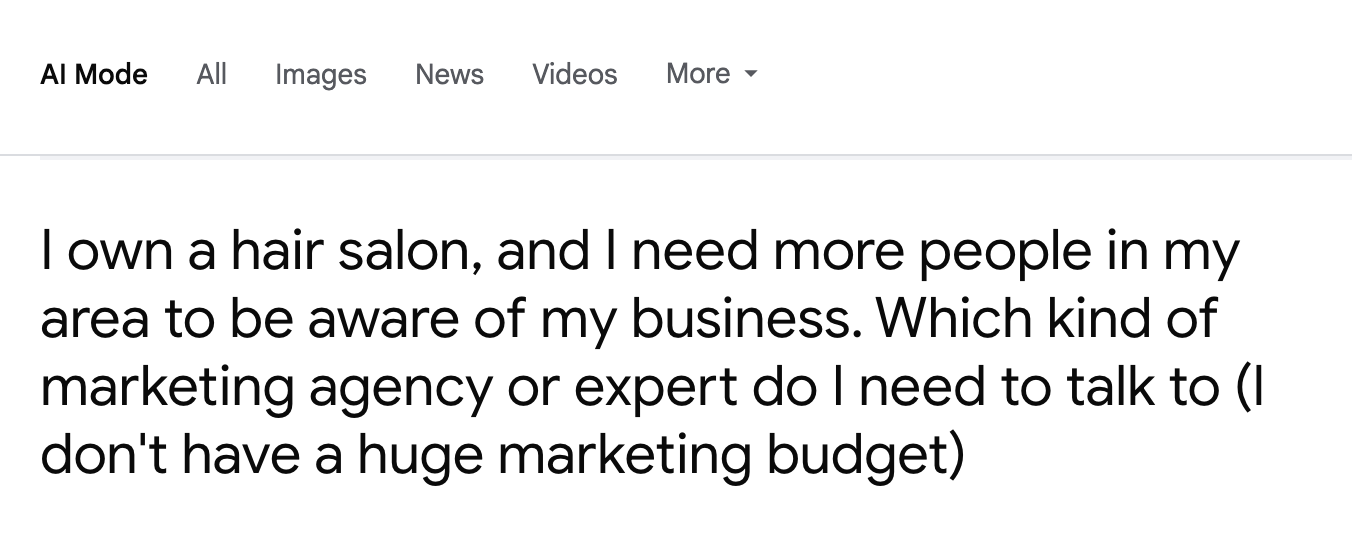
And the AI platform will understand that local SEO is a good option for them.
As I typed this prompt into Google’s AI Mode, here’s its response:
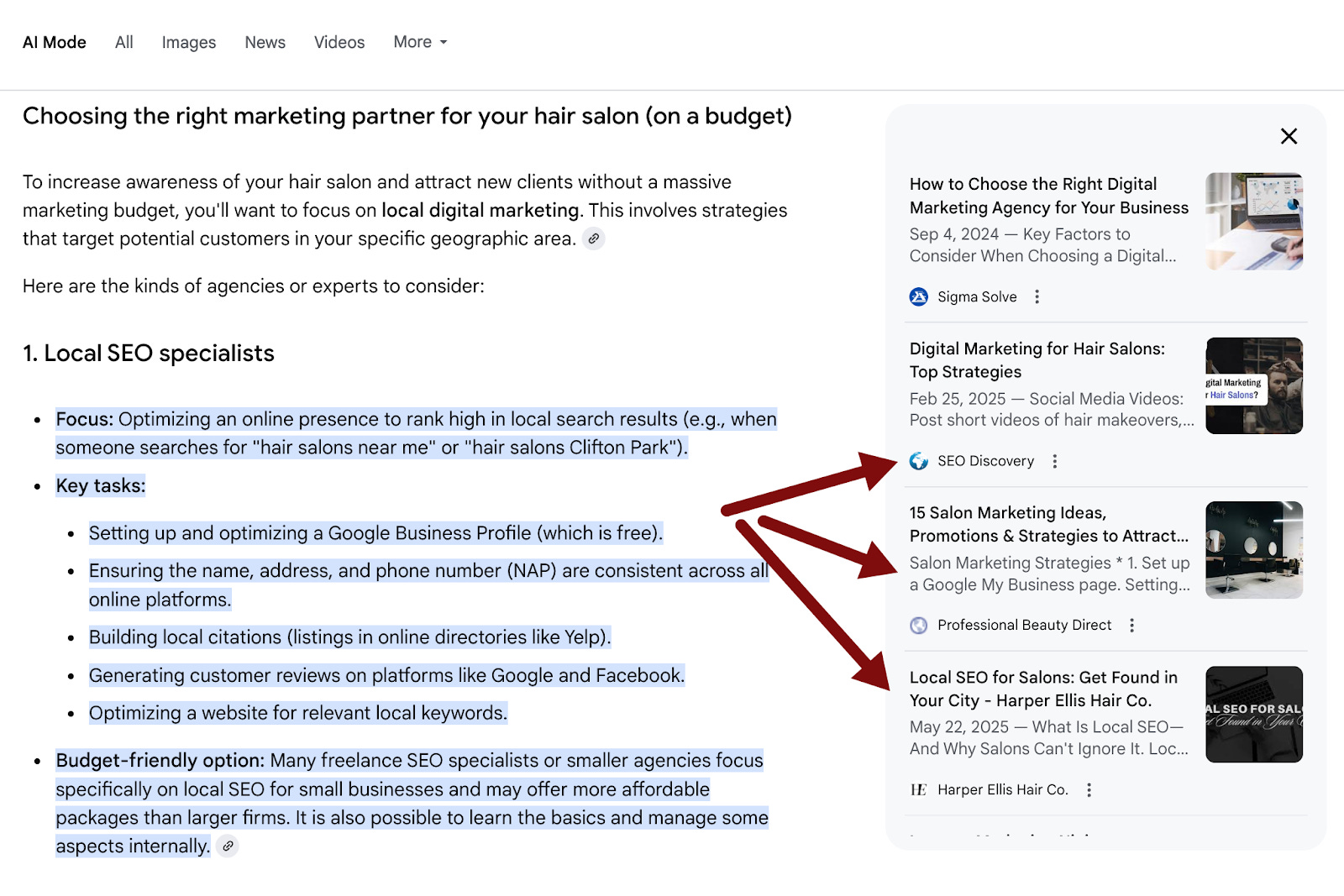
The biggest change in the “keyword optimization” strategy is how searching journeys are changing: Consumers do not prompt in keywords. They may not even know those keywords. Previously, they spent months discovering how to properly use keywords to solve their problems. Today, AI platforms understand what they mean without any proper keywords typed in a search box.
There are a few ways to better understand what people may use as a prompt to be able to discover your business or your product in an answer:
Question research tools
Knowing which questions your target audience is asking to solve their problems makes it easier to understand which problems you need to be solving on your site. It is not the perfect way because most question research tools are keyword-driven.
New prompt analytics software
New solutions start being built to help marketers understand common prompts that are relevant to their business. Similarweb has launched AI features allowing you to see which prompts drive clicks to a web page. The concept is similar to Semrush/Ahrefs intelligence. You give your or your competitor’s URL, and the platform shows which prompts cite that URL. It focuses on linked mentions (AI citations), and not brands that ARE the answers, which I think is the biggest limitation of this solution.
Aiso is a newer tool that allows you to see real-life prompts based on your keywords. The platform offers a free trial, so you can test it out to see actual AI-driven conversations your target customers have when researching relevant problems.
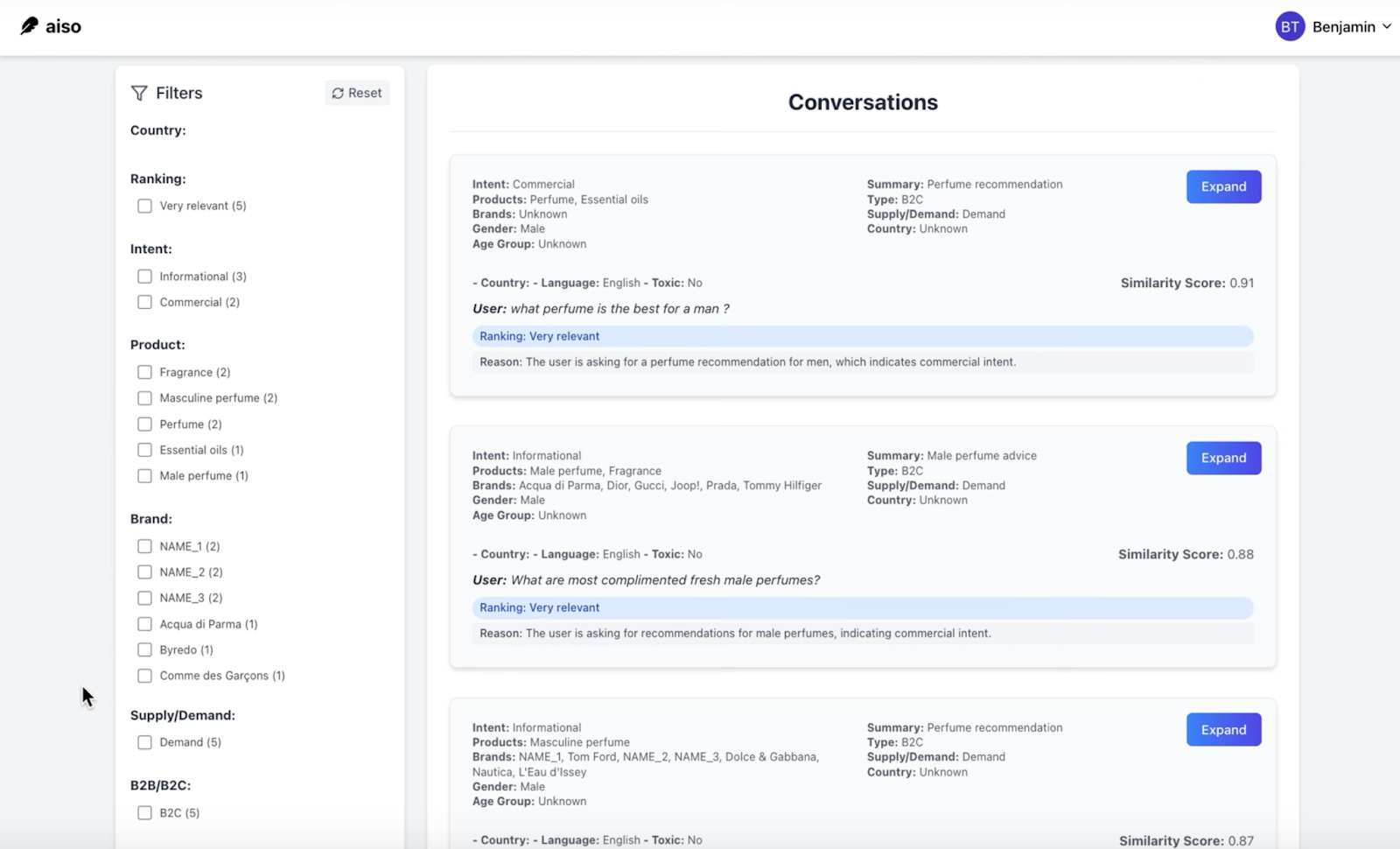
Knowing which prompts people may be typing or saying to an AI agent is only useful for understanding your customers’ journeys.
There’s no way to “traditionally” optimize your site for prompts because generative AI agents do not match prompts to content, unlike search engines, which match search queries to web documents.
Instead:
***AI Answers match problems to solutions***
THIS is the most important thing to remember.
AI platforms understand the problem behind the prompts, i.e., they focus on intent. While knowing actual prompts people use to discover your business and your competitors, the optimization strategy is completely different from traditional SEO. You need to optimize for problems and position your business as an actual solution.
Matching your landing pages to prompts is something that would work for traditional SEO, where keywords were quite predictable. SEO for AI focuses on being known as an answer to all kinds of relevant questions, regardless of how those questions are worded.
More and more people will be using prompts instead of keywords. And the key difference between searching and prompting is that prompts are highly unpredictable, and there’s no way to optimize your site for each of them. Instead of trying to create problem-solving content. Both keyword and prompt research will be helpful in understanding those problems. But matching content to all those prompts in a traditionally SEO fashion won’t be helpful.
Ann, another great article.
Do you see Google's efforts to incorporate SGE and AI Mode as being in opposition to their command of traditional search? What about Google Ads? What happens to them? Do blue links still matter?