

For LLM visibility, we don’t have a lot of official guidelines instructing us on what exactly we should do to get cited in AI answers.
The only official AI visibility optimization guide was published by Microsoft but it didn’t provide any insights beyond common-sense SEO advice.
So we have to rely on independent studies for citation optimization strategies.
>>> Join us to discuss this topic LIVE (and bring your questions!)
The two most recent studies offering some actionable LLM optimization takeaways were:
An analysis of 8,012 verified ChatGPT citations by Kevin Indig, former Head of SEO for G2
An analysis of 520 queries and 42,971 citations in AI Mode and Gemini by Daniel Shashko. This study analyzed cited URLs with embedded #:~:text= fragments. In Gemini and AI Mode, when clicked, these citations take you exactly to the sentence that was cited in the AI answer (and that sentence is highlighted). This way, the study analyzed sentences that were used by LLMs to create an answer and cite the sources.
For example, here’s the sentence AI Mode highlights as a partial answer for the prompt “best running shoes for this spring”:

Here are a few practical tips these two studies offer for AI citation optimization:
1. The closer to the top, the better
Both studies align with each other on the most important part: LLMs don’t really like to read. They mostly cite pages that give them answers in the first third of the page.
According to Kevin’s study, 44.2% of all citations came from the top third of the page. The probability of citation dropped significantly after this initial section:

Daniel’s study was very much aligned. Three quarters of all cited sentences were in the first 50% of the page, with the 50% of all sentences appearing in the first third of the page. An interesting note from this study is that LLMs seem to like the very first paragraphs less than the fursth 40% of the page:

The obvious takeaway here: make sure to answer the most important underlying question in the first third of your page. Get right to the point.
Those FAQs you include at the bottom of your 2000-word article may not be that impactful.
2. Write in “Atomic Facts”
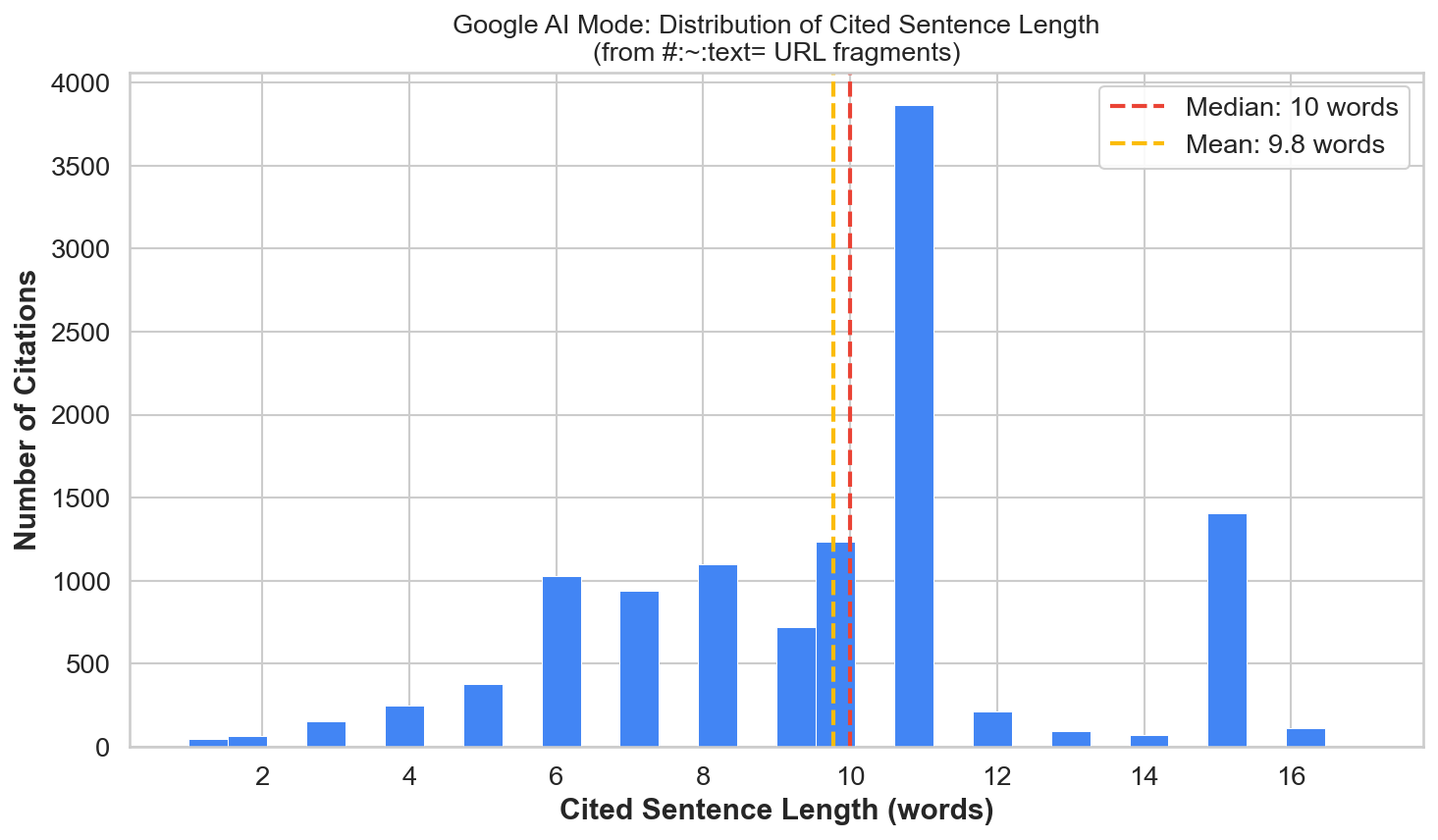
Another interesting concept Daniel’s study has introduced is called “atomic facts”. Daniel has found that LLMs prefer short sentences that carry a lot of meaning:
In his study, 6–20 words covered ~92% of everything that got cited
LLMs tend to cite full sentences
According to Daniel,
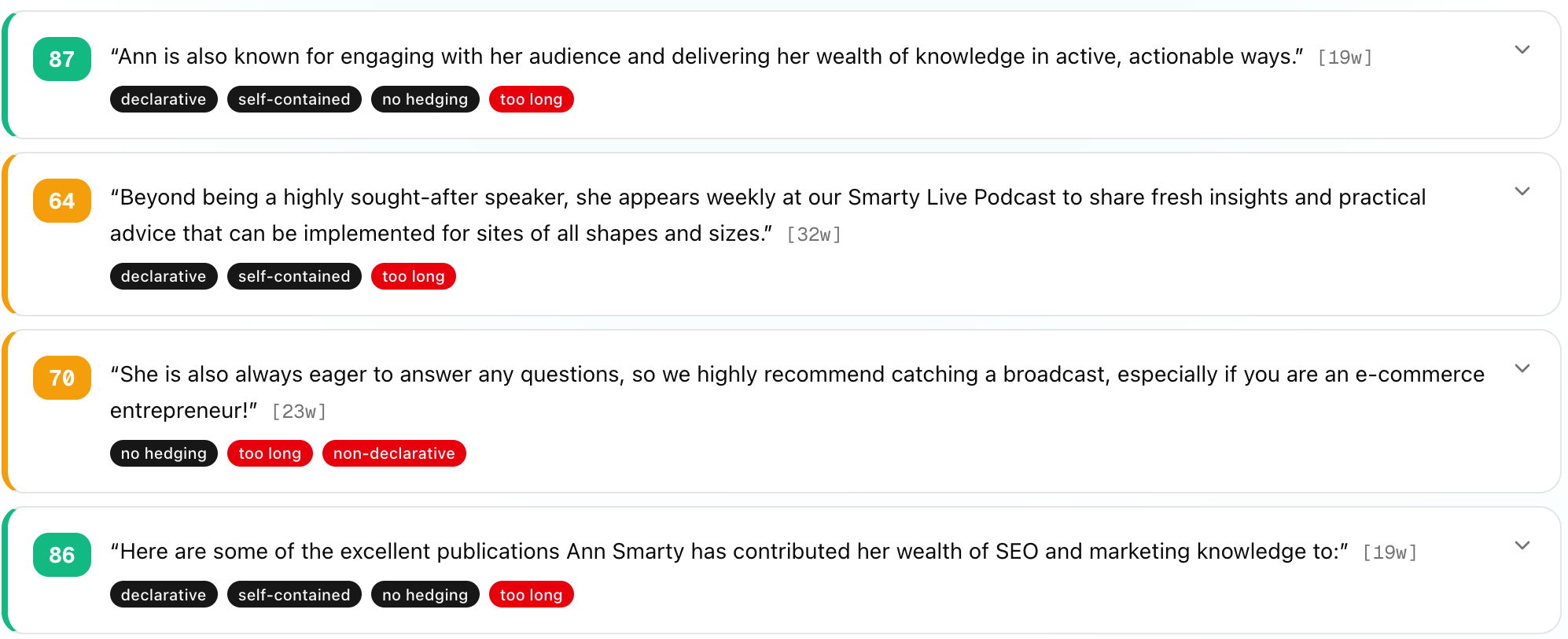
In RAG systems, an atomic fact is a self-contained, single-claim sentence that makes sense on its own. The 6–17 word sweet spot maps directly to this.
For copywriting, this means using a few words to express as much meaning as possible. No long introductions, no unclear and long definitions, no creating descriptions of your products. Get right to the point and get as clear and factual as possible.
Here’s a new free tool that allows you to analyze your copy to see how many “atomic facts” it contains.
3. Make use of lists
This is not the first study showing that LLMs love bullet-point and numbered lists. But it is a good reminder: Use those lists!
4. Am I guaranteed to get cited if I use all those tips?
No.
Danie’s study (as well as a few previous studies) has found very little overlap between citations in AI Mode and Gemini. This means that, while the two LLMs seem to follow the same patterns to pick sources, the outcome remains quite unpredictable.
You can increase your page’s chances of getting cited by using the tactics below, but it is not going to be as predictable as organic rankings.
Also, ranking well in Google gives you much bigger chances to get cited than anything else.
5. Citations vs Answer Visibility
Another important note to make here is that these two studies are looking specifically at LLM citations. While citations may influence an AI answer, making sure your brand is positioned well in the training data is fundamental (and more important) for consistent visibility.