

This year I conducted my second “State of SEO for AI” survey by reaching out to in-house marketing / SEO teams and business owners.
Check out the full report: The State of SEO + AI (AEO/GEO) Industry: What Do In-House Marketing Teams Prioritize and Fear?
Many of the SEOs and marketers also chose to add their own insights and recommendations, so in this episode I am sharing what actual in-house SEO practitioners are implementing AI visibility strategies, what they are struggling with and what they recommend moving forward:
>>> JOIN us to discuss this report live and bring your questions!
AEO / GEO experts most in-house teams are following:
Profound Team cc Josh Blyskal
Most people I reached out to were already in my network, so many of them knew and followed me, so these results are skewed. But I am still including myself, because… ummm ego…
Also, if you like my content, please follow me on Google to see more of me in Discover and AI Answers!
GEO or AEO: We don’t have a clear winner yet
This was the biggest surprise after my first survey last year: Companies are now referring to AI visibility as AEO (39%) or GEO (37%). Last year one clear winner was “SEO for AI”.
This is bad news to long-time SEO experts who (rightfully) look at AI visibility optimization as an evolving SEO strategy and see no need in more acronyms.
I don’t disagree with that but I also think this is a lost cause at this point. For the time being, I am using both acronyms but choose to distinguish between the two in a meaningful way (in my opinion): GEO -> SEO - AEO.
Whether you insist on using the SEO acronym for everything, there’s no denying the fact that it is not just search anymore. Roberto Grasiano, Head of Organic Growth @Lottie, put it very well:
SEO is becoming broader than ever. It cannot rely purely on search engines; branded profiles across the web, user interaction, and mentions will have a bigger impact than before and help LLMs understand which brands are relevant to user prompts. So embedding organic social (TikTok, X, Reddit, YouTube, Shorts, etc.) will be part of the organic remit. I also believe SEOs should rebrand as Organic Growth, since it covers all of the above.
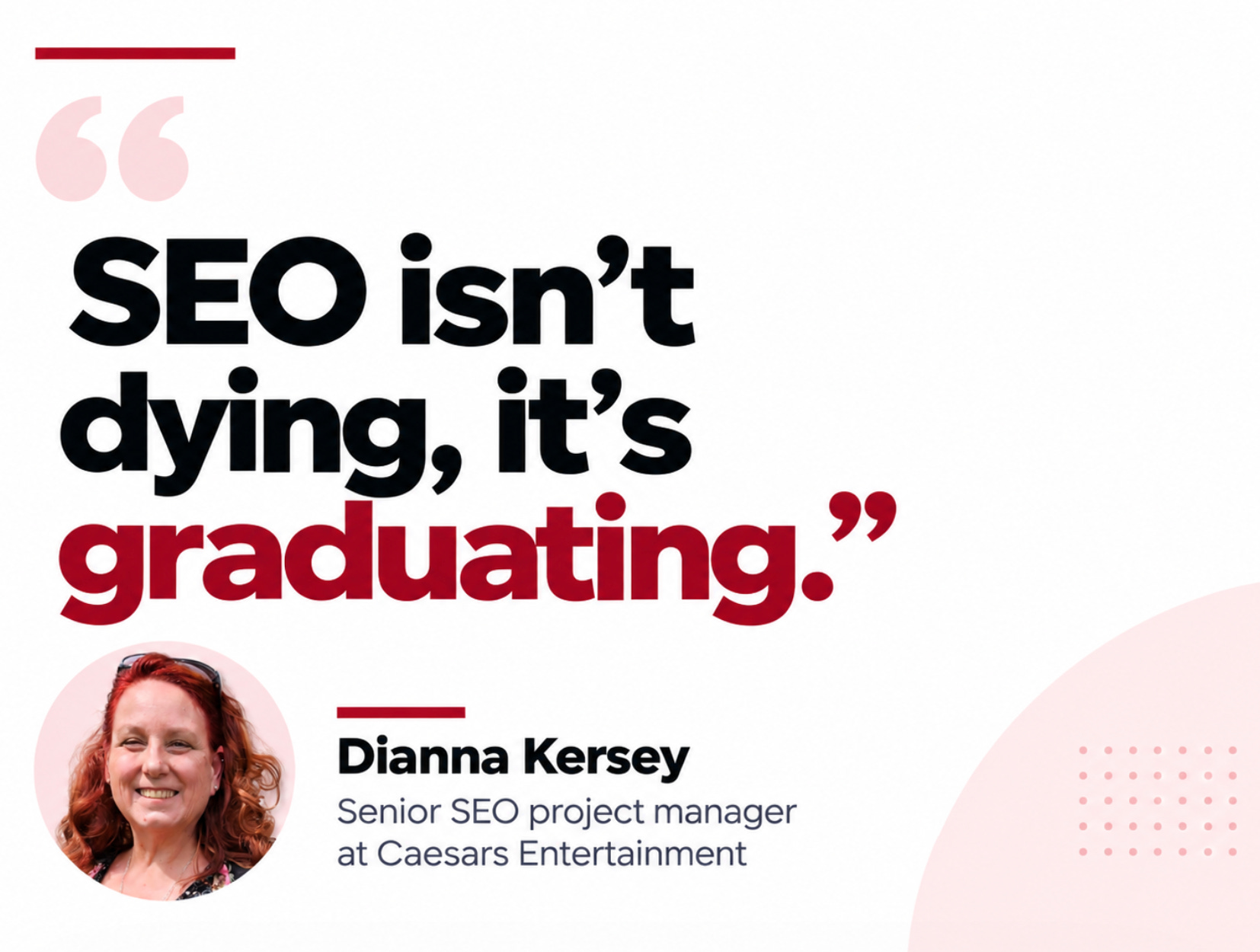
SEO isn’t dying, it’s graduating
Credit: Dianna Kersey
Tactics will evolve, but most of them are the ones we have always had:
Meet real user interest with content worth reading
Earn links from external sources, and now add mentions and messaging to that list.
That last part has always been PR work, and Avi Buchbinder thinks link building and PR are finally merging. Linus Logren, an SEO Lead at Kjell & Company, also believes that the fundamentals haven’t changed: We still focus on good content, spreading the word, and being accessible.
SEO will evolve and remain foundational to AI visibility, because AI search systems rely on discovering and retrieving useful, reliable web content. From what I understand prioritizing technical accessibility, original expertise and data, accurate information, and credible third-party coverage are critical success factors.
Alex Yardley, CEO of Laters.com, believes that SEO will evolve and remain foundational to AI visibility, because AI search systems rely on discovering and retrieving useful, reliable web content. Prioritizing technical accessibility, original expertise and data, accurate information, and credible third-party coverage are critical success factors.
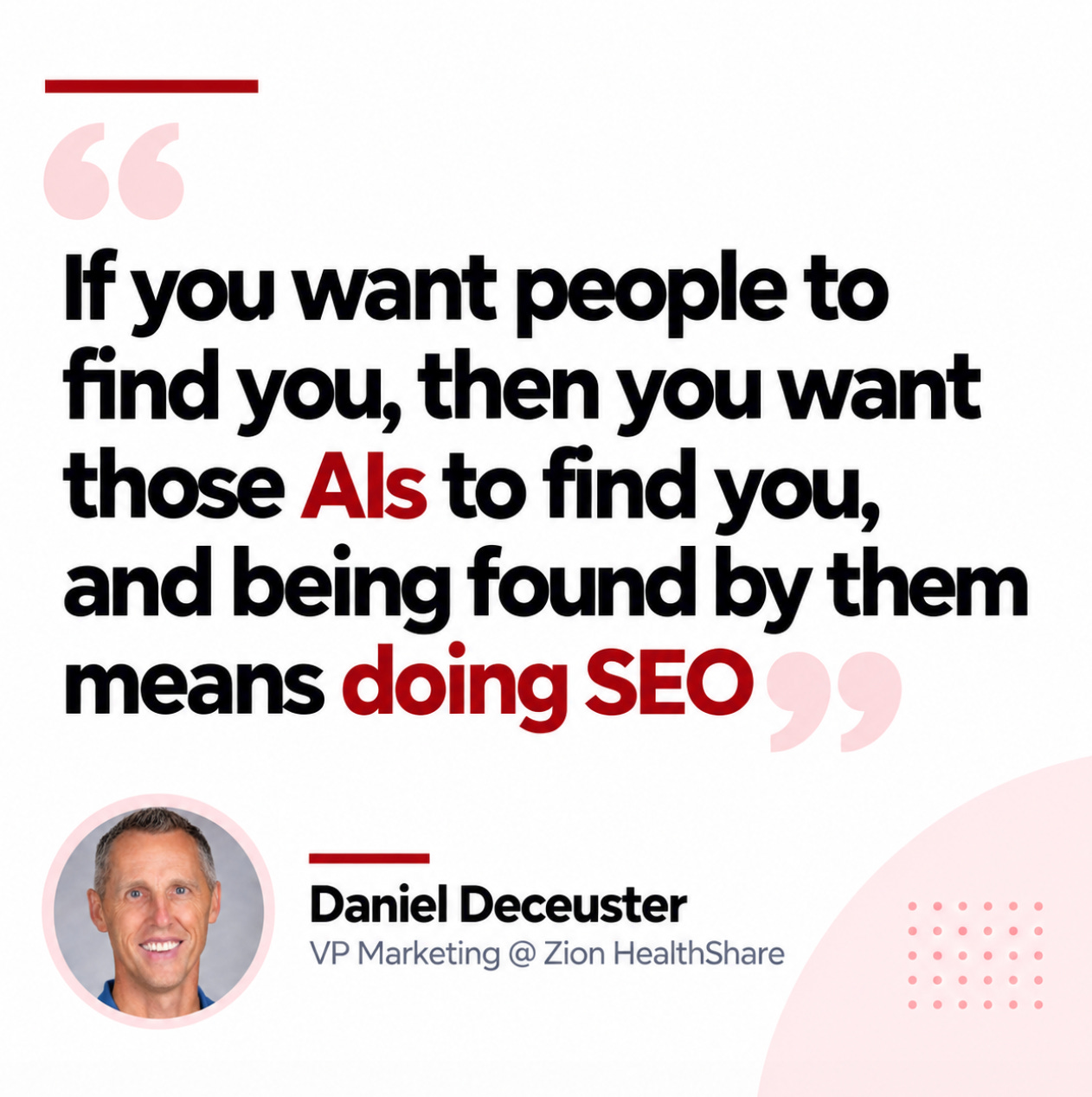
Dan Deceuster reminds us about the biggest change so far: We are optimizing for AI Agents visiting our websites and reporting back to real people. It is a completely new audience we are dealing with:
Good SEO is part of being found, it’s just that we’re trying to be found by bots now, not people. People are finding you through the AI now, whether that’s an AI Overview or an LLM. If you want people to find you, then you want those AIs to find you, and being found by them means doing SEO.
Mary Albright thinks (and I agree) that SEO has always been changing, so it is not exactly new (abeit faster than ever):
Its all just going to evolve, there will be a period of spammers and grifters and then things will shift towards the middle as they always do.
David Karalis, SEO at T-Mobile, believes that SEO is just evolving but it takes a lot monitoring and analyzing to adjust:
I think AI just changes the broader search experience, not remove old paths entirely. Marketers should be testing and watching what downstream impacts come from changes in AI visibility, how actual referral traffic from citations behaves vs other channels, etc. For example, if we make our brand present in a conversation about a service/topic we weren’t previously in, but brand sites aren’t cited, how do we know the impact? Did brand search demand increase, did direct traffic increase, do we see increased in conversion further down the line? Nothing is dead, it’s just all evolving.
Cedric Harris emphasizes the importance of fundamentals but recognizes that there’s an added layer to also prioritize:
The fundamentals still matter: the technical SEO, authoritative content and strong user experience. However, marketers now need to optimize for how AI/answer engines interpret, summarize and recommend answers from brands and which brands it should come from.
So what should we be doing?
There are new tactics that companies started prioritizing because of AI, but the fundamentals remain crucial.
Credit: Chee Lo
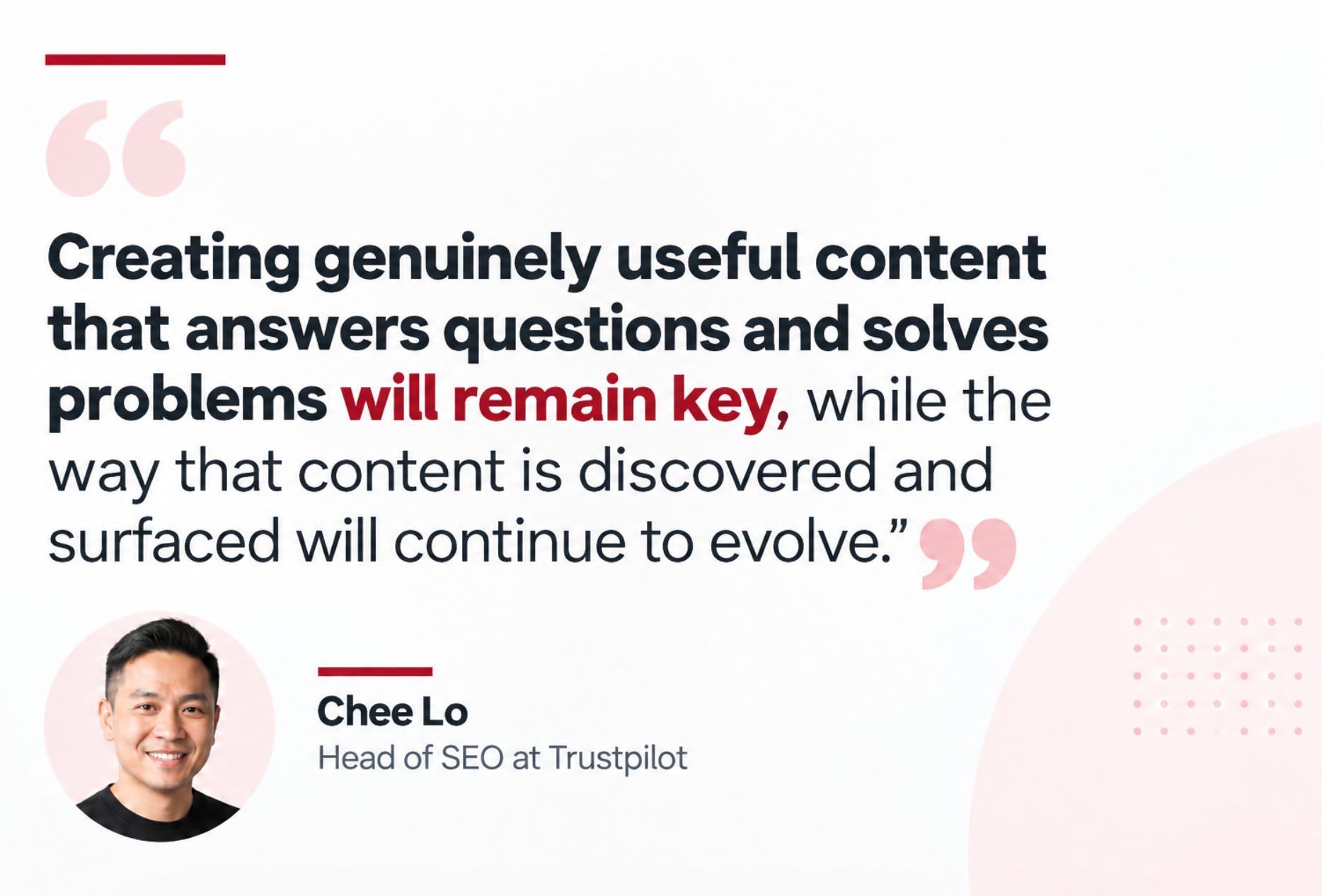
-> Great content is still key:
AI answers have to pull from somewhere, and that’s still the open web. The brands that show up in ChatGPT or Google’s AI results are the ones putting out strong, useful content and making it easy for machines to read. So SEO isn’t going away. It’s becoming the input to AI search (Eric Kovalkoski)
-> Outbound strategies go beyon backlinks
(Although, backlinks are very important too!)
Building a brand that gets talked about and recommended just became a lot more important. (Krinal Mehta, Director of SEO @ Bluehost)
Digital PR and reverse engineering query-fan outs will be crucial to LLM visibility moving forward (Alex D’Amato)
-> Effective GEO/AEO strategy requires cross-team collaboration:
AI SEO needs involvement from brand teams, especially PR and communication and social media teams. (Maham Azam, SEO Manager at Paddle)
-> Review management and hence customer relationship building are crucial (especially for ecommerce and SaaS):
Reviews are incredibly impactful for AI visibility but often overlooked. Generating genuine reviews on your website should be a higher priority, especially for ecommerce businesses. However a lot of review platforms are invisible to LLMs. This requires a technical fix to ensure reviews are being utilised to their full extent. Make sure you’re generating reviews AND that they are visible to LLMs (Destiny Flaherty ).
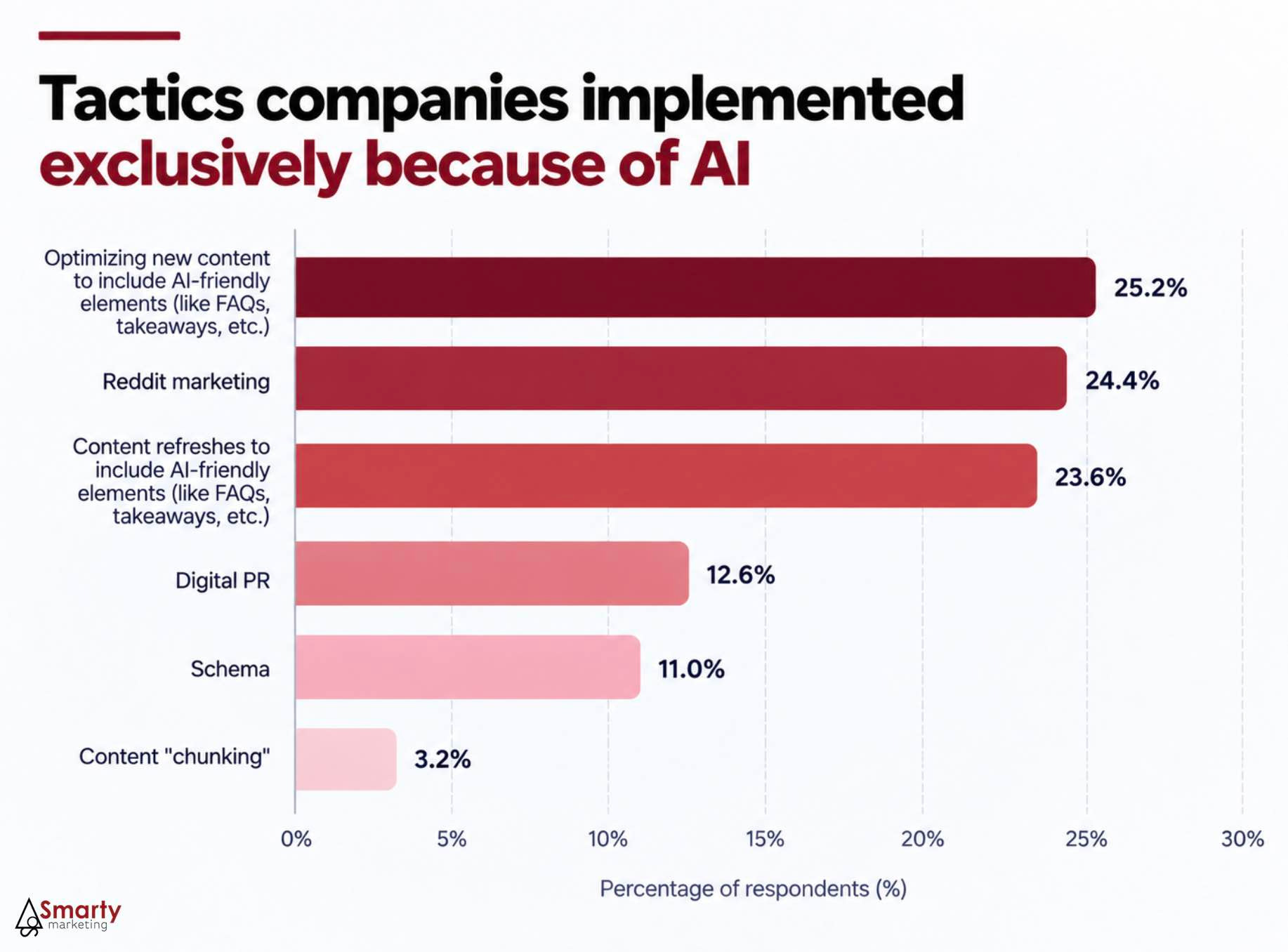
Here are new tactics that companies introduced *just* because of AI visibility concern:
Optimizing new content for AI (FAQs, takeaways, etc.)
Refreshing existing content to optimize it for AI
Digital PR for linkbuilding and brand mentions* (Note: AI-driven digital PR strategy is different from the traditional PR)
Schema
Content chunking
Content partnerships / affiliate relationships with top-cited sites
Wikipedia monitoring and inclusion strategy
Creating non-commodity content
General authority and brand building
Refreshing content to make it more valuable and useful
Youtube marketing
Overall:
Keep doing seo best practice on top of getting owned channels machine-ready plus understanding which earned sources to target to help build brand trust. (Melt du Plooy)
Long-term visibility vs quick gains
I’ve talked about shortcuts a lot here, and how they may cost your business long-term visibility, and Jack Thornburg, Digital Growth @ HelloFresh, has a very balanced perspective on this topic:
It feels like a lot of SEO / AI SEO decisions being made today are somewhat dependent on how far into the future a business can afford to look. If a business is small and needs quick wins, being aggressive on Reddit may actually make sense. It may make sense to build listicle content at scale to win citations in AI.
But for larger, more established businesses with more downside to those kinds of tactics, I think the smarter approach is to bake AI SEO / GEO into what is, quite simply, a sound SEO strategy. Create genuinely useful content, build authority around the topics that matter to your business, and make sure you’re showing up across the 3rd-party sources that AI platforms are actually using.
However, for any type of business, it is important to prioritize proven strategies. Don’t fall for yet another shiny tactic and a fancy term! Most experienced SEOs learned that lesson long time ago, so did Taryn Siwale, Interim Digital & SEO Manager at Aviva Insurance Ireland:
Having been around the block, I’ve found that testing strategies specifically for your own industry, website, and target audience provides infinitely more insight than blindly following SEO tactics found online. That’s not to say you shouldn’t listen to best practices, where possible run a controlled test phase before full-scale implementation.
I recall when Google doubled the length of meta descriptions; everyone scrambled to rewrite their tags to boost CTR, only for Google to revert the change a few months later. Similarly, community-driven tactics like leveraging Reddit for SERP and AI visibility have likely peaked and begun to plateau as algorithms mature. SEO is inherently a long-term commitment. While both traditional search and AI are evolving at an accelerating rate, remember: slow is the turtle that beats the jack rabbit to the finish line.
The huge issue with data and reporting
Lack of reporting, first-hand data, clear attribution and reliable KPIs are the biggest concerns behind AI-driven journeys.
We have to rely on third-party data that is often skewed and doesn’t tell us the full story (e.g. how AI visibility scores translate in the actual revenue).
There are different data sources and metrics companies are trying to embrace.
Avi Buchbinder explains the problem very well:
The bigger trouble I see coming for SEOs is the erosion of the click based attribution model. In a way we are back to the days before the internet, when you didn’t really know where a conversion came from. And honestly we never truly knew what convinced someone to convert, only what correlated with it. Now even the correlation gets fuzzy.
Julian Redlich has some interesting thoughts about the clickstream data rising in popularity since it can tell us what a user did before purchasing a service or product. There’s something between ChatAI and the purchase (e.g. watchign a video, Googling, reading a listicle) that we will focus more on.
Therefore, Rand Fishkin’s “Building on rented land” will become more popular since click stream data will make it more measurable.
There are new and emerging metrics we are still trying to figure out. For example, Dana Tan, Head of SEO/GEO Aritzia, is looking for ways to measure Machine Validated Trust, a concept we didn’t have to deal with before.
Understanding your target user is becoming even more important, as Michael Hayes states:
Having deep empathy for the user and their query path is critical, as it may no longer present in classic keyword research data.
It is getting harder and harder for small businesses
This is the most unfortunate trend because small businesses are the most vulnerable (and the most honorable) of all businesses.
Abby Gleason encourages businesses to find product market fit and lean into their differentiators to show up when prospects search for solutions to specific needs. But building a brand around that is absolutely essential right now.
Kirill Kniazev, Marketing Director at ToolBeltData, also believes there is still good opportunities for small and new businesses to build visibility:
Our brand is still relatively early in the SEO game, but I am still seeing reasonably good SEO results in spite of a lack of AI awareness of our brand. So, good content still works, and building an AI strategy through credibility takes time.
Fundamentals remain, everything else is changing…
I think we’re moving away from the concept of search altogether. Users are no longer “searching”; they’re “asking.” A seemingly small distinction, with big ramifications. To make an imperfect analogy, I see it as the difference between browsing your public library for a book on home repairs, or simply asking your librarian to recommend one and get it for you. The library no doubt has many books on home repair, and the librarians have curated them before you got there, but you would still need to spend time searching and discerning them from one another.
On the other hand, the librarian has expertise in picking quality books and knowing where they’re located, so you cut down on search time. In today’s world, AI acts as a super-intelligent librarian with access to seemingly all of human knowledge. If you’re a business owner or professional, your job today is to become one of the books the librarian would recommend, instead of just one of the books the librarian curates.
Traditional SEO is still relevant because the strategies and tactics we used to get curated still apply to getting recommended (quality, authority, trust, brand, etc.). But, our AI librarian can’t recommend every business, so we need to differentiate ourselves. With traditional search, businesses had direct control of the top of their funnels. Now, AI is the top of every funnel, and our new job is to navigate that shift and ensure our business is visible, properly represented, and users continue moving down funnel.
Because of this, traditional marketing and brand-building will be more important than ever in the new SEO/AI world. I think, in a way, we are going back to old-school marketing, with SEO shifting from a massive acquisition channel to a strategy we use to gain AI visibility, regain some control of the top of our funnel, and differentiate ourselves enough to be recommended. (Miljo Dragutinovic, Head of Growth at Termly)
The SEO industry is overwhelming and noisy these days. But it looks like internal teams are figuring GEO/AEO out.
If you need help with your AI visibility optimization strategy, reach out!